

Optical Filter Coating: Precision Thin-Film Technology for Advanced Wavelength Control
Modern optical systems require highly precise control over how light is transmitted, reflected, or blocked at specific wavelengths. From smartphone cameras and medical imaging devices to industrial sensors and scientific instruments, controlling spectral performance is essential for achieving accurate and reliable results. This is where optical filter coating plays a critical role.
Optical filter coating is an advanced vacuum thin-film technology that applies multilayer interference structures onto optical substrates. These coatings selectively transmit or block specific wavelength ranges, enabling highly accurate spectral control. By engineering precise combinations of dielectric materials at nanometer-level thickness, manufacturers can design filters that optimize image quality, enhance signal accuracy, and reduce unwanted optical noise.
As imaging systems become more advanced and applications demand higher precision, optical filter coatings have become indispensable in modern optical engineering.
What Is Optical Filter Coating?
Optical filter coating refers to the application of multilayer thin-film structures onto optical components using vacuum deposition techniques to control the transmission and reflection of specific wavelengths of light.
These coatings are designed to:
- Transmit selected wavelength bands
- Block unwanted light frequencies
- Improve contrast and signal clarity
- Enhance imaging accuracy
- Reduce optical interference
Each filter is carefully engineered for a specific spectral response curve.
How Optical Filter Coating Works
Thin-Film Interference Principle
Optical filter coatings rely on light interference effects. When light passes through multiple thin layers, certain wavelengths are reinforced while others are canceled out.
This allows precise control over:
- Transmission bands
- Reflection bands
- Cut-off wavelengths
Vacuum Deposition Process
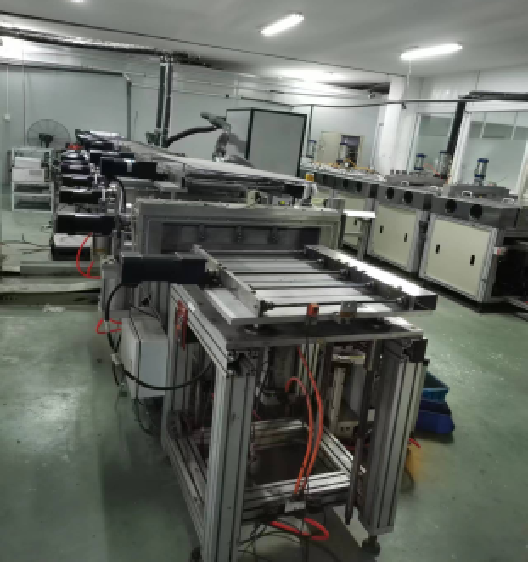
Filter coatings are produced using high-vacuum systems where materials are deposited layer by layer onto optical substrates under tightly controlled conditions.
Multilayer Optical Design
Most optical filters consist of multiple layers of dielectric materials, each with carefully controlled thickness to achieve the desired spectral response.
Types of Optical Filter Coatings
Bandpass Filters
Allow only a specific wavelength range to pass through while blocking others.
Common uses:
- Fluorescence imaging
- Biomedical diagnostics
- Optical communication systems
Longpass Filters
Transmit wavelengths above a certain cut-off point while blocking shorter wavelengths.
Shortpass Filters
Transmit shorter wavelengths while blocking longer ones.
Notch Filters
Block a narrow wavelength range while allowing others to pass.
Used in:
- Laser systems
- Scientific instrumentation
- Optical measurement equipment
Key Benefits of Optical Filter Coating
Precise Wavelength Selection
Filter coatings enable extremely accurate control of optical spectra, ensuring only desired wavelengths reach the sensor.
Improved Image Quality
By removing unwanted light, optical filters enhance:
- Contrast
- Sharpness
- Color accuracy
Reduced Optical Noise
Filters help eliminate interference from stray light and unwanted spectral components.
Enhanced Environmental Durability
Modern filter coatings also provide resistance to:
- Moisture
- Scratches
- Chemical exposure
- Temperature fluctuations
Vacuum Technologies Used in Optical Filter Coating
Magnetron Sputtering
Provides:
- High uniformity
- Excellent film density
- Strong adhesion
- Scalable production
Electron Beam Evaporation
Ideal for high-purity optical dielectric layers.
Ion-Assisted Deposition
Enhances coating density and long-term stability.
Applications of Optical Filter Coating
Smartphone Camera Modules
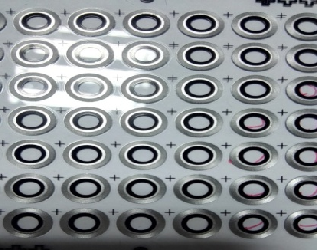
Modern smartphone cameras rely heavily on optical filter coatings for color accuracy and image clarity.
Manufacturers often use Functional Coating for Cell Phone Camera solutions to improve spectral control, reduce infrared interference, enhance image sharpness, and protect sensitive optical components. These coatings are essential for high-resolution imaging and computational photography systems.
Consumer Electronics
Optical filter coatings are widely used in:
- Smartphones
- Tablets
- Smart devices
- AR/VR systems
- Display technologies
They improve visual quality and sensor accuracy.
Medical Imaging Systems
Applications include:
- Endoscopes
- Fluorescence microscopes
- Diagnostic imaging devices
- Laboratory analysis systems
Accurate wavelength filtering is critical for medical precision.
Automotive Optical Sensors
Modern vehicles rely on optical filters for:
- ADAS cameras
- LiDAR systems
- Driver monitoring systems
- Night vision sensors
Filters improve detection accuracy in varying lighting conditions.
Scientific and Industrial Equipment
Optical filter coatings are essential for:
- Spectroscopy systems
- Laser measurement tools
- Semiconductor inspection
- Machine vision systems
Materials Used in Optical Filter Coating
Common materials include:
- Silicon dioxide (SiO₂)
- Titanium dioxide (TiO₂)
- Hafnium oxide (HfO₂)
- Tantalum pentoxide (Ta₂O₅)
- Magnesium fluoride (MgF₂)
These materials are selected based on refractive index, transparency, and environmental stability.
How to Choose an Optical Filter Coating Manufacturer
Selecting the right partner is critical for achieving accurate spectral performance.
Engineering Expertise
Look for experience in:
- Optical design simulation
- Multilayer thin-film engineering
- Spectral optimization
Advanced Vacuum Equipment
Ensure capability in:
- High-precision sputtering
- Evaporation systems
- Ion-assisted deposition
Quality Control Systems
Reliable manufacturers provide:
- Spectral transmission testing
- Wavelength accuracy verification
- Adhesion testing
- Environmental durability tests
Integrated Vacuum Coating Solutions
Choosing a supplier with multi-process vacuum coating capabilities ensures flexibility across different optical and industrial applications. Companies seeking complete thin-film engineering support can explore Vacuum Coating Solutions for optical components, consumer electronics, appliance panels, and industrial products.
Future Trends in Optical Filter Coating
Ultra-Precision Spectral Control
Next-generation filters offer tighter wavelength accuracy and improved transmission efficiency.
Multi-Functional Optical Filters
Future designs combine:
- Filtering
- Anti-reflection
- Protective layers
within integrated coating stacks.
AI-Driven Optical Design
Artificial intelligence is increasingly used to optimize multilayer filter structures for complex applications.
Advanced Imaging Systems
Demand from autonomous vehicles, robotics, and biomedical imaging continues to drive innovation.
Frequently Asked Questions
What is optical filter coating?
Optical filter coating is a vacuum thin-film technology that selectively transmits or blocks specific wavelengths of light using multilayer interference structures.
What are optical filters used for?
They are used to improve image quality, enhance spectral accuracy, and remove unwanted light in imaging, sensing, and measurement systems.
Which industries use optical filter coatings?
Consumer electronics, automotive, medical, scientific research, industrial automation, and aerospace industries rely on optical filters.
Can optical filters improve camera performance?
Yes. They enhance color accuracy, reduce infrared interference, and improve overall image clarity.
What technologies are used to make optical filters?
Magnetron sputtering, electron beam evaporation, and ion-assisted deposition are commonly used.
Can optical filter coatings be customized?
Yes. They can be designed for specific wavelength ranges, environmental conditions, and application requirements.
Are optical filter coatings durable?
High-quality coatings offer excellent resistance to moisture, scratches, temperature changes, and chemical exposure.
Conclusion
Optical filter coating is a fundamental technology for controlling light at the wavelength level, enabling precise imaging, sensing, and measurement across a wide range of industries. By leveraging advanced vacuum deposition techniques and multilayer thin-film engineering, manufacturers can create highly accurate optical filters that enhance performance, reduce noise, and improve system reliability.
As optical systems continue to evolve toward higher precision and smarter functionality, optical filter coatings will remain essential for enabling next-generation imaging and sensing technologies worldwide.