In this article
Introduction
Modern electronic products require surfaces that do much more than provide an attractive finish. Depending on the application, a component may need to resist scratches, reduce unwanted reflection, improve cleanability, withstand chemical exposure, or maintain stable performance under demanding environmental conditions.
These requirements have increased the importance of functional coating technology across consumer electronics, optical components, precision instruments, and industrial products.
Choosing the right functional coating supplier is therefore an important decision for product manufacturers and engineering teams. The supplier must understand the component’s intended function, select a compatible coating approach, control the manufacturing process, and verify that the finished surface meets defined performance requirements.
A functional coating is not simply a protective layer added at the end of manufacturing. It is an engineered part of the component that can influence durability, appearance, optical behavior, and long-term reliability.
This guide explains the main types of functional coatings, the technologies used to produce them, and the factors buyers should consider when selecting a supplier for OEM or industrial applications.
What Is a Functional Coating?
A functional coating is a surface layer designed to provide a specific technical benefit beyond basic appearance.
Depending on the application, a coating may change how a surface interacts with light, moisture, oils, chemicals, mechanical contact, or the surrounding environment.
Common functional coating objectives include:
- Improving scratch and abrasion resistance
- Reducing optical reflection
- Controlling light transmission across selected wavelengths
- Improving hydrophobic or oleophobic behavior
- Enhancing chemical resistance
- Improving surface durability
- Protecting compatible substrates from environmental exposure
- Supporting specific electrical or optical functions
Not every coating provides all these benefits. A coating designed to reduce reflection has a different purpose from one developed to improve abrasion resistance.
The correct coating depends on the substrate, operating environment, product design, and required performance criteria.
Why Choosing the Right Functional Coating Supplier Matters
Coating performance depends on more than the coating material itself. Substrate condition, surface preparation, deposition parameters, film thickness, adhesion, and quality control can all affect the final result.
A suitable supplier should help connect the desired performance with a practical manufacturing process.
1. Application-Specific Technical Support
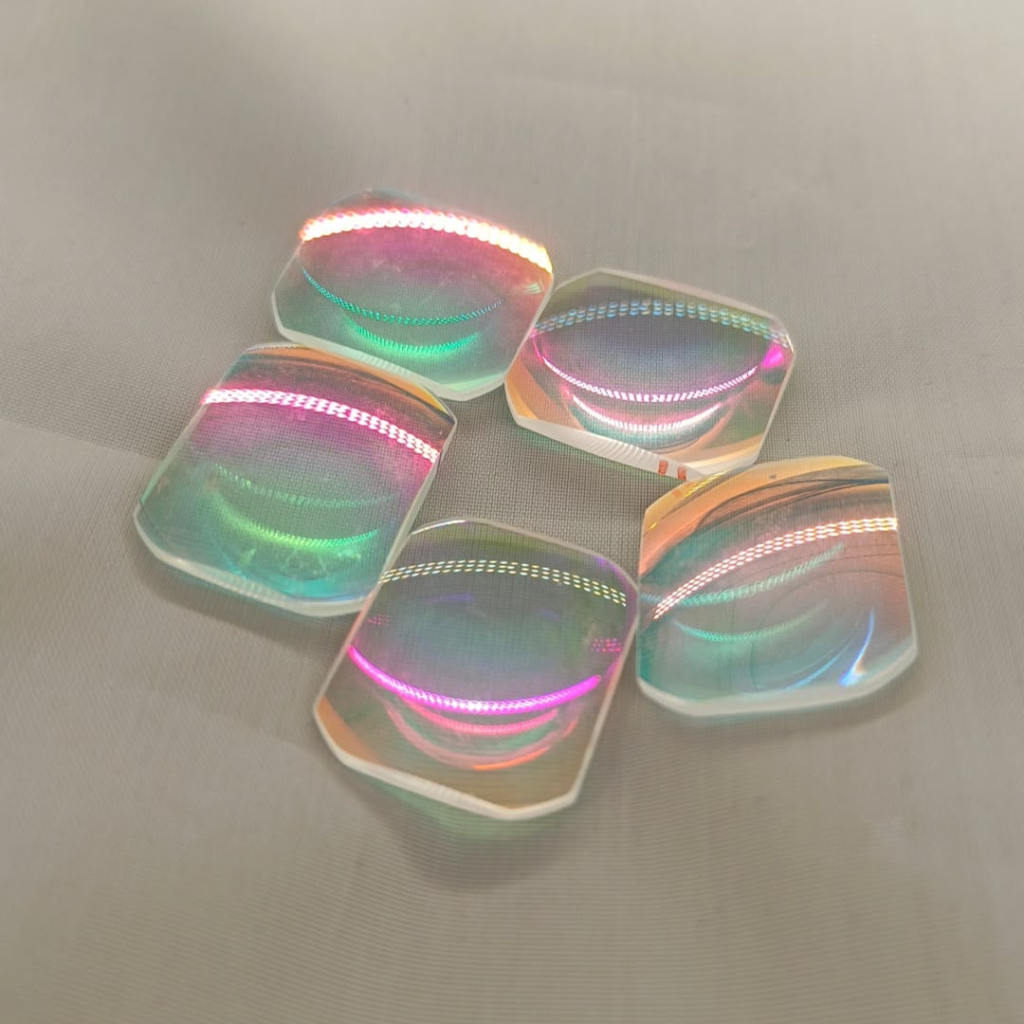
Different products have different performance priorities. A smartphone camera component may require controlled optical behavior, while a decorative panel may prioritize appearance, texture, and resistance to daily wear.
A supplier should be able to discuss the actual application and clarify which coating characteristics are essential.
2. Substrate Compatibility
Glass, sapphire, metals, ceramics, and polymers have different physical and chemical characteristics. A coating process suitable for one material may not be appropriate for another.
Substrate compatibility should be evaluated before selecting the coating material or deposition technology.
3. Measurable Performance
Terms such as high performance, premium protection, and long-lasting durability are not sufficient technical specifications.
The supplier and customer should define measurable requirements, appropriate test methods, and acceptance criteria.
4. Production Consistency
A coating that performs well on a prototype must also be reproducible in production.
Consistent cleaning, deposition conditions, film thickness, handling, and inspection are essential for controlling batch-to-batch variation.
Main Types of Functional Coatings
Functional coatings cover a broad range of technologies. Understanding the main categories helps buyers identify which supplier capabilities are relevant to their products.
Anti-Reflective Coatings
Anti-reflective coatings are designed to reduce unwanted reflection at optical interfaces.
They are used in suitable applications involving camera components, optical windows, lenses, and other light-transmitting surfaces.
Performance depends on refractive index, film thickness, layer structure, wavelength range, and angle of incidence. For precision optics, the coating must be designed around the requirements of the optical system.
Hard and Scratch-Resistant Coatings
Hard coatings are intended to improve resistance to mechanical damage, including scratching and abrasion.
They may be considered for compatible glass, sapphire, metal, and other component surfaces, depending on the coating system and application.
However, hardness alone does not guarantee durability. Adhesion, film stress, substrate support, and contact conditions also influence performance.
For advanced surface protection, explore SRNC Sapphire Super Hard Coating.
Hydrophobic and Oleophobic Coatings
Hydrophobic coatings reduce the tendency of water to spread across a surface. Oleophobic coatings help reduce the adhesion of oils and fingerprints.
These treatments can improve cleanability on exposed optical and electronic surfaces.
Their performance should be assessed after repeated handling and cleaning because surface functionality may change with use.
Chemical-Resistant Coatings
Chemical-resistant coatings are designed to tolerate specified chemicals or cleaning agents.
The required resistance depends on chemical composition, concentration, temperature, contact time, and frequency of exposure.
A suitable supplier should evaluate the intended environment rather than relying on a general claim of chemical resistance.
Decorative and Texture Coatings
Some functional coating projects combine technical performance with a particular visual or tactile effect.
Decorative coatings may be used to achieve metallic appearances, matte finishes, or controlled surface textures while meeting selected durability requirements.
The challenge is to maintain consistent appearance without compromising adhesion, abrasion resistance, or other required properties.
Spectral and Optical Filter Coatings
Certain applications require precise control over light transmission or reflection across selected wavelengths.
These coatings are used in optical systems where the spectral response must match the intended device function.
The design may require multiple thin-film layers and careful thickness control. The relevant wavelength range and acceptance criteria should be specified before development begins.
Functional Coating Technologies: Why Process Selection Matters
The appropriate manufacturing process depends on the coating material, substrate, component geometry, and target performance.
Vacuum deposition is an important technology for producing controlled thin films in advanced optical and electronic applications.
Magnetron Sputtering
Magnetron sputtering uses a plasma to transfer material from a target onto a substrate.
It can support the production of functional thin films and multilayer structures. Suitability depends on the coating material, required properties, substrate sensitivity, and production conditions.
Evaporation-Based Deposition
Evaporation-based processes transfer coating material into the vapor phase under controlled conditions, allowing it to condense on the substrate.
These processes are used for various optical and functional coating applications. The appropriate method depends on the required film structure and component specifications.
Multilayer Thin-Film Engineering
Some applications require several layers to achieve a balance of optical, mechanical, and environmental properties.
A multilayer coating may combine different materials, with each layer contributing to the overall result. Layer thickness, refractive index, adhesion, and internal stress must be controlled as part of the design.
The supplier should be able to explain why the proposed technology is suitable for the intended application rather than simply recommending an available process.
How to Evaluate Substrate Compatibility
Substrate compatibility is one of the first technical questions buyers should address.
Glass and Optical Components
Glass components may require optical clarity, controlled reflection, surface durability, or a combination of these properties.
The coating process should account for the glass composition, surface quality, and optical design.
Sapphire Components
Sapphire is associated with high hardness and is used in selected applications requiring durable surfaces or specialized optical properties.
Additional coating layers may be considered when the application requires functions beyond the properties of the base material.
Metal Components
Metal surfaces may need improved wear resistance, corrosion protection, decorative appearance, or another application-specific property.
The coating system must be compatible with the metal substrate and its surface preparation requirements.
Polymer Components
Polymers can have lower thermal limits and different surface characteristics compared with glass or metal.
The coating process should therefore be selected with consideration for temperature sensitivity, adhesion, and potential material deformation.
A qualified supplier should evaluate the actual substrate rather than assuming that one process is universally suitable.
The Functional Coating Manufacturing Process
A structured manufacturing workflow helps reduce defects and improve repeatability.
Step 1: Requirement Review
The supplier and customer define the component, substrate, intended use, performance targets, and inspection criteria.
Step 2: Incoming Material Inspection
Substrates are checked for relevant defects, dimensions, surface quality, and material conformity.
Step 3: Cleaning and Surface Preparation
Contaminants are removed before coating. Surface preparation is essential because residues and particles can affect adhesion or create visible defects.
Step 4: Loading and Vacuum Preparation
Components are positioned in suitable fixtures and loaded into the coating equipment. Fixture design and component arrangement can influence film uniformity.
Step 5: Coating Deposition
The selected coating material is deposited using the chosen process and defined parameters.
Important variables may include deposition rate, substrate temperature, film thickness, vacuum conditions, and layer sequence.
Step 6: Inspection and Testing
The finished coating is evaluated against the agreed performance requirements. Testing may include adhesion, optical properties, abrasion resistance, surface functionality, or environmental durability.
Step 7: Packaging and Final Quality Control
Finished components are handled and packaged to reduce the risk of contamination or mechanical damage. Final inspection verifies conformity with the applicable quality criteria.
What Quality Tests Should a Functional Coating Supplier Support?
The testing program should reflect the intended function of the coating.
| Performance Requirement | Possible Evaluation |
|---|---|
| Adhesion | Suitable adhesion test for the coating and substrate |
| Scratch resistance | Controlled scratch testing |
| Abrasion resistance | Repeated-contact or abrasion testing |
| Optical performance | Transmission, reflection, haze, or spectral measurements |
| Film thickness | Appropriate thin-film measurement |
| Chemical resistance | Exposure to specified chemicals or cleaning agents |
| Environmental stability | Temperature and humidity testing |
| Hydrophobic or oleophobic function | Contact-angle or cleanability testing |
| Surface appearance | Inspection for visible defects and variation |
| Production consistency | Batch inspection and process monitoring |
Not every test is required for every application. Buyers should prioritize the tests that correspond to the component’s actual service conditions.
It is also important to distinguish a test result from a guarantee of performance in every environment. Testing demonstrates behavior under defined conditions, so the test method and acceptance limits must be clearly documented.
Functional Coating Supplier Selection Checklist
Before approving a supplier, buyers can use the following checklist to organize their evaluation.
- The supplier understands the component’s intended function.
- The proposed coating is compatible with the substrate.
- The deposition or application method is technically justified.
- Film thickness and uniformity can be controlled appropriately.
- Adhesion and durability can be evaluated using suitable methods.
- Optical or surface-functional requirements are clearly specified.
- Prototype samples can be evaluated before production release.
- Quality inspection and acceptance criteria are documented.
- Production consistency and scale-up requirements are addressed.
- Responsibilities for process changes and nonconforming products are clear.
This checklist helps buyers compare suppliers based on technical capability and manufacturing readiness rather than price alone.
Common Challenges in Functional Coating Projects
Incomplete Requirements
A project may begin with broad goals such as better durability or improved optical quality, without defining how success will be measured.
Practical approach: Establish test methods, acceptance criteria, and relevant operating conditions before coating development begins.
Poor Adhesion
Adhesion problems can result from contamination, unsuitable surface preparation, incompatible materials, or process conditions.
Practical approach: Evaluate the actual substrate and confirm the cleaning, deposition, and adhesion-validation process.
Conflicting Performance Objectives
A coating may need to provide optical clarity, scratch resistance, easy cleaning, and a particular appearance at the same time.
Practical approach: Prioritize requirements and evaluate the complete coating system through controlled trials.
Inconsistent Production Results
Variations in substrate quality, loading, deposition conditions, or handling may affect the final result.
Practical approach: Define a stable process window and establish inspection and monitoring procedures before scaling up.
Limited Long-Term Durability
Initial performance may not reflect how the coating behaves after repeated cleaning, mechanical contact, or environmental exposure.
Practical approach: Include relevant aging and repeated-use tests in the validation plan.
Questions to Ask Before Requesting a Quotation
A clear technical inquiry helps a supplier recommend a more suitable coating solution.
Useful information includes:
- What is the component and its intended application?
- What substrate material is used?
- Which functional properties are required?
- Are there optical, electrical, or dimensional constraints?
- What environmental and cleaning conditions are expected?
- What test methods and acceptance criteria apply?
- What are the sample quantity and expected production volume?
- Is customization or process development required?
Providing this information early can reduce unnecessary sample iterations and make supplier quotations easier to compare.
SRNC and Functional Coating Applications
SRNC specializes in vacuum coating technology and the development and manufacturing of nanocomposite materials and advanced coating equipment.
For camera-related optical applications, explore SRNC Functional Coating for Cell Phone Camera.
For applications emphasizing surface hardness and protective performance, see SRNC Sapphire Super Hard Coating.
These pages provide a starting point for understanding SRNC’s related coating technologies. Specific coating compatibility, customization scope, test requirements, and production arrangements should be confirmed with SRNC based on the intended component and its technical specifications.
Conclusion
Choosing the right functional coating supplier requires a clear understanding of the product’s technical requirements and the supplier’s ability to meet them consistently.
The most suitable supplier should be able to evaluate substrate compatibility, select an appropriate coating technology, control the manufacturing process, and verify performance through relevant testing.
Whether the objective is optical clarity, scratch resistance, chemical durability, surface functionality, or a combination of properties, coating selection should be based on measurable requirements rather than general product claims.
For OEMs, component manufacturers, and product development teams, a structured supplier evaluation process can improve communication, reduce development uncertainty, and support a more reliable transition from prototype to mass production.