

Wavelength Response Coating for Optical Thin Films
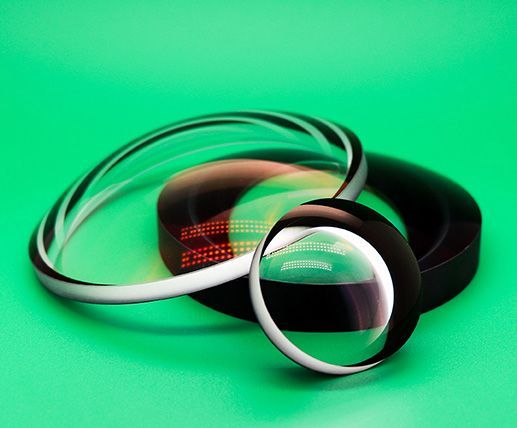
Optical components often need to respond differently to different wavelengths of light. Wavelength Response Coating is a thin film coating designed to control optical transmission, reflection, and spectral response within a selected wavelength range.
These coatings are used in optical filters, lenses, sensors, laser components, and photonics systems.
What Is Wavelength Response Coating?
Wavelength Response Coating is a functional optical coating that changes the way a surface interacts with light at different wavelengths.
It can be designed to provide:
- Wavelength selection
- Transmission control
- Reflection control
- Spectral response adjustment
- Reduced optical loss
Common applications include:
- Optical filters
- Optical lenses
- Optical sensors
- Laser components
- Photonics devices
How Does Wavelength Response Coating Work?
The coating uses carefully controlled thin film layers to produce a specific optical response.
Different materials have different refractive indexes. By combining materials and controlling their thickness, manufacturers can adjust how light is transmitted or reflected across a target wavelength range.
← Longer λWavelength (m)
10310−110−510−910−13
RadioRadioMWMicrowaveIRInfraredVis.VisibleUVUltravioletX-rayX-rayGammaGamma ray
3×1053×1093×10133×10173×1021
Frequency (Hz)Higher f & photon energy →
Band boundaries are approximate
Visible light, magnified400–700 nm
Red · longershorter · Violet
Visible: about 550 nm · 545 THz
BandRadioMicrowaveIRVisibleUVX-rayGamma
RadioMicrowaveIRVisibleUVX-rayGamma
Give feedback
Important factors include:
- Film thickness
- Refractive index
- Layer structure
- Material selection
- Target wavelength
Wavelength Response Coating Materials
Common materials include:
Silicon Dioxide (SiO₂)
Used as a low refractive index material in multilayer optical films.
Titanium Dioxide (TiO₂)
Used as a high refractive index material for wavelength and reflection control.
Tantalum Pentoxide (Ta₂O₅)
Used in precision optical coatings where stable spectral performance is required.
Wavelength Response Coating Process
Precision coatings can be produced using:
- PVD coating
- Magnetron sputtering
- Electron beam evaporation
- Vacuum thin film deposition
Before deposition, substrates are cleaned and prepared to improve coating adhesion and uniformity.
Accurate thickness control is especially important because small changes in layer thickness can affect the final wavelength response.
Applications of Wavelength Response Coating
Optical Filters
Coatings can be designed to transmit selected wavelengths while reducing unwanted light.
Optical Sensors
Wavelength-specific coatings help sensors respond to particular spectral ranges.
Laser Components
Laser optics require controlled transmission and reflection at specific wavelengths.
Photonics Systems
Photonics components use wavelength response coatings for precise light management.
Wavelength Response Coating and Vacuum Coating
Vacuum coating provides controlled conditions for depositing precise multilayer optical films.
SRNC provides vacuum coating technology for optical components and advanced thin film applications.
SRNC vacuum coating technology
For optical coating applications:
SRNC optical coating solutions
Factors Affecting Coating Performance
The final wavelength response depends on:
- Film thickness accuracy
- Material properties
- Layer structure
- Substrate quality
- Deposition conditions
- Target wavelength
Precise coating design and process control help maintain consistent optical performance.
Future Development
Wavelength Response Coating technology is moving toward broader spectral ranges, more precise wavelength control, lower optical loss, and advanced multilayer structures.
These developments will support optical sensing, imaging, lasers, photonics, and optical communication applications.
FAQ
What is Wavelength Response Coating?
It is an optical thin film coating designed to control transmission and reflection at selected wavelengths.
Where is it used?
It is commonly used in optical filters, sensors, lenses, laser components, and photonics systems.
How is it produced?
Common deposition methods include PVD, magnetron sputtering, electron beam evaporation, and vacuum thin film deposition.