

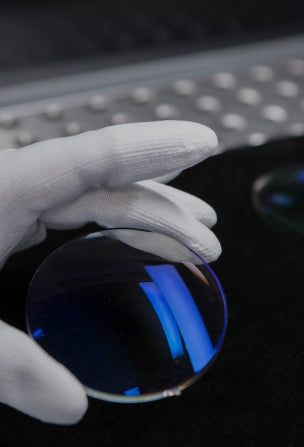
Surface Modification: 8 Advanced Strategies to Upgrade Sapphire Surface Performance
A material can have excellent bulk properties and still need a different surface.
That may sound strange at first, but it makes sense when you look at how modern components are actually used.
The interior of a component may need to provide strength and dimensional stability, while its exterior may need to interact with light, water, oil, chemicals, or another material.
These requirements don’t always point in the same direction.
This is where surface modification becomes useful.
Instead of changing the entire material, engineers can modify the surface to create a more suitable interface. Depending on the application, this may involve changing surface chemistry, roughness, energy, structure, or adding a carefully engineered thin-film coating.
Sapphire is an excellent example.
It already provides outstanding hardness, optical transparency, chemical resistance, and thermal stability. Yet a sapphire component used in an optical, electronic, or industrial system may still require additional surface functions.
Through appropriate surface modification, the component can be adapted to the actual environment in which it will operate.
What Is Surface Modification?
Surface modification is the process of changing the properties or structure of a material’s outer surface without necessarily changing its bulk properties.
The modification may be:
- Physical
- Chemical
- Mechanical
- Thermal
- Plasma-based
- Coating-based
The purpose is to make the surface behave differently from the untreated material.
Depending on the application, engineers may target:
- Hardness
- Roughness
- Adhesion
- Surface energy
- Friction
- Wettability
- Optical response
- Chemical resistance
- Wear resistance
Surface modification therefore acts as a bridge between the material and its operating environment.
Why Modify Only the Surface?
Changing the entire bulk material can be expensive, unnecessary, or technically difficult.
Suppose a component already has excellent bulk strength but needs better resistance to a particular type of surface wear.
Replacing the substrate isn’t necessarily the best solution.
A surface treatment or coating may address the problem directly.
This approach can provide several advantages:
- Preserve the original substrate properties.
- Add a targeted surface function.
- Reduce material consumption.
- Support application-specific performance.
- Enable multifunctional surface designs.
In other words, engineers don’t always need to reinvent the material. Sometimes they simply need to redesign its outermost interface.
8 Important Surface Modification Strategies
1. Hard Surface Coatings
Hard coatings are one of the most common approaches to surface modification.
They can improve resistance to:
- Scratching
- Abrasion
- Mechanical contact
- Surface wear
For sapphire components exposed to repeated handling or mechanical interaction, a carefully engineered hard coating can provide an additional protective layer.
SRNC’s Sapphire Super Hard Coating is designed for applications requiring advanced surface protection and high-performance coating solutions.
2. Optical Surface Modification
For transparent materials, surface properties directly affect light.
Thin-film coatings can modify:
- Reflection
- Transmission
- Absorption
- Spectral response
This makes surface modification important for optical windows, lenses, camera components, filters, and sensors.
A multilayer thin-film structure can be designed to interact with selected wavelengths while preserving the transparency of the substrate.
3. Surface Energy Modification
Surface energy determines how a liquid interacts with a surface.
By changing surface energy, engineers can influence whether water or oil:
- Spreads across the surface
- Forms droplets
- Adheres strongly
- Can be removed easily
This principle is widely used for hydrophobic, oleophobic, and easy-clean surfaces.
4. Chemical Resistance Enhancement
A surface can be modified to provide additional protection against environmental chemicals.
Depending on the coating system, this may help protect against:
- Oils
- Solvents
- Cleaning chemicals
- Moisture
- Industrial contaminants
Chemical resistance should always be validated under the actual exposure conditions.
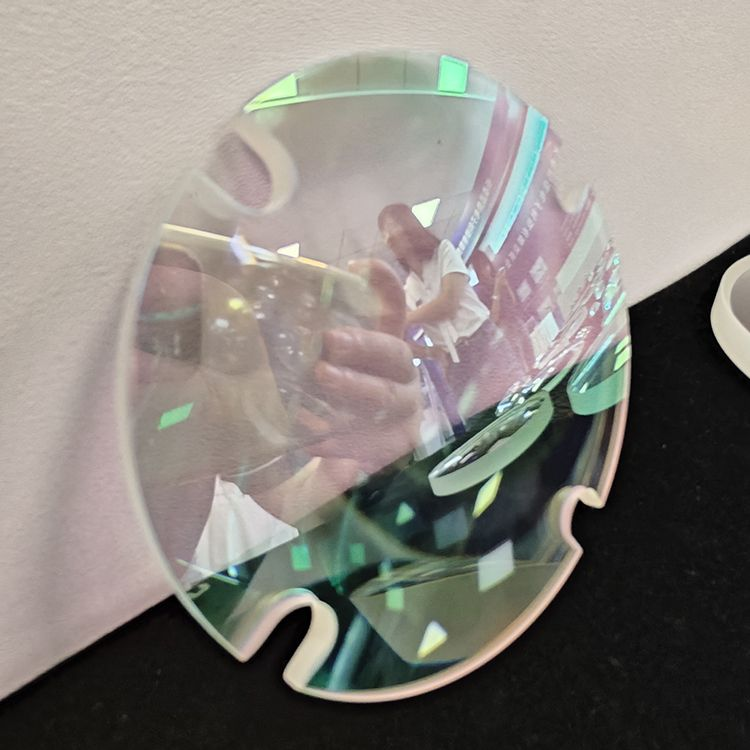
5. Adhesion Improvement
A coating is only useful if it stays attached.
Surface modification can be used to improve the interface between a substrate and a deposited film.
Potential techniques include:
- Plasma treatment
- Ion cleaning
- Surface activation
- Adhesion layers
These processes can help create a more stable coating-substrate interface.
6. Friction Modification
Surface modification can also alter friction and sliding behavior.
This is useful where a component repeatedly contacts another surface.
Depending on the coating and structure, engineers can target:
- Lower friction
- Controlled sliding
- Reduced wear
- Improved contact behavior
7. Surface Roughness Control
Surface texture affects both optical and mechanical behavior.
A modified surface can be engineered to achieve a particular level of roughness or texture.
This can influence:
- Light scattering
- Tactile feel
- Friction
- Liquid behavior
- Adhesion
For consumer products, surface texture can also contribute to the visual identity of a component.
8. Multifunctional Surface Design
Perhaps the most interesting approach is combining multiple functions.
A surface might need to be:
- Hard
- Optically controlled
- Easy to clean
- Water repellent
- Chemically resistant
A multilayer architecture can assign different functions to different layers.
For example:
Substrate → adhesion layer → hard layer → optical layer → functional top layer
The final structure depends on the application and required performance.
Surface Modification Technologies
Surface modification isn’t a single process.
Different technologies produce different results.
Physical Vapor Deposition
PVD deposits thin films under vacuum conditions.
It can be used to create hard, decorative, optical, and functional surfaces.
Magnetron Sputtering
Magnetron sputtering is useful for controlled deposition of metals, oxides, nitrides, and other materials.
It is particularly suitable for thin-film applications where composition and thickness need to be carefully controlled.
Ion-Assisted Processes
Ion assistance can modify film density, adhesion, and microstructure.
This can improve the performance of coatings designed for demanding applications.
Plasma Treatment
Plasma can be used to clean or activate a surface before coating.
This can improve the conditions at the substrate-coating interface.
Surface Modification of Sapphire
Sapphire has a unique combination of properties that makes it useful in demanding environments.
Its characteristics include:
- High hardness
- Optical transparency
- Chemical stability
- Thermal stability
- Dimensional stability
Potential applications include:
- Optical windows
- Sensor covers
- Camera components
- Protective windows
- Precision optical parts
However, the surface may need additional functions depending on its use.
A sapphire window exposed to abrasion may need a hard protective surface.
A camera cover may need optical and easy-clean properties.
An industrial optical window may need chemical and environmental protection.
The modification strategy should therefore be based on the actual application.
Surface Modification for Optical Components
Optical components require careful surface engineering because even small changes can affect light transmission.
For example, a multilayer coating can be designed to reduce reflection at selected wavelengths.
Potential applications include:
- Camera lenses
- Optical filters
- Sapphire windows
- Sensor covers
- Laser optics
- Imaging systems
The coating structure needs to account for wavelength, incident angle, substrate refractive index, and environmental requirements.
Surface Modification for Camera Components
Smartphone camera components provide a good example of multifunctional surface requirements.
The exposed optical surface may encounter:
- Fingerprints
- Oil
- Water
- Dust
- Cleaning
- Scratches
At the same time, the surface must maintain appropriate optical transmission.
SRNC’s Functional Coating for Cell Phone Camera is designed around the specialized coating requirements of smartphone camera components.
The coating strategy can combine optical and surface functionality depending on the component specification.
Surface Modification for Consumer Electronics
Surface engineering is also widely used on consumer electronic products.
Smartphones, wearables, and other devices often require surfaces that feel good, look attractive, and remain durable.
For example, SRNC’s Texture Coating for Cell Phone Back Panel demonstrates how surface modification can be used to develop controlled texture and functional surface characteristics for electronic housings.
Potential surface targets include:
- Texture
- Gloss
- Color
- Scratch resistance
- Chemical resistance
- Tactile feel
- Easy cleaning
Surface Modification vs. Surface Coating
These terms are related but aren’t identical.
| Surface Modification | Surface Coating |
|---|---|
| Broad engineering concept | Specific surface treatment approach |
| May change surface chemistry or structure | Usually adds a separate film |
| Can include plasma treatment | Can use PVD or sputtering |
| Can alter roughness or surface energy | Can add hardness or optical functionality |
| May or may not add material | Adds a coating layer |
A coating process can therefore be one form of surface modification.
How Surface Modification Is Evaluated
The testing method depends on the intended surface function.
| Property | Typical Evaluation |
|---|---|
| Hardness | Hardness testing |
| Scratch resistance | Scratch testing |
| Wear | Abrasion testing |
| Adhesion | Adhesion testing |
| Wettability | Contact-angle measurement |
| Optical response | Transmission/reflectance testing |
| Chemical resistance | Chemical exposure testing |
| Surface roughness | Roughness measurement |
Testing under realistic conditions is important.
A surface that performs well in a laboratory test may behave differently after prolonged exposure to heat, humidity, cleaning, or mechanical contact.
How to Choose a Surface Modification Process
Start by defining the surface problem.
What needs to change?
Is the issue:
- Scratching?
- Reflection?
- Water?
- Oil?
- Chemical exposure?
- Friction?
- Adhesion?
What must remain unchanged?
For transparent sapphire components, optical clarity may need to remain high.
For precision parts, dimensional accuracy may be critical.
What environment will the surface face?
Consider:
- Temperature
- Humidity
- Chemicals
- Mechanical contact
- Cleaning
- UV exposure
What production volume is required?
A laboratory process may not automatically be suitable for mass production.
The coating technology should therefore be selected with scalability in mind.
Frequently Asked Questions
What is surface modification?
Surface modification is the process of changing a material’s surface properties or structure to achieve specific technical performance while preserving most of the bulk material’s characteristics.
Is coating a type of surface modification?
Yes. Applying a functional or protective thin film is one of the most widely used approaches to surface modification.
Can sapphire be surface modified?
Yes. Sapphire can undergo various surface treatments and coating processes to enhance or tailor properties such as wear resistance, optical response, adhesion, and surface energy.
Why is surface modification important for sapphire?
Sapphire already has excellent bulk properties, but different applications may require additional surface functions. Surface modification allows these requirements to be addressed without replacing the substrate.
Can surface modification improve scratch resistance?
Yes. Hard surface coatings can provide additional resistance to scratching and abrasion when properly designed and bonded to the substrate.
Can surface modification change optical performance?
Yes. Thin-film structures can modify reflection, transmission, absorption, and wavelength-dependent optical behavior.
What technologies are used for surface modification?
Technologies include PVD, magnetron sputtering, ion-assisted deposition, plasma treatment, surface activation, and other coating or treatment processes.
Can one surface modification provide multiple functions?
Yes. Multilayer systems can combine different functions, such as hardness, optical control, chemical resistance, and easy cleaning.
How is surface modification performance tested?
Testing can include hardness, scratch, abrasion, adhesion, contact angle, optical transmission, reflectance, chemical resistance, and environmental aging tests.
Conclusion
Surface modification gives manufacturers a practical way to tailor the outer surface of a material without fundamentally changing its bulk structure.
For sapphire, this is particularly valuable. The substrate already provides exceptional hardness, transparency, chemical stability, and thermal performance. Advanced surface modification can then add the specific characteristics required by the final application.
Hard coatings can improve surface durability. Optical thin films can control light. Functional top layers can improve water and oil repellency. Interface treatments can improve adhesion. Multilayer architectures can bring several of these functions together.
For demanding sapphire applications, SRNC’s Sapphire Super Hard Coating provides an application-focused solution for advanced surface protection.
For smartphone camera components, Functional Coating for Cell Phone Camera demonstrates how specialized coatings can address optical and surface requirements in a compact component.
For consumer electronic housings, Texture Coating for Cell Phone Back Panel shows another practical direction for engineering surface appearance, texture, and functional performance.
Ultimately, successful surface modification starts with understanding the actual surface problem. Once the required properties are clearly defined, the substrate, coating material, deposition technology, interface treatment, and testing method can be engineered as one complete system.