

Scratch Resistant Coating: Engineering Durable Surfaces for Electronics
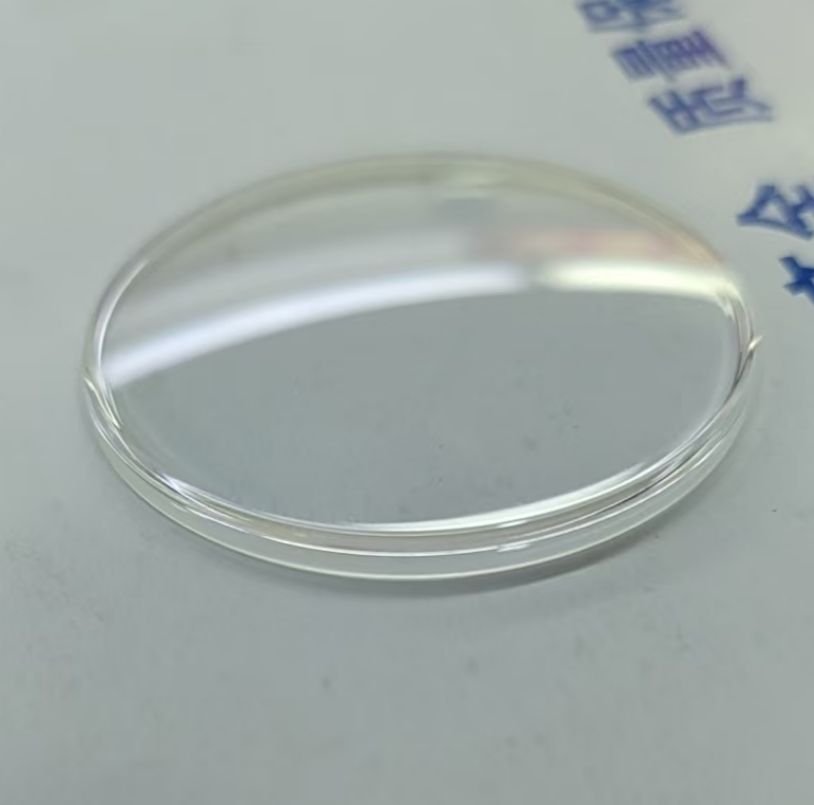
Surface scratches may appear small, but they can have a significant impact on the perceived and functional quality of a finished product.
Consumer electronics are handled repeatedly throughout their service life. Smartphone components, camera parts, protective covers, decorative panels, and other precision surfaces may encounter keys, dust particles, cleaning cloths, packaging materials, tools, and other hard objects.
For manufacturers, preventing visible surface damage is therefore more than an aesthetic concern. Scratches can affect surface appearance, contribute to wear, expose the underlying substrate, and in some applications interfere with optical or functional performance.
A scratch resistant coating provides an engineered surface layer designed to reduce susceptibility to mechanical damage while preserving the characteristics required by the final product.
The challenge is to develop a coating that does more than simply achieve high hardness. Effective scratch resistance depends on the interaction between the coating, substrate, interface, surface condition, and actual contact environment.
What Is a Scratch Resistant Coating?
A scratch resistant coating is a thin protective layer engineered to improve a component’s ability to withstand localized mechanical contact without developing unacceptable surface damage.
Depending on the application, the coating may provide a combination of:
- Increased surface hardness
- Improved scratch resistance
- Better abrasion resistance
- Enhanced wear durability
- Strong adhesion
- Chemical resistance
- Environmental stability
- Appearance retention
The coating can be applied to different substrate types depending on the technology and application requirements.
Glass, sapphire-related materials, metals, ceramics, and engineered plastics can all present different coating challenges. The appropriate coating structure and deposition parameters must therefore be selected according to the substrate rather than using a one-size-fits-all approach.
Scratch Resistance Is Not the Same as Hardness
Hardness is an important factor, but it is not the complete definition of scratch resistance.
A scratch occurs when a contacting material generates sufficient stress to deform, fracture, or remove material from a surface. The behavior depends on the relative properties of the coating and the object making contact.
Several factors can influence the result:
- Coating hardness
- Coating thickness
- Substrate hardness
- Film adhesion
- Coating structure
- Surface roughness
- Contact pressure
- Counterface material
- Particle contamination
- Sliding speed
- Repeated contact
A coating can therefore have high hardness but still exhibit poor practical scratch resistance if its adhesion or structural integrity is inadequate.
For this reason, scratch performance should be evaluated as a complete coating system.
How a Scratch Resistant Coating Works
The basic purpose of a scratch-resistant surface is to reduce the likelihood that an external object can permanently deform or remove material from the exposed surface.
A properly engineered hard film can create a stronger surface interface between the environment and the underlying substrate.
When a hard particle or object contacts the surface, the coating helps distribute and withstand the applied stress. Its structure can reduce plastic deformation, surface gouging, and other forms of localized damage.
However, the coating must also remain attached to the substrate.
If the interface is weak, mechanical stress can cause cracking or delamination even when the coating itself is hard. This is why coating architecture and adhesion are just as important as the material’s intrinsic hardness.
The Role of Coating Architecture
Modern scratch resistant coating systems may use carefully engineered multilayer structures.
Instead of relying on a single film, different layers can perform complementary functions.
For example, a coating architecture may include layers designed to support:
Interface adhesion → mechanical hardness → wear resistance → surface functionality
The exact structure depends on the application.
A hard outer layer may provide resistance to scratches, while an underlying layer can help distribute stress or improve adhesion. Additional functional layers may be incorporated when the surface also requires optical, decorative, or environmental characteristics.
This layered approach allows manufacturers to balance properties that are difficult to optimize simultaneously in a single material.
Substrate Selection and Surface Preparation
The substrate remains a fundamental part of scratch resistance.
Even an advanced coating cannot completely compensate for an unsuitable or poorly prepared substrate.
Before deposition, manufacturers need to consider:
Substrate Hardness
A softer substrate can deform under load, potentially affecting the behavior of the coating above it.
Surface Roughness
An uneven surface can influence coating uniformity and local stress distribution.
Contamination
Oil, dust, residues, and other contaminants can interfere with film adhesion.
Geometry
Curved, recessed, or three-dimensional components may require specialized fixture and deposition strategies.
Thermal Characteristics
Some materials are sensitive to processing temperature and require carefully controlled deposition conditions.
Proper cleaning and surface preparation are therefore critical steps in achieving consistent scratch-resistant performance.
Vacuum Deposition for Scratch Resistant Coatings
Vacuum deposition is widely used for precision thin-film applications because it allows coating parameters to be carefully controlled.
Technologies such as magnetron sputtering and electron-beam evaporation can be used to create thin protective films. Depending on the application, multilayer structures and additional process techniques can be incorporated.
Important process variables include:
- Deposition rate
- Film thickness
- Vacuum conditions
- Substrate temperature
- Surface preparation
- Layer sequence
- Deposition energy
- Substrate movement
Controlling these parameters helps establish a repeatable relationship between the coating structure and final performance.
For high-volume manufacturing, repeatability is particularly important. A scratch resistant coating must perform consistently across production batches rather than only on selected laboratory samples.
Scratch Resistance for Glass Components
Glass is widely used in electronic and optical products, but its surface can still be vulnerable to mechanical damage under real-world conditions.
A scratch resistant coating can provide an additional protective layer for suitable glass components.
Applications may include:
- Protective covers
- Electronic panels
- Optical components
- Sensor windows
- Camera-related components
- Precision glass parts
The coating must be compatible with the glass surface and, where optical performance matters, carefully engineered so that protection does not compromise required optical characteristics.
For optical applications, coating thickness and uniformity can be especially important.
Scratch Resistant Coating for Sapphire
Sapphire is recognized for its high hardness and is used in demanding applications where surface durability is important.
Even when the substrate itself offers strong mechanical performance, manufacturers may require engineered surface treatments to achieve additional functional or application-specific characteristics.
A sapphire-oriented coating system should take into account:
- Substrate surface condition
- Film adhesion
- Coating structure
- Mechanical stress
- Optical requirements
- Environmental exposure
- Production uniformity
SRNC’s Sapphire Super Hard Coating is designed around advanced high-hardness surface protection requirements and is relevant to applications where durability and surface performance are key considerations.
Scratch Resistant Coating for Smartphone Components
Smartphones are a particularly demanding application because their surfaces combine premium appearance with frequent physical contact.
A typical device may be exposed to:
- Pocket contents
- Dust particles
- Finger contact
- Cleaning cloths
- Packaging materials
- Accidental contact with hard objects
- Repeated assembly and handling
For smartphone components, scratch resistance can help preserve the appearance of the finished device while reducing surface degradation during use.
Different components may require different coating strategies.
For example, a camera-related component may prioritize optical and functional performance, while a back-panel component may place greater emphasis on appearance, texture, and wear resistance.
SRNC also provides Texture Coating for Cell Phone Back Panel for applications where surface texture and appearance are important parts of the component design.
Abrasion Resistance and Long-Term Durability
A scratch is generally associated with a localized event. Abrasion is different because it involves repeated mechanical interaction.
A surface may survive an individual scratch test but gradually deteriorate after many rubbing cycles.
This distinction is important when selecting a scratch resistant coating for products that are frequently cleaned or handled.
Long-term surface durability may depend on:
- Repeated rubbing
- Contact pressure
- Cleaning frequency
- Surface contamination
- Counterface material
- Coating adhesion
- Film structure
Consequently, manufacturers should consider both scratch and abrasion performance when developing a durable surface.
Chemical Exposure Can Affect Scratch Performance
Surface degradation is not always purely mechanical.
Cleaning agents, perspiration, oils, cosmetics, humidity, and other environmental factors can interact with the coating and substrate.
If chemical exposure weakens the coating or its interface, the surface may become more susceptible to subsequent mechanical damage.
This is why a robust scratch resistant coating should often be evaluated under combined mechanical and environmental conditions.
Relevant testing may include:
- Chemical resistance
- Humidity exposure
- Salt spray
- Temperature and humidity cycling
- Cleaning-agent exposure
- Repeated abrasion
The appropriate test program should reflect the actual environment of the finished product.
Testing Scratch Resistant Coating Performance
Scratch performance needs measurable testing.
A manufacturer may use several complementary methods to understand coating behavior.
Scratch Testing
Controlled scratching can be used to evaluate resistance to localized mechanical damage.
Abrasion Testing
Repeated rubbing can help determine whether the coating maintains its protective properties over time.
Hardness Testing
Hardness measurements provide useful information about resistance to deformation, although they should not be treated as a complete substitute for application-specific scratch testing.
Adhesion Testing
Adhesion tests help determine whether the coating remains attached to the substrate after processing and mechanical stress.
Environmental Testing
Humidity, temperature, salt spray, and chemical testing can help identify conditions that may weaken the coating.
Visual Inspection
Changes in gloss, haze, color, texture, or visible surface defects may also be important quality indicators.
For optical components, additional optical measurements may be required before and after durability testing.
Coating Uniformity and Production Quality
A scratch resistant coating must be consistent across the entire component.
Variations in film thickness or coating structure can produce variations in mechanical performance. For complex components, this can become a significant manufacturing challenge.
Uniformity is influenced by:
- Chamber configuration
- Fixture design
- Substrate positioning
- Component geometry
- Deposition source
- Substrate movement
- Process parameters
- Cleaning procedures
Production control is therefore essential.
A reliable coating manufacturer needs to manage not only the chemistry and physics of the film but also the repeatability of the manufacturing process.
Developing a Scratch Resistant Coating for Mass Production
Coating development should ideally begin with a clear product specification.
The development process can follow a structured sequence:
Application requirements → substrate evaluation → surface preparation → coating design → deposition → testing → optimization → pilot production → mass production
At the beginning, manufacturers should define what constitutes acceptable surface damage.
For example, a specification may need to distinguish between microscopic marks that are functionally acceptable and visible scratches that would cause a product to fail cosmetic inspection.
Once acceptance criteria are established, coating parameters and testing methods can be optimized around measurable objectives.
This makes development more efficient and helps prevent disagreements between coating suppliers and component manufacturers later in the production process.
Choosing the Right Scratch Resistant Coating Supplier
For OEM and high-volume applications, supplier capability is an important part of coating selection.
Manufacturers should look beyond a supplier’s coating name and evaluate its engineering process.
Key questions include:
- Can the supplier work with the required substrate?
- Does it have suitable vacuum deposition equipment?
- Can coating thickness and uniformity be controlled?
- How are surface preparation and cleaning managed?
- What scratch and abrasion tests are available?
- Can adhesion be tested?
- Can environmental durability be evaluated?
- Can coating structures be customized?
- Can the supplier support prototype development?
- Can the process be transferred reliably to mass production?
The goal is to find a partner capable of controlling the complete surface treatment process.
Cost and Value of Scratch Resistant Coating
The lowest coating price is not necessarily the lowest-cost solution.
A coating that fails prematurely can generate:
- Increased rejection rates
- Rework
- Customer complaints
- Warranty costs
- Production interruptions
- Appearance-related quality issues
- Additional inspection requirements
A more reliable coating can therefore create value by reducing downstream quality risks.
Manufacturers should evaluate coating economics across the complete production lifecycle, including material cost, processing efficiency, testing, yield, durability, and product performance.
Scratch Resistance as Part of a Larger Surface Strategy
Scratch resistance is often only one requirement among many.
A modern electronic component may need a surface that combines:
Scratch resistance + wear protection + chemical resistance + adhesion + appearance + environmental stability
This is particularly relevant for premium consumer products where the surface serves both a functional and visual role.
A coating development program should therefore identify the complete set of performance requirements before selecting the final coating architecture.
Conclusion
A well-designed scratch resistant coating can significantly improve the durability and appearance retention of electronic, optical, and precision components.
However, scratch resistance cannot be reduced to hardness alone. The final result depends on the interaction between the coating, substrate, interface, surface preparation, coating architecture, deposition process, and actual operating environment.
Vacuum deposition technologies provide manufacturers with precise control over thin-film structures, while multilayer architectures can help balance hardness, adhesion, wear resistance, and other functional requirements.
For manufacturers, the most reliable approach is to treat scratch resistance as a complete surface-engineering challenge—from substrate preparation and coating development through testing, process optimization, and mass-production control.
Explore SRNC’s Sapphire Super Hard Coating for advanced high-hardness surface protection, or learn more about SRNC’s broader Hard Coating technology and applications.