

PVD vs CVD: Understanding the Differences Between Physical and Chemical Vapor Deposition Coatings
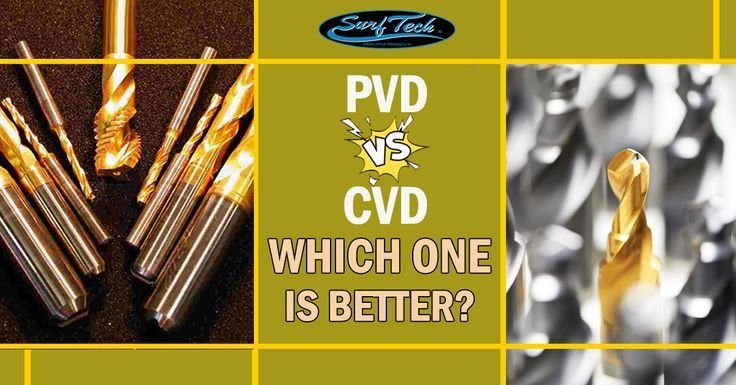
Surface coating technologies play an important role in modern manufacturing by improving component performance, durability, and functionality.
Among the most widely used advanced coating methods are Physical Vapor Deposition (PVD) and Chemical Vapor Deposition (CVD).
Both technologies create thin protective layers on component surfaces, but they differ significantly in deposition methods, processing conditions, coating characteristics, and application areas.
Understanding the differences between PVD vs CVD helps manufacturers select the most suitable coating technology for their specific requirements.
What Is PVD Coating?
PVD (Physical Vapor Deposition) is an advanced coating process that deposits a thin material layer onto a component surface through a physical vaporization process.
During PVD coating, solid coating materials are converted into vapor particles inside a controlled vacuum environment. These particles then condense onto the surface of the customer-supplied component, forming a thin and durable coating layer.
Common PVD coating materials include:
- Titanium Nitride (TiN)
- Titanium Carbon Nitride (TiCN)
- Chromium Nitride (CrN)
- Aluminum Titanium Nitride (AlTiN)
PVD coatings are widely used where high hardness, wear resistance, and surface performance are required.
What Is CVD Coating?
CVD (Chemical Vapor Deposition) is a coating process where chemical reactions between gaseous materials create a solid coating layer on the component surface.
Unlike PVD, CVD uses chemical reactions at elevated temperatures to form the coating.
CVD coatings are commonly used in applications requiring:
- High temperature resistance
- Excellent wear protection
- Strong coating adhesion
- Complex surface coverage
CVD technology is widely used in industries such as semiconductor manufacturing, tooling, and advanced industrial applications.
PVD vs CVD: Main Differences
| Feature | PVD Coating | CVD Coating |
|---|---|---|
| Deposition method | Physical vapor process | Chemical reaction process |
| Processing temperature | Lower temperature | Higher temperature |
| Coating thickness | Generally thinner | Generally thicker |
| Surface appearance | Smooth decorative finish | Functional industrial finish |
| Substrate impact | Suitable for temperature-sensitive materials | Requires heat-resistant materials |
| Common applications | Tools, electronics, decorative parts | Industrial tools, semiconductor applications |
PVD vs CVD: Temperature Difference
One of the most important differences between PVD and CVD is processing temperature.
PVD Coating Temperature
PVD typically operates at lower temperatures compared with CVD.
Advantages:
- Less thermal impact on components
- Suitable for precision parts
- Suitable for decorative applications
- Compatible with more substrate materials
This makes PVD a preferred choice for many electronic, optical, and precision components.
CVD Coating Temperature
CVD requires higher temperatures because chemical reactions are needed to create the coating layer.
Advantages:
- Excellent coating adhesion
- Strong surface coverage
- Suitable for extreme industrial conditions
However, higher temperatures may limit the types of materials that can be coated.
PVD vs CVD: Coating Performance Comparison
Hardness and Wear Resistance
Both PVD and CVD coatings can provide excellent wear resistance.
CVD coatings often provide strong protection in high-temperature industrial environments.
PVD coatings provide:
- High hardness
- Low friction
- Excellent surface finish
They are commonly used for precision tools and components requiring controlled surface properties.
Coating Thickness
CVD generally produces thicker coating layers.
This can be beneficial for heavy-duty industrial applications.
PVD produces thinner coatings, making it suitable for applications where dimensional accuracy and surface appearance are important.
Surface Appearance
PVD coatings are widely used for decorative and premium surface finishes.
Applications include:
- Electronic components
- Decorative metal parts
- Consumer products
CVD coatings are generally selected for functional performance rather than appearance.
PVD vs CVD Applications
PVD Coating Applications
PVD is commonly used for:
- Cutting tools
- Precision components
- Electronic parts
- Decorative metal surfaces
- Wear-resistant applications
- Optical-related components
Advantages:
- Low processing temperature
- Excellent appearance
- Good hardness
- Precision coating control
CVD Coating Applications
CVD is commonly used for:
- High-performance cutting tools
- Semiconductor applications
- Industrial components
- High-temperature environments
Advantages:
- Excellent adhesion
- Thick coating capability
- Strong environmental resistance
Which Coating Technology Is Better: PVD or CVD?
There is no universal answer to whether PVD or CVD is better.
The correct choice depends on:
- Component material
- Operating environment
- Required coating properties
- Temperature limitations
- Surface appearance requirements
- Production specifications
For precision components, electronics, and decorative applications, PVD is often preferred because of its lower processing temperature and excellent surface quality.
For extreme industrial environments requiring thick protective layers, CVD may be more suitable.
PVD Coating Processing for Customer-Supplied Components
At SRNC, we specialize in advanced surface coating processing for customer-supplied components.
Our role is not manufacturing finished products. Instead, customers provide their own components, and SRNC applies customized coating solutions designed to improve:
- Surface durability
- Wear resistance
- Appearance
- Functional performance
PVD coating processing can support applications including:
- Precision metal components
- Electronic components
- Decorative parts
- Industrial components
- Functional surfaces
By focusing on coating technology, SRNC helps customers achieve consistent surface performance while maintaining the original design requirements of their components.
Future Development of PVD and CVD Technologies
As industries demand higher performance materials, both PVD and CVD technologies continue to evolve.
Future coating development focuses on:
- Higher wear resistance
- Improved environmental stability
- Multifunctional coatings
- Better process control
- Advanced thin-film structures
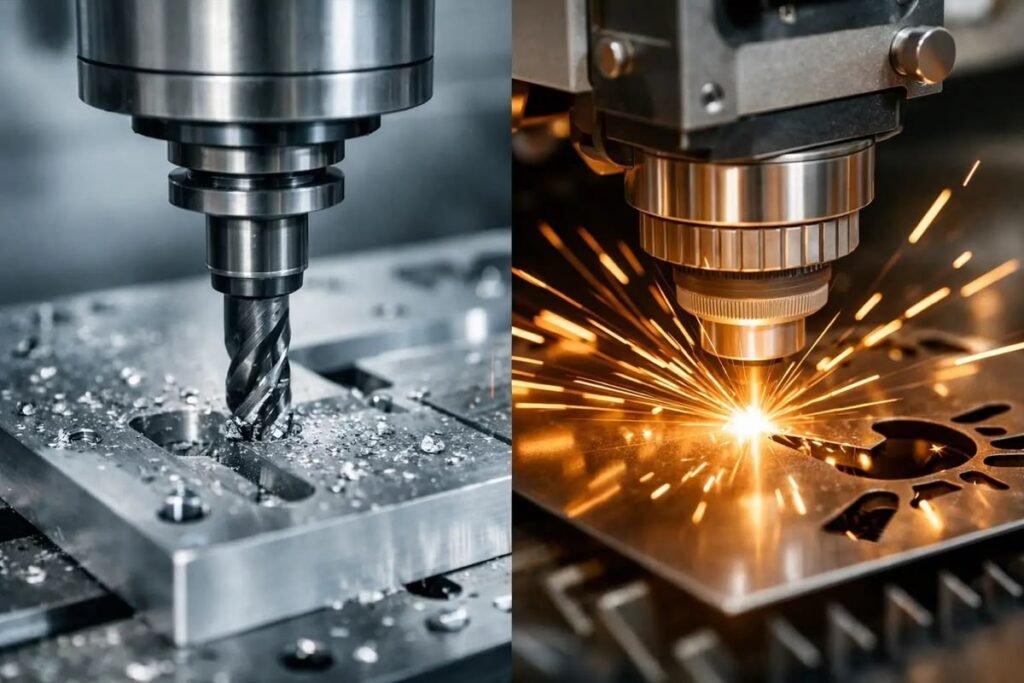
These technologies will continue supporting industries including electronics, precision manufacturing, optics, tooling, and industrial engineering.
Conclusion
PVD vs CVD represents two important vapor deposition coating technologies with different advantages and applications.
PVD provides excellent surface performance, lower processing temperatures, and high-quality finishes, making it suitable for precision components, electronics, and decorative applications.
CVD provides strong adhesion, thicker coatings, and excellent high-temperature performance for demanding industrial applications.
Selecting the right coating technology depends on the specific requirements of the component and its operating environment.
For companies seeking professional coating processing services, SRNC provides customized surface coating solutions based on customer-supplied components and application requirements.