

Protective Hard Coating: Advanced Surface Protection for Durable Components
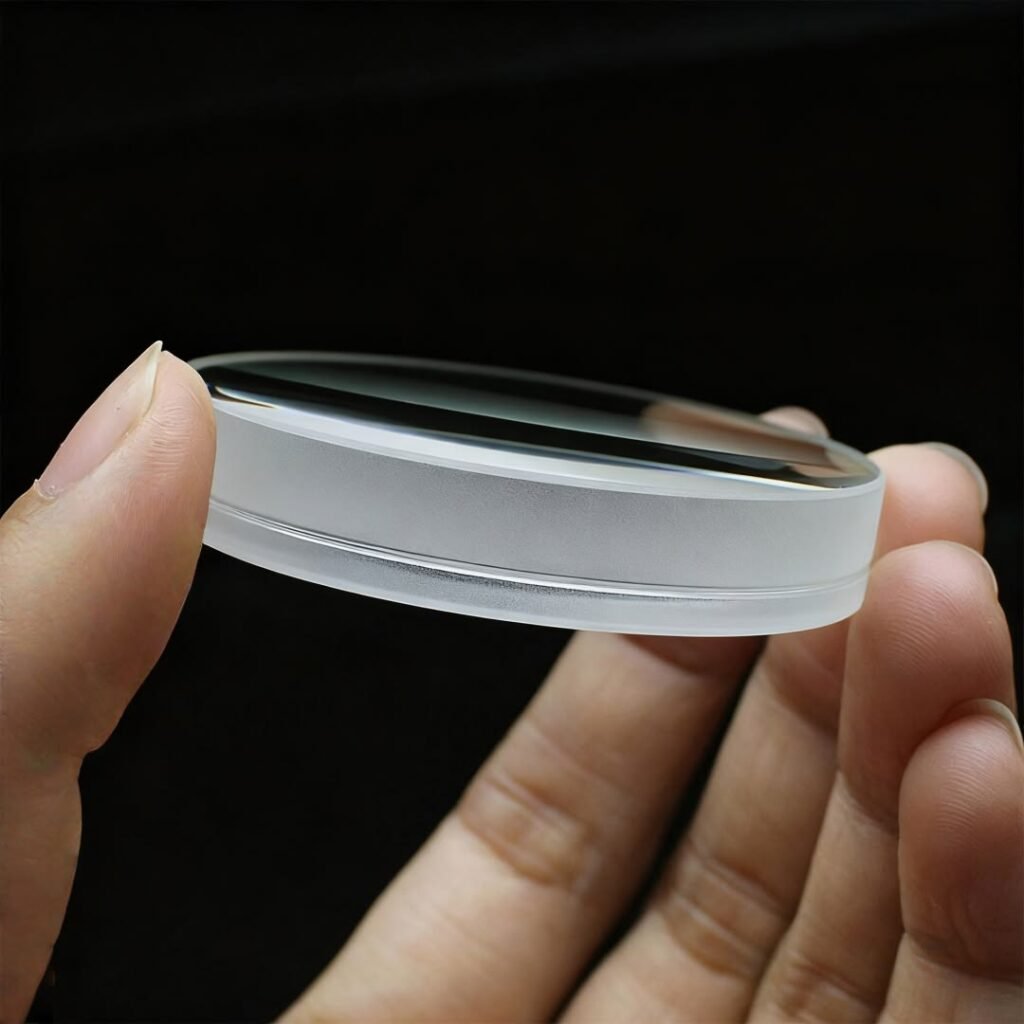
Modern electronic and precision components are expected to maintain their appearance and performance throughout increasingly demanding service conditions.
Surfaces can experience repeated handling, friction, abrasion, cleaning, impact, moisture, chemicals, and contact with other materials. Without appropriate protection, even a carefully engineered substrate can develop scratches, wear marks, discoloration, or other forms of surface degradation.
This is where protective hard coating technology becomes valuable.
A protective hard coating creates an engineered surface layer designed to improve resistance to mechanical and environmental stresses. Rather than changing the entire substrate, manufacturers can use a thin coating to introduce specific surface properties while retaining the characteristics of the underlying material.
For consumer electronics, optical components, metal parts, decorative panels, and other precision products, this approach can provide an effective balance between durability, appearance, and manufacturing efficiency.
What Is Protective Hard Coating?
Protective hard coating is a thin-film surface treatment designed primarily to improve the durability of a component’s exposed surface.
The coating can be engineered to address one or several performance requirements, including:
- Scratch resistance
- Abrasion resistance
- Surface hardness
- Wear protection
- Chemical resistance
- Environmental stability
- Improved surface durability
- Adhesion between functional layers
- Appearance retention
The final coating structure depends on the substrate and application.
For example, the requirements for a smartphone component may differ significantly from those for an industrial metal component. An optical surface may require careful control of optical characteristics, while a decorative panel may place greater emphasis on appearance, texture, and resistance to everyday handling.
Consequently, protective coating development should begin with the intended application rather than with a generic coating specification.
Protective Coating Is More Than Hardness
One of the most common misconceptions in surface engineering is that a high hardness value automatically means excellent protection.
In reality, long-term surface durability depends on multiple interacting properties.
A coating may be extremely hard but still perform poorly if it has weak adhesion to the substrate. Similarly, a coating with good scratch resistance may not withstand repeated abrasion, chemical exposure, or humidity.
A practical protective hard coating should therefore be considered as a system involving:
Hardness + adhesion + wear resistance + environmental stability + substrate compatibility
These properties must be optimized together.
The coating architecture, deposition parameters, surface preparation, and substrate condition can all influence the final result.
Scratch Resistance for Everyday Use
Scratch resistance is a major reason manufacturers adopt hard protective coatings.
Consumer products are constantly exposed to mechanical contact. A device may be placed on a desk, carried in a pocket, cleaned with a cloth, or placed against other objects.
Small particles can also create localized pressure points during handling. Repeated contact can gradually create visible marks on an unprotected surface.
A protective hard coating provides a harder and more durable surface that can reduce susceptibility to these forms of mechanical damage.
However, scratch resistance depends on more than the hardness of the deposited film. The substrate, coating thickness, film structure, adhesion, surface roughness, and contact conditions all contribute to the final performance.
For this reason, application-specific scratch testing is an important part of coating development.
Wear Protection for Repeated Contact
Scratch damage is often a single-event problem, while wear develops through repeated mechanical interaction.
Components used in consumer electronics, industrial equipment, and precision products may experience thousands or millions of contact cycles during their service life.
Repeated rubbing can gradually remove material from the surface, change its appearance, or expose the underlying substrate.
A well-engineered protective hard coating can reduce the rate of surface degradation by creating a more wear-resistant interface.
Typical wear-related considerations include:
- Frequency of contact
- Contact pressure
- Counterpart material
- Surface roughness
- Cleaning method
- Particle contamination
- Coating structure
- Substrate hardness
A realistic durability program should reproduce the conditions expected during actual product use whenever possible.
The Importance of Substrate Compatibility
A coating does not operate independently from the material beneath it.
Glass, sapphire, stainless steel, aluminum, ceramic, and engineering plastics have different physical and chemical properties. Their surface energy, thermal behavior, hardness, roughness, and sensitivity to processing conditions can vary significantly.
The same coating approach may therefore produce different results on different substrates.
Before selecting a protective coating, manufacturers should consider:
Substrate Material
The coating system needs to be compatible with the physical and chemical characteristics of the substrate.
Surface Condition
Contamination, residues, particles, and inappropriate surface preparation can reduce coating adhesion and consistency.
Geometry
Flat components and curved or three-dimensional components may require different fixture and deposition strategies.
Thermal Sensitivity
Some substrates cannot tolerate excessive process temperatures, making process control especially important.
Final Application
The expected mechanical and environmental stresses should determine the coating performance priorities.
Understanding these relationships helps manufacturers develop a coating system that performs reliably rather than simply selecting a coating based on its nominal material properties.
Vacuum Deposition for Protective Hard Coatings
Vacuum deposition is an important technology for producing controlled thin protective films.
Techniques such as magnetron sputtering and electron-beam evaporation can deposit carefully controlled layers onto suitable substrates. Depending on the required performance, coating systems can incorporate multiple layers with different functions.
Vacuum coating can provide several advantages:
- Controlled film thickness
- Repeatable deposition conditions
- Uniform thin-film structures
- Flexible coating architectures
- Compatibility with functional coatings
- Suitability for precision components
Process control is essential. Deposition parameters can influence film density, adhesion, thickness, surface quality, and overall performance.
The coating process should therefore be developed around the complete component rather than treating the deposition stage as an isolated manufacturing step.
Multilayer Protective Hard Coating Structures
Advanced protective coatings often use multilayer structures rather than a single layer.
Different layers can perform different roles within the coating system.
For example, a multilayer structure may be engineered to combine:
- Interface or adhesion support
- Mechanical hardness
- Wear resistance
- Environmental protection
- Surface functionality
- Optical or decorative performance
This architecture allows coating engineers to balance properties that may otherwise be difficult to achieve simultaneously.
A very hard outer layer, for example, may require a carefully engineered interface to maintain adhesion during mechanical stress. Similarly, a functional surface may need a protective layer underneath it to improve long-term durability.
The result is a coating system designed around the complete performance requirement.
Chemical Resistance and Surface Protection
Mechanical damage is only one source of surface degradation.
Consumer products and industrial components may encounter oils, cleaning chemicals, perspiration, moisture, salt, cosmetics, or other substances.
Chemical exposure can change the appearance or physical characteristics of an inadequately protected surface. In some cases, chemical attack can also contribute to coating failure or degradation at the substrate interface.
Protective hard coating systems can therefore be engineered with chemical and environmental resistance in mind.
Potential evaluation conditions include:
- Chemical exposure
- Humidity
- Salt spray
- Temperature and humidity cycling
- Cleaning agents
- Repeated surface contact
- Long-term environmental exposure
The appropriate test conditions depend on the application and should be defined according to the expected service environment.
Maintaining Appearance During Product Use
For many consumer products, surface protection is closely connected to appearance.
A component may need to retain a specific color, texture, gloss level, metallic appearance, or surface finish throughout its service life.
This creates an additional challenge: the protective layer must improve durability without undermining the intended visual design.
For decorative electronics, manufacturers may need to balance:
Appearance + texture + hardness + wear resistance + adhesion
Vacuum coating technology can support controlled surface finishes while allowing manufacturers to engineer additional protective characteristics.
SRNC’s Texture Coating for Cell Phone Back Panel is relevant when surface texture and appearance are important alongside functional surface performance.
Protective Hard Coating for Consumer Electronics
Consumer electronics provide a clear example of why surface protection matters.
Smartphones, wearable devices, cameras, and other products are exposed to continuous handling. Their external surfaces must withstand daily interaction while maintaining a premium appearance.
Potential applications for protective hard coatings include:
- Smartphone components
- Camera-related components
- Electronic housings
- Decorative panels
- Protective covers
- Sensor components
- Precision components
- Other high-contact surfaces
The coating requirements differ according to the component.
A camera-related component may require optical compatibility, while a decorative back panel may prioritize texture and appearance retention. A metal housing may require stronger protection against wear and environmental exposure.
This application-specific approach is essential for successful coating development.
Testing Protective Hard Coating Performance
Testing provides the evidence needed to determine whether a coating meets its intended purpose.
A comprehensive evaluation may include several categories.
Hardness Testing
Hardness testing helps assess the resistance of the coating surface to deformation.
Abrasion Testing
Abrasion testing evaluates how the coating behaves under repeated mechanical contact.
Scratch Testing
Scratch testing helps determine the resistance of the surface to localized mechanical damage.
Adhesion Testing
Adhesion evaluation verifies whether the coating remains securely bonded to the substrate.
Environmental Testing
Humidity, temperature, salt spray, and other environmental tests can reveal weaknesses that may not appear during basic mechanical testing.
Chemical Testing
Application-specific chemicals and cleaning agents can be used to evaluate surface stability.
Testing should be linked to actual product requirements. A coating specification is most meaningful when the test method reflects the conditions the component will experience during production, assembly, transportation, and use.
Process Control Determines Production Consistency
A coating that performs well on one prototype is not automatically ready for mass production.
Manufacturers need consistent results across:
- Different production batches
- Different component positions
- Different coating cycles
- Different substrate lots
- Different production volumes
This requires controlled cleaning, loading, deposition, inspection, and testing processes.
Coating thickness and uniformity must be managed carefully, while process parameters should remain within defined operating windows.
Production consistency is particularly important for OEM and high-volume electronics manufacturing because small variations can become significant when multiplied across large quantities.
From Coating Development to Mass Production
A structured development process helps reduce production risk.
A typical workflow can include:
1. Define requirements
Identify the substrate, application, expected wear conditions, environmental exposure, appearance requirements, and quality criteria.
2. Evaluate the substrate
Determine the surface condition, geometry, thermal sensitivity, and compatibility requirements.
3. Develop the coating structure
Select an appropriate thin-film architecture based on the desired combination of hardness, adhesion, wear, and environmental performance.
4. Produce samples
Apply the coating under controlled conditions and evaluate the initial performance.
5. Conduct durability testing
Use mechanical, chemical, environmental, and application-specific testing to identify weaknesses.
6. Optimize the process
Adjust deposition parameters, layer structures, surface preparation, or other relevant variables.
7. Validate pilot production
Confirm that the optimized process remains stable when production conditions and quantities change.
8. Establish mass-production controls
Define inspection methods, process limits, testing requirements, and quality-control procedures.
This approach turns coating development into a repeatable manufacturing process.
How to Choose a Protective Hard Coating Manufacturer
When sourcing a protective coating, buyers should evaluate the supplier’s engineering and manufacturing capabilities rather than focusing only on price.
Important questions include:
- What coating technologies does the manufacturer operate?
- Can the supplier work with the required substrate?
- Can it develop customized coating structures?
- How is surface preparation controlled?
- How is film thickness monitored?
- What mechanical testing capabilities are available?
- Can environmental durability be evaluated?
- Can the supplier support sample development and production scale-up?
- How is batch-to-batch consistency maintained?
A capable coating manufacturer should be able to connect material selection, deposition technology, testing, and production control into one coherent process.
For companies developing advanced electronic components, this can reduce the engineering risk associated with introducing a new surface treatment.
Protective Hard Coating as a Surface Engineering Strategy
The strongest coating solutions begin with the component’s actual failure modes.
If scratches are the primary concern, hardness and scratch resistance may receive greater emphasis. If repeated friction is expected, abrasion resistance becomes more important. If the component is exposed to moisture or chemicals, environmental stability must also be considered.
In many products, several of these conditions occur simultaneously.
That means the ideal protective hard coating is rarely defined by one specification. Instead, it is the result of balancing multiple properties through material selection, surface preparation, deposition technology, coating architecture, and testing.
This systems-level approach is what turns a thin protective film into a reliable manufacturing solution.
Conclusion
Protective hard coating technology provides manufacturers with an effective way to improve surface durability without replacing the underlying substrate.
By combining controlled thin-film deposition with appropriate surface preparation, coating architecture, adhesion engineering, and performance testing, manufacturers can develop surfaces with improved resistance to scratches, abrasion, chemicals, and environmental stresses.
For advanced electronics and precision components, the objective is not simply maximum hardness. The most successful coating system is one that provides the right balance of durability, adhesion, appearance, functionality, and production consistency.
As product designs become thinner, more sophisticated, and more heavily used, engineered surface protection will continue to play an important role in extending component life and maintaining product quality.
For applications requiring advanced high-hardness surface protection, explore SRNC’s Sapphire Super Hard Coating. For broader information about durable surface treatment technology, visit SRNC’s Hard Coating resource.