

Photon Management Film for Precision Optical Applications
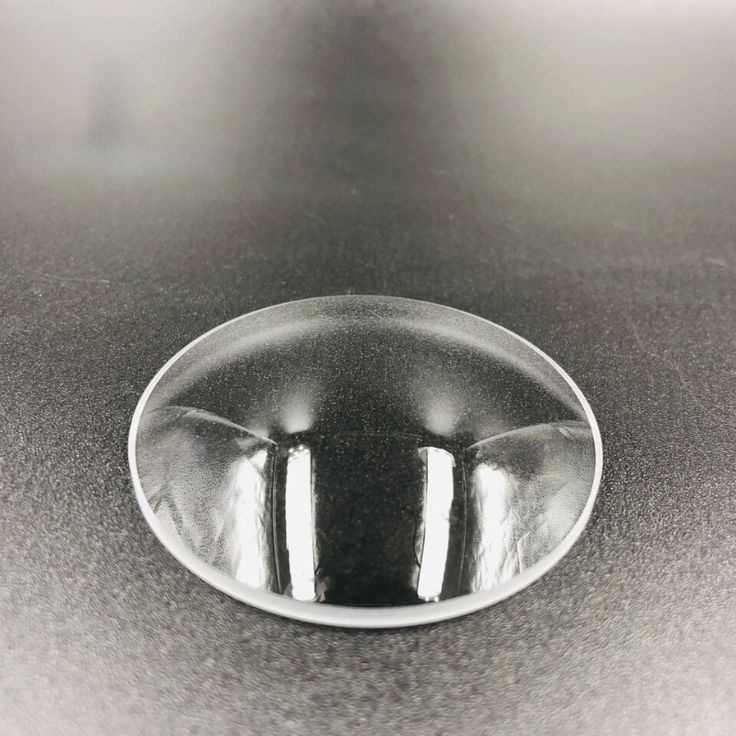
Modern optical systems often need to do more than simply transmit or reflect light. Cameras, sensors, laser systems, and photonics components may need to control how light interacts with a surface across specific wavelength ranges. Photon Management Film provides a thin film approach for managing these optical characteristics.
By carefully selecting coating materials and controlling film thickness, manufacturers can develop optical films with specific transmission, reflection, and spectral response characteristics.
What Is Photon Management Film?
Photon Management Film is a functional optical thin film designed to control the behavior of light at an optical surface.
Depending on the application, the film can be designed to manage:
- Light transmission
- Surface reflection
- Wavelength response
- Optical loss
- Spectral distribution
The film can consist of a single layer or a multilayer structure. Multilayer designs provide greater flexibility because different materials can be combined to achieve a specific optical response.
How Does Photon Management Film Work?
The optical behavior of a thin film depends on factors such as refractive index, film thickness, material composition, and layer arrangement.
When light reaches a coated surface, part of the light can be transmitted while another portion is reflected. In a multilayer structure, reflections from different interfaces interact with each other. Careful control of the optical thickness of each layer allows the coating designer to adjust this interaction.
As a result, a Photon Management Film can be designed to increase transmission within a target wavelength range, reduce unwanted reflection, or provide selective spectral control.
Materials Used in Photon Management Film
Material selection is an important part of optical film design.
Silicon Dioxide (SiO₂)
Silicon dioxide is commonly used as a low refractive index material. Its transparency and chemical stability make it suitable for a wide range of optical multilayer structures.
Titanium Dioxide (TiO₂)
Titanium dioxide provides a relatively high refractive index and can be combined with low-index materials to create controlled optical interference effects.
Tantalum Pentoxide (Ta₂O₅)
Tantalum pentoxide is used in precision optical coatings where stable optical properties and controlled spectral performance are required.
The final material combination depends on the target wavelength, substrate, environmental conditions, and required optical response.
Photon Management Film Manufacturing Process
Producing a consistent optical film requires accurate thin film deposition.
The process normally begins with substrate preparation. Optical surfaces need to be cleaned carefully to remove contaminants that could affect coating adhesion or uniformity.
The selected materials are then deposited onto the substrate using controlled processes such as:
- Physical Vapor Deposition (PVD)
- Magnetron sputtering
- Electron beam evaporation
- Vacuum deposition
For multilayer films, thickness control is particularly important. Each layer contributes to the final optical response, so variations during deposition can change the intended transmission or reflection characteristics.
Applications of Photon Management Film
Optical Imaging
Cameras and imaging systems often need to control unwanted reflection while maintaining efficient light transmission. Optical films can be designed according to the spectral requirements of the imaging system.
Optical Sensors
Sensors may need to respond to a specific portion of the spectrum. A functional film can help manage unwanted wavelengths before light reaches the sensing element.
Laser Systems
Laser components operate around defined wavelengths, making precise control of transmission and reflection important for optical windows, mirrors, and other components.
Photonics Components
Photonics systems require controlled interaction between light and optical surfaces. Thin film structures can provide the required optical response without significantly changing the underlying component.
Photon Management Film and Optical Performance
The performance of a Photon Management Film is not determined by material selection alone.
Film thickness, layer sequence, refractive index, surface quality, and deposition accuracy all contribute to the final result.
For example, a coating designed for high transmission may require a different structure from one designed to provide strong reflection at a selected wavelength.
This is why optical film design normally begins with the required performance rather than with a fixed coating material.
Photon Management Film and Vacuum Coating
Precision optical films require a controlled deposition environment to maintain coating uniformity and repeatability.
Vacuum coating technology provides suitable conditions for depositing thin optical layers with controlled thickness and composition.
SRNC provides vacuum coating technology for optical components and advanced thin film applications.
SRNC Vacuum Coating Technology
For related optical coating applications:
SRNC Optical Coating Solutions
Factors Affecting Photon Management Film Performance
Several factors should be considered when developing an optical film:
- Target wavelength
- Film thickness
- Refractive index
- Material absorption
- Layer structure
- Substrate properties
- Surface quality
- Deposition conditions
The coating also needs to remain stable under its intended operating environment. Temperature, humidity, mechanical stress, and exposure to chemicals can all influence long-term performance.
Conclusion
Photon Management Film provides a flexible way to control light at optical surfaces. Through appropriate material selection and accurately controlled thin film structures, manufacturers can adjust transmission, reflection, and wavelength response for different optical applications.
As imaging, sensing, laser, and photonics technologies become increasingly precise, functional optical films will continue to play an important role in modern surface engineering.