

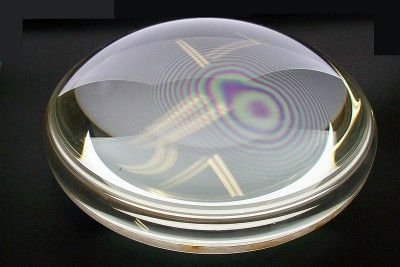
Optical Window Coating: 9 Powerful Benefits for High-Performance Optics
An optical window may look like a simple transparent component, but its surface can have a major influence on the performance and reliability of an optical system.
Optical windows are used to protect cameras, sensors, lasers, imaging systems, and other sensitive components from the surrounding environment. At the same time, the window must allow light to pass through with as little unwanted optical loss as possible.
This creates a demanding combination of requirements.
The window needs to be transparent, durable, cleanable, and stable. In many applications, it must also withstand repeated abrasion, temperature changes, chemicals, dust, and other environmental conditions.
This is where optical window coating technology becomes important.
A carefully engineered coating can modify the surface of an optical window to improve optical transmission, reduce reflection, increase surface durability, or provide other application-specific functions.
When the substrate is sapphire, the combination can be particularly attractive for applications requiring both optical performance and exceptional surface hardness.
What Is Optical Window Coating?
Optical window coating is a thin functional layer or multilayer structure applied to an optical window to modify its surface properties.
Depending on the design, the coating may be used for:
- Anti-reflection
- Higher optical transmission
- Scratch resistance
- Abrasion resistance
- Chemical resistance
- Environmental protection
- Surface durability
- Easier cleaning
The coating can be applied to different optical substrates, including glass and sapphire.
The appropriate design depends on the wavelength, angle of incidence, substrate, environmental conditions, and performance targets.
Why Optical Windows Need Coatings
A transparent substrate does not automatically provide optimal optical performance.
Whenever light encounters the boundary between air and a transparent material, some light can be reflected.
For many optical systems, that reflection represents unwanted optical loss.
Reflected light can also contribute to:
- Glare
- Ghost images
- Stray light
- Reduced contrast
An optical coating can be designed to manage these effects.
At the same time, a protective coating can help the surface withstand mechanical and environmental stress.
This means one small optical component may require both optical engineering and surface engineering.
Optical Window Coating for Light Transmission
Transmission is one of the most important properties of an optical window.
If the window is placed in front of a camera or sensor, the incoming light needs to reach the optical system efficiently.
Reducing surface reflection can increase the amount of useful light transmitted through the window.
This can be especially important for systems operating under low-light conditions or where optical efficiency is critical.
The coating should be designed around the required spectral range rather than simply targeting maximum transmission at one wavelength.
Anti-Reflective Optical Window Coating
Anti-reflective coatings are designed to reduce reflection at the optical surface.
A simple coating may use one layer, while more advanced designs can use multiple layers with carefully controlled refractive indices and thicknesses.
Multilayer structures provide greater flexibility for controlling optical performance across a wider wavelength range.
Depending on the application, a coating may be optimized for:
- Visible wavelengths
- Near-infrared
- Specific laser wavelengths
- Broad spectral bands
The optical design must match the actual system requirements.
Optical Window Coating and Surface Reflection
Reflection isn’t only about lost light.
In imaging systems, reflected light can travel through the optical system in unwanted directions.
This can create ghosting or flare.
Reducing surface reflection can therefore help improve the overall image quality.
However, the coating must be designed together with the other optical components because system-level performance depends on more than one surface.
Why Sapphire Is an Important Optical Window Substrate
Sapphire is widely used when optical windows require exceptional mechanical durability.
It offers high hardness and good optical transmission across relevant spectral regions.
This makes it attractive for demanding environments where conventional transparent materials may be more vulnerable to scratching or abrasion.
Potential applications include:
- Protective camera windows
- Sensor windows
- Laser windows
- Industrial optical systems
- Aerospace optics
- Scientific instruments
Adding a suitable coating can further customize the surface.
Optical Window Coating on Sapphire
Sapphire provides a strong substrate for a hard optical window.
However, the sapphire surface can still benefit from a functional coating.
For example, a coating can be designed to provide:
- Lower reflection
- Higher transmission
- Additional surface hardness
- Improved abrasion resistance
- Environmental protection
This creates a complementary relationship between substrate and coating.
The sapphire provides the bulk material properties, while the coating is used to engineer the surface.
Scratch Resistance
Optical windows can encounter particles, tools, cleaning materials, and other sources of mechanical contact.
Even small scratches can affect the appearance of a transparent surface.
For imaging and precision optical applications, surface damage may also become an optical concern.
A hard protective coating can provide an additional barrier against selected types of surface damage.
Testing should be performed according to the expected application rather than assuming that a particular coating will resist every type of scratch.
Abrasion Resistance
Repeated contact can gradually wear an optical surface.
This is different from a single scratch event.
For example, an optical window may be cleaned hundreds of times during its service life.
Abrasion-resistant coating systems can be developed to withstand repeated rubbing and cleaning.
Relevant tests may simulate:
- Repeated wiping
- Mechanical rubbing
- Particle contact
- Cleaning cycles
The objective is to maintain both optical clarity and surface integrity.
Optical Window Coating and Chemical Resistance
Optical components can encounter chemicals during manufacturing, maintenance, or use.
Common examples include:
- Alcohol
- Cleaning solutions
- Oils
- Solvents
- Environmental contaminants
Chemical resistance helps reduce the risk of coating degradation or surface changes.
Testing should use realistic chemicals and exposure conditions.
A coating that performs well in one chemical environment may not automatically perform equally well in another.
Environmental Stability
Some optical windows operate in demanding environments.
They may experience:
- High humidity
- Temperature cycling
- Thermal shock
- Dust
- Salt
- Outdoor exposure
A coating must remain stable under the environmental conditions expected during the product’s service life.
Environmental testing is therefore an important part of coating qualification.
Coating Adhesion
A coating must stay attached to the optical substrate.
Poor adhesion can lead to:
- Peeling
- Delamination
- Cracking
- Localized coating failure
This can compromise both the appearance and performance of the optical window.
Good adhesion starts with appropriate surface preparation.
The substrate must be properly cleaned, and the coating process must be compatible with the material.
Surface Preparation Before Coating
Optical substrates require careful preparation because even small contaminants can affect coating quality.
A typical process may include:
- Cleaning
- Degreasing
- Surface inspection
- Surface activation or conditioning
- Coating deposition
- Curing or stabilization
- Optical inspection
The exact process depends on the substrate and coating technology.
For precision optics, cleanliness is particularly important.
Thin-Film Optical Coating Technology
Many optical window coatings use thin-film technology.
The coating consists of extremely controlled layers whose thickness and optical properties influence the final performance.
Engineers can use these layers to control reflection and transmission.
For multilayer systems, even small variations in film thickness can affect the optical response.
This is why deposition accuracy and process stability are critical.
Vacuum Deposition
Vacuum deposition is commonly used for precision optical thin films.
The controlled environment allows coating materials to be deposited with carefully controlled thickness.
Different deposition technologies can be selected according to:
- Optical requirements
- Coating material
- Substrate
- Production volume
- Durability targets
The coating process should provide both optical precision and repeatable production quality.
Optical Window Coating for Cameras
Camera windows are an important application.
A protective window must protect the camera system while minimizing its impact on incoming light.
An effective surface design may need:
- High transmission
- Low reflection
- Low flare
- Scratch resistance
- Easy cleaning
- Stable optical performance
The coating therefore has both a protective role and an optical role.
Optical Window Coating for Sensors
Sensors can also require protective optical windows.
Depending on the sensor type, the window may need to transmit specific wavelengths while blocking or reducing unwanted radiation.
This makes spectral coating design particularly important.
The coating may be optimized for a specific wavelength range rather than visible light alone.
Optical Window Coating for Laser Systems
Laser applications can place very specific demands on optical surfaces.
A coating must be designed around the laser wavelength and power level.
Important considerations may include:
- Reflection
- Transmission
- Laser-induced damage resistance
- Thermal stability
- Adhesion
The coating architecture should be selected according to the laser system rather than treated as a general-purpose optical coating.
Sapphire Super Hard Coating for Optical Windows
When a sapphire optical window requires additional surface durability, SRNC’s Sapphire Super Hard Coating provides a relevant surface-engineering option.
The technology focuses on creating a highly durable coating structure for sapphire-based applications.
This can be particularly relevant when an optical component needs to combine the inherent hardness of sapphire with additional engineered surface protection.
For more information about the specific sapphire coating technology, readers can also explore the Sapphire Super Hard Coating product page directly.
Optical Uniformity
Optical coatings need to be uniform across the entire window.
Variations in coating thickness can cause changes in optical performance.
This can be especially important for:
- Large optical windows
- Imaging components
- Precision sensors
- Laser optics
Quality control may therefore measure coating thickness, transmission, reflection, and other optical characteristics across different areas of the component.
Optical Window Coating and Cleanability
A window cannot perform well if its surface is constantly covered by contamination.
Dust, fingerprints, oils, and other residues can interfere with optical transmission.
A well-designed surface should therefore consider cleanability as part of the overall product requirement.
For frequently maintained components, repeated cleaning should be included in durability testing.
Optical Window Coating vs. Uncoated Window
An uncoated optical window may already provide suitable transparency and mechanical performance.
However, a coated window gives engineers more control over surface characteristics.
| Property | Uncoated Window | Coated Window |
|---|---|---|
| Surface reflection | Material dependent | Can be reduced |
| Optical transmission | Substrate dependent | Can be optimized |
| Scratch protection | Substrate dependent | Can be enhanced |
| Surface functionality | Limited | More customizable |
| Spectral control | Limited | Broad design options |
| Environmental protection | Material dependent | Can be improved |
The correct choice depends on the application and performance requirements.
How Optical Window Coating Is Manufactured
A typical production process includes several controlled stages.
Substrate Cleaning
The optical window is thoroughly cleaned to remove contaminants.
Surface Preparation
The substrate may undergo additional treatment to support coating adhesion.
Thin-Film Deposition
The selected coating material is deposited under controlled conditions.
Layer Control
For multilayer coatings, each layer is carefully controlled.
Curing or Stabilization
The coating receives any required post-deposition treatment.
Optical Inspection
Transmission and reflection characteristics are evaluated.
Durability Testing
The finished window is tested against mechanical, chemical, and environmental requirements.
Testing Optical Window Coating
A complete qualification program may include several categories.
Optical Testing
- Transmission
- Reflection
- Spectral response
- Optical uniformity
Mechanical Testing
- Scratch resistance
- Abrasion resistance
- Adhesion
- Surface hardness
Chemical Testing
- Solvent resistance
- Cleaning-agent resistance
- Oil resistance
Environmental Testing
- Humidity
- Thermal cycling
- Temperature exposure
- Application-specific environmental conditions
Testing should reflect the final product’s actual operating environment.
How to Select Optical Window Coating
The selection process should begin with the optical system.
Wavelength Range
Define the required spectral band.
Transmission Target
Determine how much light needs to pass through the window.
Reflection Requirement
Set the acceptable reflection level.
Mechanical Environment
Identify expected scratching, abrasion, and cleaning exposure.
Chemical Environment
Determine which chemicals may contact the surface.
Substrate
Choose the appropriate coating design for glass, sapphire, or another optical material.
Production Requirements
Make sure the coating technology can achieve consistent performance at the required manufacturing scale.
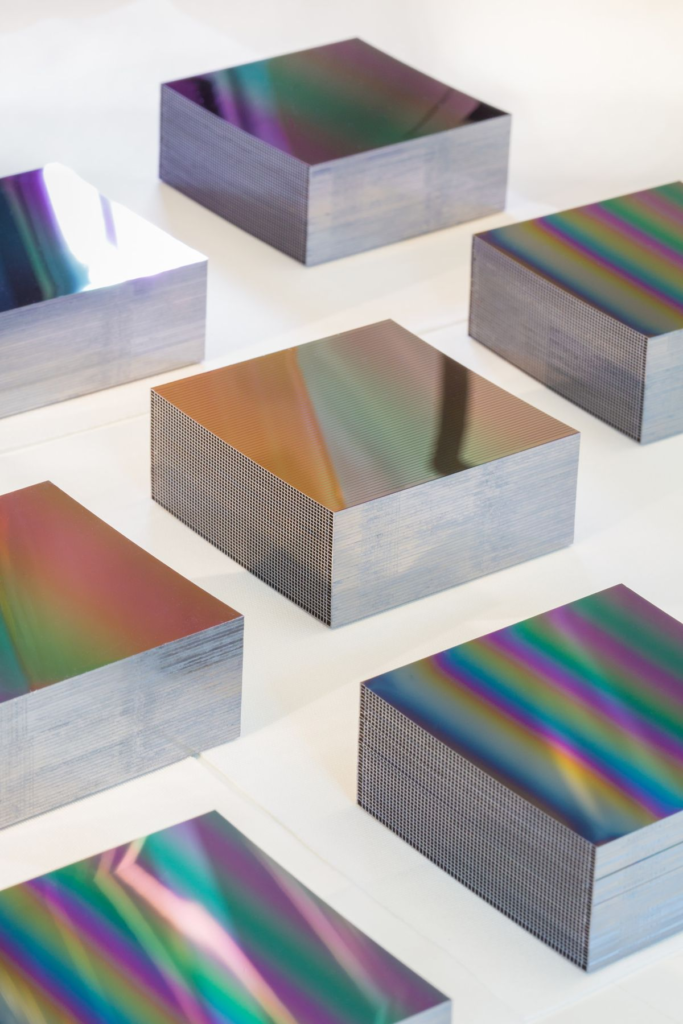
Future Trends in Optical Window Coating
Optical windows are becoming more multifunctional as imaging and sensing systems become more sophisticated.
Future coatings are likely to combine several functions within increasingly controlled thin-film structures.
These may include:
- High transmission
- Low reflection
- High hardness
- Abrasion resistance
- Chemical resistance
- Easy cleaning
- Environmental durability
The key challenge is maintaining optical precision while adding functional performance.
For demanding applications, the coating can no longer be viewed simply as an extra layer. It becomes an engineered part of the optical system.
Frequently Asked Questions
What is optical window coating?
Optical window coating is a thin functional layer or multilayer structure applied to an optical window to control reflection, transmission, surface durability, or other properties.
Why are optical windows coated?
Coatings can reduce reflection, improve transmission, enhance scratch and abrasion resistance, and provide additional environmental or chemical protection.
Can sapphire be used for coated optical windows?
Yes. Sapphire is an excellent substrate for demanding optical windows because of its high hardness and optical properties.
Can optical window coating reduce reflection?
Yes. Anti-reflective thin-film coatings can be designed to reduce surface reflection over selected wavelength ranges.
Does optical coating improve scratch resistance?
A suitable hard coating can add an engineered protective layer and improve resistance to certain forms of surface damage.
What is the difference between single-layer and multilayer optical coatings?
Single-layer coatings use one primary film, while multilayer coatings use several controlled layers to achieve more precise optical performance.
Can optical window coatings be used for infrared applications?
Yes. Coatings can be specifically designed for infrared wavelengths, provided the coating materials and layer structure are suitable for the required spectral range.
How is optical window coating tested?
Testing can include transmission, reflection, spectral performance, adhesion, scratch resistance, abrasion resistance, chemical resistance, and environmental durability.
Why is coating uniformity important?
Non-uniform film thickness can cause variations in optical performance across the window. Consistent deposition is therefore important for precision applications.
Conclusion
An optical window has to do two jobs at once: protect the sensitive system behind it and allow light to pass through efficiently.
That makes its surface extremely important.
Optical window coating provides a way to engineer this surface for specific optical and functional requirements. Anti-reflective structures can improve transmission, while hard protective coatings can help resist scratching, abrasion, chemicals, and environmental exposure.
Sapphire is particularly attractive when mechanical durability is a priority. Combined with an appropriately engineered coating, it can provide a strong foundation for demanding optical windows used in cameras, sensors, lasers, and other precision systems.
For applications requiring enhanced surface durability on sapphire, SRNC’s Sapphire Super Hard Coating is a relevant solution to consider.
The right coating isn’t simply an additional layer on an optical window. It’s part of the optical component’s overall engineering—helping balance transmission, reflection, durability, surface quality, and long-term reliability.