

Optical Thin Film Coating: Precision Optical Solutions for Smartphone Camera Components
Why Thin Films Have Become Critical to Smartphone Camera Design
Smartphone cameras have evolved from simple imaging modules into highly engineered optical systems. Larger sensors, multiple camera lenses, computational photography, HDR, night photography, and AI-based image processing all place greater demands on the optical components in front of the sensor.
Yet there’s a practical limitation: every optical surface can influence how light travels through the camera.
Reflection at a glass or lens interface can reduce the amount of useful light reaching the sensor. Uncontrolled reflections may also contribute to flare, ghost images, and contrast loss. At the same time, exposed optical surfaces must withstand fingerprints, moisture, dust, abrasion, and repeated handling.
This is where optical thin film coating becomes important.
Rather than changing the basic optical component, a precisely engineered thin-film stack can modify how its surface interacts with light. By controlling the material, thickness, and structure of individual layers, coating engineers can design surfaces for specific optical and functional requirements.
For smartphone camera manufacturers, this creates an opportunity to optimize several performance factors at once: transmission, reflection, image clarity, surface durability, and long-term reliability.
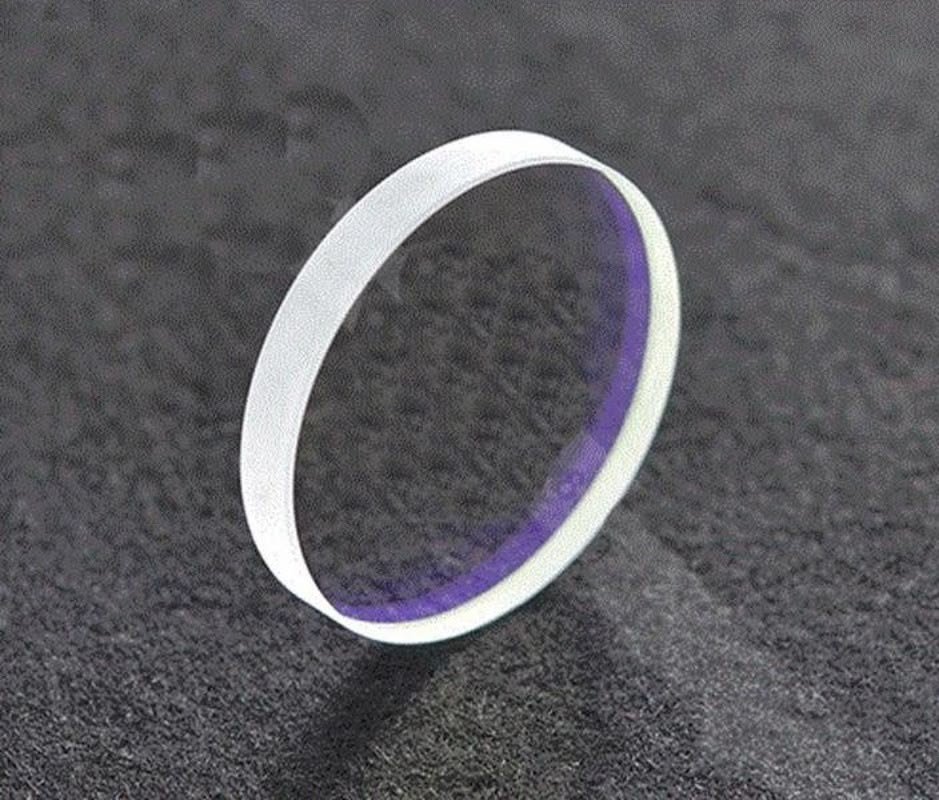
What Makes an Optical Thin Film Different from a Conventional Surface Coating?
A conventional protective coating may primarily focus on mechanical protection. An optical thin film has a different job: its structure is deliberately engineered at a microscopic scale to control the behavior of light.
The thickness of each deposited layer can be extremely small, and the final coating may contain multiple layers with different optical properties.
This multilayer structure can be designed to achieve specific performance targets, such as:
- Higher visible-light transmission
- Lower surface reflectance
- Reduced optical flare
- Better contrast
- Controlled spectral transmission
- Improved surface durability
The important point is that coating performance doesn’t come simply from adding a film. It comes from designing the complete thin-film system around the optical requirements of the component.
For smartphone camera applications, this precision is particularly valuable because the available space is limited and optical tolerances can be demanding.
How Optical Thin Film Coating Controls Light
When light reaches an uncoated optical surface, part of it can be transmitted while another portion is reflected. When a camera module contains several optical interfaces, these losses can accumulate.
An engineered thin-film coating changes the optical behavior at the surface.
Through carefully selected materials and layer thicknesses, coating engineers can create constructive and destructive interference effects that reduce unwanted reflection within a targeted wavelength range.
This can help the camera system make better use of incoming light.
For a smartphone camera, the practical goals may include:
- Increasing useful light transmission.
- Reducing unwanted reflections.
- Minimizing flare and ghosting.
- Maintaining color performance.
- Protecting the optical surface.
The result is not simply a “clearer coating.” It is a carefully engineered optical interface designed to work as part of the entire camera system.
Multilayer Design Is at the Heart of Modern Optical Coatings
One of the biggest advantages of thin-film technology is the ability to combine multiple layers into a single coating stack.
Different layers can perform different optical functions. The final design depends on the substrate, wavelength range, angle of incidence, required transmission, reflectance targets, and environmental requirements.
For example, a coating system may combine layers that contribute to:
- Anti-reflective performance
- High transmission
- Spectral filtering
- Surface protection
- Environmental resistance
This approach is particularly useful for compact smartphone cameras because a single component may need to satisfy several requirements simultaneously.
Instead of treating optical performance and surface durability as completely separate problems, a multifunctional thin-film structure can address both.
From Camera Cover Glass to Lens Components
The application of optical thin films isn’t limited to one part of a camera module.
Camera Cover Glass
Cover glass provides an external protective barrier for the camera. Because it sits directly in the optical path, its surface properties can influence the amount of light entering the module.
A properly engineered coating can improve optical transmission while helping protect the exposed surface.
Optical Lens Components
Camera lenses contain multiple optical surfaces. Reflection control across these interfaces is important for maintaining efficient light transmission and image quality.
Thin-film coatings can therefore be designed according to the requirements of individual lens elements.
Optical Filters
Spectral control is another important function in camera modules. Thin-film technology can be engineered to transmit selected wavelengths while suppressing unwanted portions of the spectrum.
Compact Multi-Camera Systems
Modern phones may integrate wide-angle, ultra-wide-angle, telephoto, macro, and depth-related optical systems. Each configuration can have different optical requirements, making customized coating design increasingly important.
The Connection Between Optical Performance and Surface Protection
An optical coating isn’t necessarily limited to reflection reduction.
In real-world smartphone applications, the surface must also survive everyday use.
A camera surface can encounter:
- Fingerprints
- Oils
- Moisture
- Dust
- Cleaning
- Repeated abrasion
- Environmental contamination
For this reason, modern functional coating systems can combine optical and protective functions.
A coating stack may be engineered to provide optical performance while also supporting adhesion, mechanical durability, and environmental stability.
This multifunctional approach is especially useful for camera cover glass and other exposed optical components.
How Vacuum Deposition Supports Precision Thin Films
The performance of an optical thin film depends heavily on manufacturing accuracy. If layer thickness or composition varies significantly, the final optical response may shift away from the intended design.
Advanced vacuum deposition provides the controlled environment needed for precision thin-film manufacturing.
SRNC’s published smartphone camera coating information identifies technologies including magnetron sputtering, electron beam evaporation, and ion-assisted deposition. These processes can provide controlled film formation, strong adhesion, and uniform coating structures for demanding optical applications.
A controlled vacuum process can help manage important parameters such as:
- Film thickness
- Deposition rate
- Chamber pressure
- Substrate temperature
- Layer uniformity
- Film adhesion
This level of process control is essential when optical performance must remain consistent across production batches.
Why Coating Uniformity Matters in Mass Production
Developing a successful optical coating in the laboratory is only part of the challenge. Smartphone components are manufactured at high volumes, so the coating must remain consistent during production.
Uniformity affects:
- Transmission
- Reflectance
- Appearance
- Color consistency
- Functional performance
A professional coating process therefore needs more than sophisticated deposition equipment. It also requires process monitoring, incoming material inspection, coating inspection, and final quality control.
SRNC describes a production flow covering incoming material inspection, cleaning, coating, process inspection, packaging, outgoing inspection, and shipping, supported by optical and surface testing equipment.
Functional Coating for Cell Phone Camera
For smartphone camera manufacturers, the goal is rarely just one optical property. The coating needs to fit the complete camera architecture.
SRNC’s Functional Coating for Cell Phone Camera is positioned as a functional coating solution for mobile camera components, supporting requirements such as light transmission, reflection suppression, optical clarity, and surface protection.
The coating concept is particularly relevant to applications involving:
- Camera cover glass
- Optical lenses
- Optical filters
- Compact camera modules
- High-end smartphone imaging systems
By engineering the coating around the optical component and application, manufacturers can target the performance characteristics required by a specific camera design.
What Should Manufacturers Consider When Selecting an Optical Thin Film?
Choosing an optical coating shouldn’t begin with the coating name alone. The correct solution depends on the complete optical system.
Wavelength Range
The required coating performance should match the wavelengths used by the camera system.
Angle of Incidence
Light does not always strike an optical surface at the same angle. Coating performance can therefore depend on the geometry of the component.
Substrate Material
Glass type, surface condition, and preparation can influence coating adhesion and optical behavior.

Environmental Requirements
Mobile devices encounter temperature changes, humidity, fingerprints, cleaning, and mechanical wear. The coating must remain stable under these conditions.
Production Volume
A coating solution must be scalable and repeatable if it is intended for mass-produced smartphones.
Testing Requirements
Optical transmission, reflectance, adhesion, abrasion, and environmental durability should be evaluated according to the application’s requirements.
Optical Thin Film Coating and the Future of Mobile Imaging
Smartphone camera technology is moving toward increasingly compact and sophisticated optical architectures. At the same time, users expect better low-light performance, sharper images, improved color reproduction, and more reliable camera hardware.
This creates a clear need for optical surfaces that do more with less space.
Future thin-film coating development is likely to focus on:
- Lower reflectance
- Higher transmission
- Wider usable wavelength ranges
- Multifunctional coating stacks
- Better mechanical durability
- Improved environmental stability
- More precise large-scale manufacturing
The next generation of camera coatings won’t simply be about making a surface harder or more transparent. The challenge will be integrating multiple functions into extremely thin, precisely controlled structures.
Frequently Asked Questions
What is optical thin film coating?
Optical thin film coating is a precisely engineered layer or multilayer structure deposited onto an optical surface to control light transmission, reflection, or spectral behavior while potentially providing additional surface protection.
Why is optical thin film coating used in smartphone cameras?
It can increase useful light transmission, reduce unwanted reflections, control optical artifacts, and protect camera components from everyday environmental and mechanical exposure.
What is the difference between an optical thin film and an anti-reflective coating?
An anti-reflective coating is one type of optical thin-film coating. Optical thin-film technology can also be designed for high transmission, spectral filtering, reflection control, and other functions.
Which smartphone camera components can use thin-film coatings?
Applications can include camera cover glass, lens elements, optical filters, and other components positioned within the camera’s optical path.
How are optical thin films deposited?
Depending on the required coating structure and application, processes can include magnetron sputtering, electron beam evaporation, and ion-assisted deposition.
Can optical thin film coatings be customized?
Yes. Coating structures can be designed according to factors such as wavelength range, transmission requirements, reflectance targets, substrate material, and environmental conditions.
How does vacuum coating improve optical thin-film quality?
A controlled vacuum environment supports precise deposition and helps manufacturers achieve consistent film thickness, adhesion, and uniformity.
Conclusion
Optical thin film coating is a key enabling technology for modern smartphone camera systems. By precisely controlling multilayer structures, manufacturers can optimize light transmission, suppress unwanted reflection, improve optical clarity, and add protection to sensitive camera components.
For mobile imaging applications, the coating should be considered as part of the complete optical system rather than as an isolated surface treatment. Material selection, layer design, deposition technology, substrate compatibility, and production control all influence the final result.
With its Functional Coating for Cell Phone Camera solution and advanced vacuum coating capabilities, SRNC supports manufacturers developing precision optical components for next-generation mobile imaging.