

Optical Notch Film for Precision Optical Applications
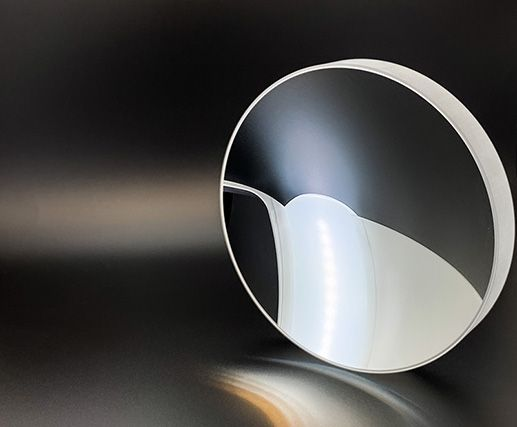
Optical Notch Film is a functional thin film designed to reduce transmission within a selected wavelength range while allowing surrounding wavelengths to pass. It is useful for applications that require precise spectral filtering.
What Is Optical Notch Film?
Optical Notch Film is a multilayer optical coating designed to create a narrow rejection band within a broader transmission range.
It can provide:
- Selective wavelength rejection
- Spectral filtering
- Reflection control
- Transmission control
- Optical response adjustment
Typical applications include:
- Optical filters
- Optical sensors
- Imaging systems
- Laser components
- Photonics devices
How Does Optical Notch Film Work?
Optical notch films use carefully designed multilayer structures. Different refractive indexes and film thicknesses create controlled interference effects.
The coating design determines the rejected wavelength range and the transmission of surrounding wavelengths.
Key factors include:
- Film thickness
- Refractive index
- Layer structure
- Material selection
- Target wavelength
← Longer λWavelength (m)
10310−110−510−910−13
RadioRadioMWMicrowaveIRInfraredVis.VisibleUVUltravioletX-rayX-rayGammaGamma ray
3×1053×1093×10133×10173×1021
Frequency (Hz)Higher f & photon energy →
Band boundaries are approximate
Visible light, magnified400–700 nm
Red · longershorter · Violet
Visible: about 550 nm · 545 THz
BandRadioMicrowaveIRVisibleUVX-rayGamma
RadioMicrowaveIRVisibleUVX-rayGamma
Give feedback
Optical Notch Film Materials
Common materials include:
- SiO₂ — low refractive index material
- TiO₂ — high refractive index material
- Ta₂O₅ — used for precision multilayer optical coatings
The material combination and layer thickness determine the final spectral response.
Optical Notch Film Manufacturing
Precision optical notch films can be produced using:
- PVD coating
- Magnetron sputtering
- Electron beam evaporation
- Vacuum thin film deposition
Accurate thickness control is important because small variations can shift the rejection band.
Applications of Optical Notch Film
Optical Sensors
Notch films can suppress unwanted wavelengths and improve spectral selectivity.
Imaging Systems
They can reduce specific unwanted light bands in imaging applications.
Laser Systems
Optical notch films can be designed to reject selected wavelengths while transmitting other parts of the spectrum.
Photonics Components
They provide controlled spectral filtering for precision optical systems.
Optical Notch Film and Vacuum Coating
Vacuum coating technology provides controlled conditions for producing accurate multilayer optical films.
SRNC provides vacuum coating technology for optical components and advanced thin film applications.
SRNC vacuum coating technology
For optical coating applications:
SRNC optical coating solutions
Factors Affecting Optical Notch Film Performance
Important factors include:
- Film thickness accuracy
- Material selection
- Layer structure
- Target wavelength
- Substrate quality
- Deposition conditions
Precise optical design helps achieve the required rejection band and transmission range.
FAQ
What is Optical Notch Film?
It is a multilayer optical film designed to reject a selected wavelength range while transmitting surrounding wavelengths.
Where is Optical Notch Film used?
It is used in optical filters, sensors, imaging systems, laser components, and photonics devices.
How is Optical Notch Film produced?
Common methods include PVD, magnetron sputtering, electron beam evaporation, and vacuum thin film deposition.