

Optical Mirror Coating: Technology and Applications
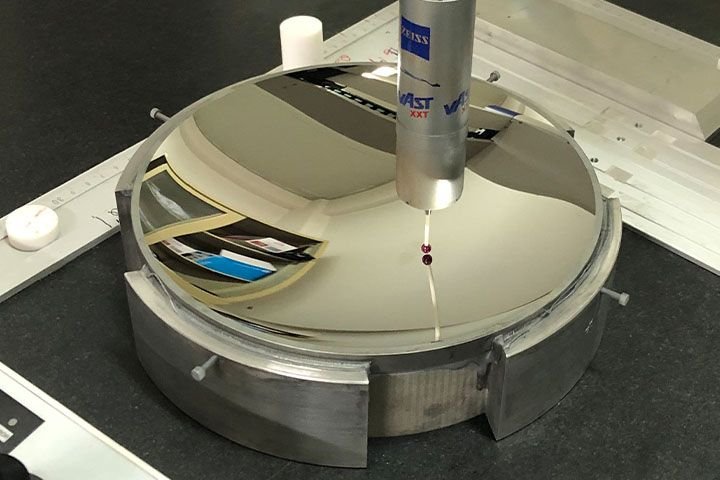
Optical mirrors are essential components in laser systems, imaging equipment, scientific instruments, and precision optical devices. The performance of an optical mirror depends not only on the substrate material but also on the quality of the reflective coating applied to its surface.
Optical mirror coating is an advanced thin film coating technology used to improve the reflection performance, wavelength control, and durability of optical mirrors.
Through carefully designed multilayer structures, optical mirror coatings can achieve high reflectivity, low optical loss, and stable performance across different wavelength ranges.
What Is Optical Mirror Coating?
Optical mirror coating refers to the application of reflective thin film layers onto optical substrates to enhance their ability to reflect specific wavelengths of light.
The coating layer is designed according to application requirements, including:
- Reflection wavelength range
- Reflectivity level
- Laser power handling capability
- Environmental durability
Common optical mirror substrates include:
- Optical glass
- Fused silica
- Quartz
- Sapphire
Applications include:
- Laser mirrors
- Industrial optical systems
- Imaging equipment
- Scientific instruments
- Photonics devices
The main functions of optical mirror coatings include:
- Increasing reflectivity
- Controlling wavelength response
- Reducing optical loss
- Improving surface protection
How Does Optical Mirror Coating Work?
Optical mirror coatings work by controlling the interaction between light and multilayer thin film structures.
When light reaches the coated surface, the coating layers create controlled interference effects that enhance reflection at specific wavelengths.
The performance depends on:
- Refractive index difference between layers
- Film thickness accuracy
- Number of coating layers
- Coating material selection
Different coating designs provide different optical characteristics:
- Broadband reflection
- High reflection at specific wavelengths
- Laser wavelength optimization
Optical Mirror Coating Process
High-quality optical mirror coatings require precise thin film deposition technologies.
Surface Preparation
Before coating, optical substrates require strict preparation.
Common processes include:
- Ultrasonic cleaning
- Chemical cleaning
- Surface inspection
- Plasma treatment
Proper preparation improves:
- Film adhesion
- Coating uniformity
- Optical performance
Thin Film Deposition
Optical mirror coatings are produced through advanced vacuum coating technologies.
Vacuum Evaporation
Vacuum evaporation is widely used for optical mirror production.
Advantages:
- Excellent optical quality
- Precise multilayer control
- Suitable for high-performance mirrors
Applications:
- Laser mirrors
- Optical reflectors
Ion Assisted Deposition (IAD)
IAD improves coating density and durability.
Benefits:
- Strong adhesion
- Better environmental stability
- Higher coating reliability
Applications:
- Precision optical mirrors
- Laser systems
Magnetron Sputtering
Magnetron sputtering provides durable reflective coatings.
Advantages:
- High uniformity
- Excellent stability
- Strong film performance
Types of Optical Mirror Coating
Dielectric Mirror Coating
Dielectric mirror coatings use multiple layers of dielectric materials to achieve high reflectivity.
Common materials include:
- Silicon dioxide (SiO₂)
- Titanium dioxide (TiO₂)
Advantages:
- Extremely high reflectivity
- Low absorption
- Excellent laser performance
Applications:
- Laser systems
- Precision optical instruments
Metal Mirror Coating
Metal coatings provide broadband reflection performance.
Common materials include:
- Aluminum
- Silver
- Gold
Advantages:
- Wide wavelength coverage
- Simple optical design
Applications:
- Optical instruments
- Imaging systems
High Reflective Coating
High reflective coatings are designed for maximum reflection efficiency.
Applications:
- Laser resonators
- Optical systems
- Scientific equipment
Benefits:
- Reduced energy loss
- Improved optical efficiency
Laser Mirror Coating
Laser mirror coatings are optimized for specific laser wavelengths.
Applications:
- Laser cutting systems
- Laser marking equipment
- Medical lasers
Features:
- High damage resistance
- Precise wavelength control
Broadband Mirror Coating
Broadband mirror coatings provide high reflection across wide wavelength ranges.
Applications:
- Imaging systems
- Research instruments
- Optical measurement equipment
Materials Used in Optical Mirror Coating
Dielectric Materials
Common dielectric materials include:
- Silicon dioxide (SiO₂)
- Titanium dioxide (TiO₂)
- Aluminum oxide (Al₂O₃)
Benefits:
- High stability
- Low optical absorption
- Excellent durability
Metal Materials
Metal reflective coatings include:
- Aluminum
- Silver
- Gold
Applications:
- Broadband mirrors
- Infrared optical systems
- Reflective components
Applications of Optical Mirror Coating
Laser Systems
Optical mirror coatings are critical components in laser equipment.
Applications include:
- Laser cavities
- Beam steering systems
- Optical resonators
Benefits:
- Improved reflection efficiency
- Better laser stability
- Higher system performance
Imaging Systems
Optical mirrors are widely used in imaging technologies.
Applications:
- Cameras
- Microscopes
- Telescopes
Coatings improve:
- Image quality
- Light management
- Optical efficiency
Scientific Instruments
Research equipment requires precise optical performance.
Applications:
- Spectroscopy systems
- Measurement equipment
- Laboratory instruments
Optical coatings provide:
- Accurate wavelength control
- Reliable reflection performance
SRNC provides optical coating and thin film coating solutions for mirrors, optical components, and precision optical applications.
Learn more:
https://srnc.net/optical-coating/
Industrial Optical Equipment
Optical mirror coatings are used in:
- Machine vision systems
- Inspection equipment
- Automation systems
Benefits include:
- Long-term stability
- Environmental resistance
Optical Mirror Coating and Thin Film Technology
Optical mirror coating is an important application of optical thin film technology.
Modern optical systems require mirror coatings with:
- High reflectivity
- Low absorption
- Precise wavelength performance
- Strong environmental resistance
Vacuum coating technology enables manufacturers to produce complex multilayer mirror structures with accurate optical performance.
SRNC specializes in vacuum coating and optical thin film technologies for mirrors, laser optics, and advanced optical components.
More information:
https://srnc.net/
Factors Affecting Optical Mirror Coating Performance
Several factors influence mirror coating quality:
- Coating material
- Film thickness accuracy
- Deposition technology
- Operating wavelength
- Environmental conditions
Different applications require customized coating solutions.
For example:
- Laser mirrors require high damage resistance.
- Infrared mirrors require wavelength-specific reflection.
- Scientific optics require high precision.
Future Development of Optical Mirror Coating
With the development of laser technology, photonics, and precision optical systems, optical mirror coatings continue to advance.
Future trends include:
- Higher reflectivity
- Improved laser damage resistance
- More advanced multilayer structures
- Better environmental durability
Optical mirror coating technology will continue to support laser systems, imaging equipment, and advanced optical applications.
Although coating layers are extremely thin, they determine the optical performance and reliability of modern mirror components.