

Optical Film Coating: Process, Materials and Applications
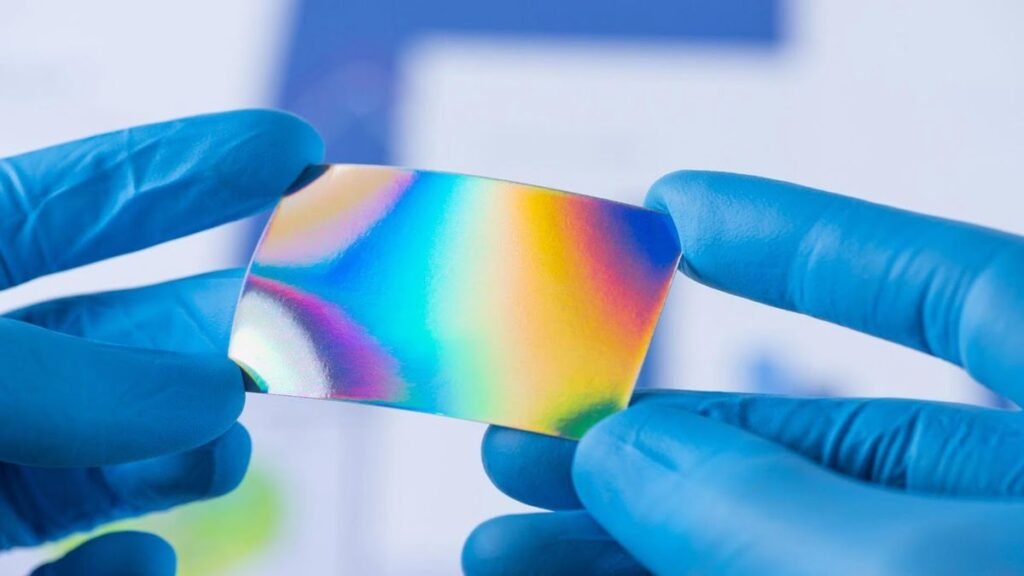
Optical components are widely used in cameras, electronic devices, medical instruments, and precision equipment. As optical systems become more advanced, controlling how light interacts with surfaces has become increasingly important.
Optical film coating is a technology that helps improve the optical performance of lenses, glass, and other optical substrates by applying extremely thin material layers to their surfaces.
Although these coating layers are often only a few nanometers or microns thick, they can significantly affect reflection, transmission, and light control.
What Is Optical Film Coating?
Optical film coating refers to the process of depositing one or multiple thin film layers onto an optical surface.
These layers are designed to modify the interaction between light and the substrate.
Common optical film coating functions include:
- Reducing surface reflection
- Increasing light transmission
- Controlling specific wavelengths
- Improving optical stability
- Protecting optical surfaces
The coating materials and layer structures are carefully selected according to the requirements of different optical applications.
Optical film coating is commonly applied to:
- Optical lenses
- Glass components
- Camera modules
- Sensors
- Optical instruments
How Does Optical Film Coating Work?
Optical film coating works based on the principle of thin film interference.
During the coating process, different materials are deposited onto a substrate surface in controlled layers. Each layer has specific optical properties, such as refractive index and thickness.
When light reaches the coated surface, the interaction between different layers changes the way light is reflected or transmitted.
By adjusting:
- Film thickness
- Material combination
- Number of layers
- Coating structure
Manufacturers can create coatings with specific optical functions.
Optical Film Coating Process
The production of optical film coatings usually takes place in a controlled vacuum environment.
The main process includes:
Surface Preparation
Before coating, the substrate surface needs to be cleaned carefully to remove particles and contamination.
Surface quality directly affects coating adhesion and performance.
Thin Film Deposition
During deposition, coating materials are transferred onto the substrate surface.
Common deposition technologies include:
- Physical Vapor Deposition (PVD)
- Magnetron sputtering
- Electron beam evaporation
These processes allow accurate control of coating thickness and layer structure.
Performance Testing
After coating, optical components are tested for:
- Light transmission
- Reflection performance
- Coating uniformity
- Adhesion strength
Common Materials Used in Optical Film Coating
Material selection plays an important role in optical coating performance.
Silicon Dioxide (SiO₂)
Silicon dioxide is one of the most commonly used optical coating materials.
It provides:
- Good transparency
- Chemical stability
- Low refractive index characteristics
It is widely used in anti reflective coatings and multilayer optical structures.
Titanium Dioxide (TiO₂)
Titanium dioxide is a high refractive index material commonly used in optical thin film designs.
It is often combined with SiO₂ to create multilayer coatings with controlled optical properties.
Magnesium Fluoride (MgF₂)
Magnesium fluoride is widely used in optical coatings, especially for anti reflective applications.
It provides good transmission performance and optical stability.
Types of Optical Film Coating
Anti Reflective Coating (AR Coating)
Anti reflective coating is one of the most common optical film coating applications.
It reduces unwanted reflections from optical surfaces and improves light transmission.
Applications include:
- Camera lenses
- Smartphone cameras
- Optical windows
- Display components
Multilayer Optical Coating
Multilayer optical coatings consist of multiple thin film layers with different optical properties.
They are used when precise control of reflection and transmission is required.
Applications include:
- Optical filters
- Laser components
- Scientific instruments
Protective Optical Coating
Some optical film coatings are designed to improve surface durability.
They can provide:
- Scratch resistance
- Environmental protection
- Better surface stability
Applications include:
- Optical glass
- Sensors
- Precision components
Applications of Optical Film Coating
Camera Lens and Imaging Systems
Camera systems depend on accurate light transmission and reflection control.
Optical film coatings are used on:
- Camera lenses
- Smartphone camera modules
- Industrial imaging equipment
They help reduce unwanted reflection and improve image quality.
SRNC provides vacuum coating and optical thin film technologies for optical components and imaging applications.
More information:
https://srnc.net/optical-coating/
Consumer Electronics
Modern electronic products use many optical components.
Optical film coatings are applied to:
- Camera covers
- Electronic glass
- Optical sensors
They help improve optical performance and surface protection.
Medical and Scientific Equipment
Precision optical instruments require stable light control.
Applications include:
- Microscopes
- Imaging equipment
- Laboratory instruments
Optical film coatings help improve measurement accuracy and system reliability.
Semiconductor Equipment
Semiconductor manufacturing relies on precise optical systems.
Optical film coatings are used in:
- Inspection equipment
- Optical measurement systems
- Precision components
Optical Film Coating and Vacuum Coating Technology
Optical film coating requires precise control during the deposition process.
Vacuum coating technology provides a clean environment for producing uniform thin film layers.
Technologies such as PVD and magnetron sputtering allow manufacturers to control:
- Coating thickness
- Material composition
- Layer structure
SRNC focuses on vacuum coating and thin film coating technologies for optical and functional surface applications.
Learn more:
https://srnc.net/
Future Development of Optical Film Coating
With the development of imaging technology, electronics, and precision optical systems, the demand for optical film coating continues to grow.
Future developments will focus on:
- More precise thin film structures
- Improved coating durability
- Multifunctional optical surfaces
- Wider wavelength control
Optical film coating will continue to play an important role in improving the performance of modern optical products.
Although optical films are extremely thin, they provide essential control over light behavior and help optical systems achieve better reliability and efficiency.