

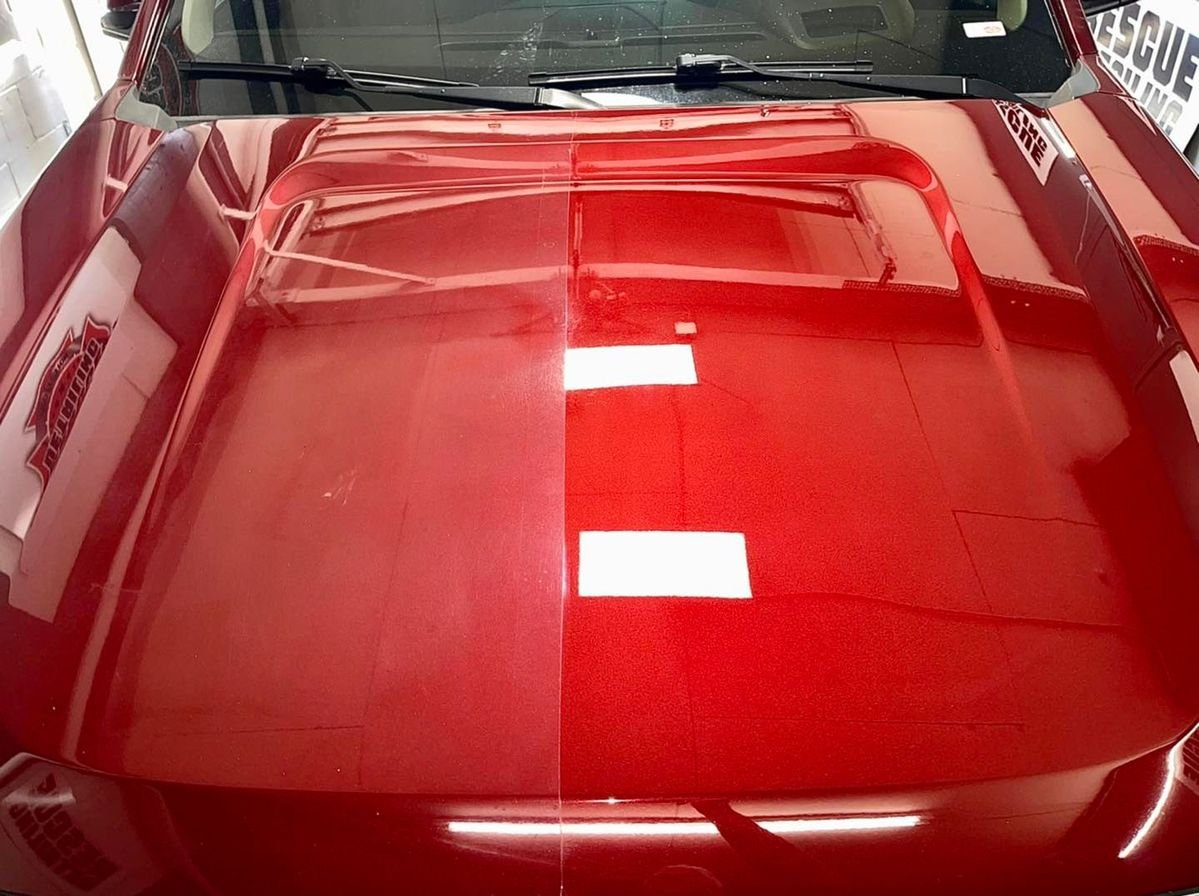
Lens Coating: Powerful Benefits for Modern Optical Systems
A lens is designed to control light with precision, but the surface of the lens also has a major influence on how efficiently that light travels through an optical system.
Every time light crosses from air into glass or from one optical material into another, part of it can be reflected. In a simple optical system, this may seem insignificant. But modern cameras and compact imaging systems can contain multiple optical surfaces, making these small losses and reflections increasingly important.
This is where lens coating technology becomes essential.
A properly designed coating can modify the behavior of the lens surface without changing the basic shape of the optical element. Depending on the application, it can reduce unwanted reflection, improve transmission, control spectral response, increase surface durability, and provide additional protection against environmental exposure.
For smartphone cameras, these functions become particularly important because the optical system needs to deliver high performance in a very compact space.
The coating therefore isn’t simply a protective layer.
It’s part of the optical design.
What Is Lens Coating?
Lens coating refers to one or more thin layers applied to an optical lens surface to modify its optical, mechanical, or environmental properties.
The coating can be designed for different purposes, including:
- Anti-reflective performance
- Higher light transmission
- Reflection control
- Scratch resistance
- Wear resistance
- Chemical resistance
- Environmental durability
- Spectral filtering
Different applications require different coating structures.
A basic optical system may use a relatively simple coating, while advanced camera and imaging systems can use carefully designed multilayer thin films.
The choice depends on the wavelength range, optical material, mechanical requirements, and expected operating environment.
Why Do Optical Lenses Need Coatings?
An uncoated optical surface reflects some incoming light.
That reflected light isn’t always useful.
In an imaging system, unwanted reflection can reduce the amount of light reaching the sensor and can also create secondary reflections inside the optical path.
These effects may contribute to:
- Lower transmission
- Reduced contrast
- Glare
- Flare
- Ghost images
A suitable coating can help control these effects.
This is particularly valuable when an optical system contains multiple lens elements.
The more surfaces light passes through, the more important surface reflection control can become.
How Lens Coating Changes Optical Performance
A coating changes the optical interface between the surrounding environment and the lens.
Instead of light interacting directly with a single air-to-glass boundary, it encounters a carefully engineered thin-film structure.
The coating’s refractive index and thickness influence how light behaves at the interface.
With appropriate design, reflected light can be reduced while transmitted light is increased within the desired wavelength range.
This principle forms the foundation of many modern anti-reflective optical coatings.
Lens Coating for Smartphone Cameras
Smartphone cameras place demanding requirements on optical surfaces.
The camera needs to capture sufficient light while fitting multiple optical elements into a very small module.
The external optical surface must also survive everyday use.
A lens coating system can help address several requirements simultaneously:
- High transmission
- Low reflection
- Optical clarity
- Surface durability
- Scratch resistance
- Environmental stability
The coating therefore supports both the optical path and the physical reliability of the camera.
Functional Coating for Cell Phone Camera
SRNC’s Functional Coating for Cell Phone Camera is designed for smartphone camera applications requiring advanced functional surface treatment.
Depending on the application, coating technology can be engineered around requirements such as:
- Reflection reduction
- High optical transmission
- Anti-glare performance
- Surface durability
- Scratch resistance
- Wear resistance
- Optical surface protection
The coating becomes part of the camera’s optical interface rather than simply an external protective layer.
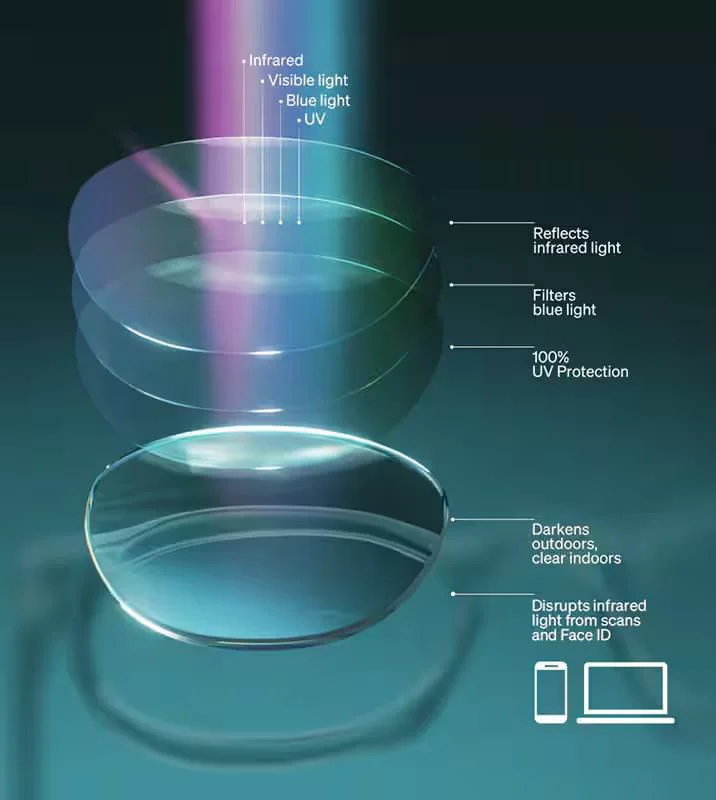
Anti-Reflective Lens Coating
One of the most common purposes of lens coating is to reduce reflection.
Anti-reflective coatings are designed to minimize the amount of light reflected from the optical surface.
This can increase the amount of useful light transmitted through the lens.
The result can be particularly valuable in compact imaging systems where optical efficiency matters.
However, anti-reflective performance isn’t universal.
A coating needs to be designed for a particular wavelength range and angle-of-incidence requirement.
Single-Layer vs. Multilayer Lens Coating
A single-layer coating can provide useful reflection reduction over a limited range.
Multilayer systems offer greater design flexibility.
By combining layers with different refractive indices and carefully controlled thicknesses, engineers can create more sophisticated optical responses.
A simplified multilayer structure may look like:
Air → Layer 1 → Layer 2 → Layer 3 → Lens substrate
Each layer contributes to the final reflection and transmission behavior.
Multilayer coatings can be optimized for broader wavelength ranges or more specific optical targets.
Lens Coating and High Transmission
High transmission is particularly important for cameras and imaging systems.
More transmitted light means more optical energy can reach the sensor.
A coating can improve transmission by reducing unwanted reflection at the lens surface.
This can be important for applications where light efficiency is critical.
The target transmission range should be defined according to the camera’s spectral response.
Visible-light camera coatings and coatings for specialized wavelengths may require very different designs.
Lens Coating and Image Contrast
Uncontrolled surface reflection can introduce stray light into an optical system.
Stray light can reduce image contrast, especially in scenes with strong light sources.
A well-designed coating can reduce reflection at the lens interface and help control one source of stray light.
This can support cleaner imaging performance.
However, lens coating is only one part of the overall optical system. Lens geometry, internal reflections, sensor behavior, and image processing also influence final image quality.
Lens Coating and Flare
Flare is a familiar problem when cameras photograph bright light sources.
It can appear as unwanted brightness or haze in an image.
Surface reflection is one factor that can contribute to this effect.
By reducing reflection at the lens surfaces, an appropriate coating can help control one part of the flare problem.
This is especially useful in applications where strong point light sources are common.
Lens Coating and Ghost Images
Ghosting can occur when light reflects between optical surfaces.
The resulting secondary images may appear as faint shapes or light artifacts.
Multiple optical elements create multiple interfaces where reflections can occur.
Reducing surface reflection can help lower the amount of unwanted reflected light available to create these effects.
This is one reason advanced lens systems often use carefully designed multilayer coatings.
Why Coating Thickness Matters
Optical coatings can be extremely thin, but their thickness needs to be precisely controlled.
The thickness determines how light interacts with the coating.
A small deviation can change the intended optical response.
For this reason, coating manufacturing needs to control:
- Film thickness
- Uniformity
- Refractive properties
- Layer sequence
- Surface quality
Precision becomes especially important when multilayer designs are used.
Lens Coating Uniformity
A lens coating must be uniform across the active optical surface.
Non-uniform coating thickness can cause variations in optical performance.
Potential effects include:
- Uneven reflection
- Transmission variation
- Color shift
- Local optical artifacts
For small camera lenses, the active area may be tiny, but the optical tolerances can still be demanding.
Consistent deposition is therefore essential.
Lens Coating and Surface Hardness
Optical performance isn’t enough if the lens surface is easily damaged.
A lens can be exposed to:
- Dust
- Cleaning
- Handling
- Mechanical contact
- Environmental particles
A hard surface coating can improve resistance to certain forms of mechanical damage.
This can help maintain the quality of the optical surface during the product’s service life.
However, hardness should always be considered together with adhesion and optical performance.
Lens Coating and Scratch Resistance
Scratches on an optical surface can scatter light.
Even relatively small defects can become noticeable under strong illumination.
A scratch-resistant coating can help protect the lens surface against certain mechanical interactions.
Testing should be performed under conditions that represent the actual use environment.
For consumer cameras, repeated cleaning and everyday handling are particularly relevant.
Lens Coating and Wear Resistance
A lens may be cleaned repeatedly throughout its service life.
Each cleaning cycle creates friction.
Over time, this can wear down a poorly designed surface treatment.
Wear-resistant coating technology can help maintain the original surface characteristics through repeated contact.
This is particularly important when the coating also provides optical functionality.
If the optical coating changes significantly with wear, reflection and transmission characteristics may change as well.
Chemical Resistance
Optical lenses can encounter oils, cleaning agents, solvents, and other substances.
Chemical exposure may affect some coating materials or interfaces.
A suitable lens coating can be engineered for the chemicals relevant to the intended application.
Testing may include:
- Cleaning solutions
- Alcohol-based products
- Oils
- Humidity
- Other specified chemicals
The objective is to ensure that the coating maintains its intended performance after exposure.
Lens Coating and Environmental Stability
Modern cameras operate in many different environments.
Temperature and humidity can change significantly between indoor and outdoor use.
A coating system needs to remain stable across the required operating range.
Important considerations include:
- Adhesion
- Optical transmission
- Reflection
- Surface integrity
- Layer stability
Thermal cycling and humidity testing can provide information about long-term reliability.
Lens Coating Adhesion
The coating must remain securely attached to the lens.
Poor adhesion can lead to:
- Peeling
- Delamination
- Localized defects
- Optical degradation
Strong adhesion is particularly important for multilayer structures because failure at one interface can affect the performance of the entire coating stack.
Good surface preparation and controlled deposition conditions are therefore essential.
Lens Surface Preparation
Before coating, the lens surface needs to be properly prepared.
Particles and contamination can create coating defects.
Even microscopic contamination can influence adhesion or optical quality.
A controlled process may include:
- Surface cleaning
- Inspection
- Surface preparation
- Thin-film deposition
- Post-coating inspection
The exact process depends on the coating technology and substrate material.
Lens Coating for Different Optical Materials
Different lens materials can require different coating approaches.
Common optical substrates can include:
- Optical glass
- Specialty glass
- Sapphire
- Polymer optical materials
- Other transparent substrates
The coating needs to be compatible with the substrate’s surface chemistry, refractive index, thermal behavior, and manufacturing process.
This is why a coating that works well on one optical material cannot automatically be transferred to another without evaluation.
Lens Coating for Sapphire
Sapphire offers a combination of high hardness and optical transparency that makes it useful for demanding applications.
A coating can further modify its surface characteristics.
Depending on the design, the coating can provide optical functionality while complementing the inherent durability of the sapphire substrate.
This creates a layered surface system in which:
Sapphire provides the robust substrate, while the coating provides controlled surface functionality.
Lens Coating for Camera Modules
Camera modules can contain several optical elements.
The coating design may need to account for:
- Wavelength
- Incident angle
- Lens curvature
- Number of optical surfaces
- Module architecture
A coating optimized for a flat optical window may behave differently on a curved lens surface.
Therefore, optical coating design needs to consider the geometry of the actual component.
Spectral Lens Coating
Not all coatings are designed for the same wavelengths.
Depending on the application, a coating may be optimized for:
- Visible light
- Near-infrared
- Ultraviolet
- Specialized spectral bands
Spectral control allows engineers to tailor the coating to the optical system.
This can be useful for imaging, sensing, and specialized optical applications.
How Lens Coating Is Tested
Lens coating performance should be evaluated from several perspectives.
Optical Testing
Measures transmission, reflection, haze, and spectral behavior.
Hardness Testing
Evaluates resistance to mechanical deformation.
Scratch Testing
Examines surface resistance to localized damage.
Abrasion Testing
Tests repeated mechanical contact.
Adhesion Testing
Determines how strongly the coating remains attached.
Chemical Testing
Measures stability after exposure to specified chemicals.
Environmental Testing
May include temperature and humidity testing.
Imaging Testing
For camera applications, the coated component can also be evaluated inside the actual optical system.
Why Optical Testing Should Be Combined With Mechanical Testing
A coating can be mechanically excellent but optically unsuitable.
For example, a very hard surface may still produce unwanted reflection.
Likewise, a coating with excellent transmission may not survive repeated cleaning.
This is why lens coating development requires a balance between optical and mechanical performance.
The final coating should satisfy the requirements of the complete application rather than optimize only one specification.
Nine Benefits of Lens Coating
A properly engineered lens coating can provide:
- Reduced surface reflection
- Higher optical transmission
- Better control of stray light
- Reduced potential for flare and ghosting
- Improved scratch resistance
- Better wear resistance
- Improved chemical stability
- Longer-lasting optical surface performance
- Greater flexibility in optical system design
The exact results depend on the coating architecture, substrate, wavelength range, and application.
How to Choose the Right Lens Coating
Before selecting a coating, manufacturers should define the complete optical and environmental requirements.
1. Define the Wavelength
Identify the operating spectral range.
2. Set Transmission Targets
Determine the desired optical transmission.
3. Define Reflection Limits
Specify acceptable reflection across the target band.
4. Consider Lens Geometry
Flat windows and curved lenses may require different coating approaches.
5. Define Durability Requirements
Consider scratches, abrasion, cleaning, and handling.
6. Evaluate Environmental Exposure
Include temperature, humidity, chemicals, and other relevant conditions.
7. Consider Production Volume
The coating process must provide repeatable optical and mechanical performance at production scale.
The Role of Lens Coating in Modern Optical Design
Optical design increasingly depends on precise control of every interface.
As devices become smaller, engineers have less physical space to compensate for optical losses.
Coatings provide a way to optimize surface behavior without significantly changing the physical dimensions of the optical components.
This makes lens coating technology especially valuable for compact camera modules and precision imaging systems.
The Future of Lens Coating Technology
Future lens coating systems are likely to become increasingly multifunctional.
A single coating architecture may combine:
- Anti-reflection
- High transmission
- Anti-glare performance
- Surface hardness
- Scratch resistance
- Wear resistance
- Chemical resistance
- Easy-clean functionality
The challenge is achieving all these characteristics in extremely thin and precisely controlled layers.
As optical systems continue to evolve, surface coating will remain an important part of the engineering process.
Frequently Asked Questions
What is lens coating?
Lens coating is a thin functional layer or multilayer structure applied to an optical lens to modify reflection, transmission, durability, or other surface properties.
Why are camera lenses coated?
Camera lenses are coated to reduce unwanted reflection, improve transmission, control stray light, and protect optical surfaces against mechanical and environmental exposure.
Is lens coating the same as AR coating?
Not exactly. AR coating is one type of lens coating specifically designed to reduce reflection. Lens coating is a broader term that can include protective, optical, spectral, and other functional treatments.
Can lens coating improve image quality?
It can help by reducing unwanted surface reflection and improving transmission. Final image quality also depends on lens design, sensor characteristics, mechanical construction, and image processing.
Can lens coating be scratch resistant?
Yes. Certain coating systems can be engineered for improved resistance to scratches and mechanical wear.
What is multilayer lens coating?
A multilayer lens coating contains several thin-film layers with controlled thickness and optical properties. The layers work together to achieve more precise reflection and transmission characteristics.
Can lens coating be applied to sapphire?
Yes. Sapphire can be used as a substrate for advanced optical coating systems when the coating process is properly designed for the material.
Does lens coating affect light transmission?
Yes. A coating can be designed to increase transmission by reducing reflection, or it can be engineered for specific spectral transmission requirements.
How is lens coating tested?
Testing may include optical transmission and reflection measurements, scratch and abrasion testing, adhesion, chemical resistance, environmental testing, and application-level imaging evaluation.
Conclusion
The performance of an optical lens doesn’t depend only on its shape or substrate.
Its surface matters too.
A carefully engineered lens coating can reduce unwanted reflection, improve optical transmission, control stray light, and protect the lens from mechanical and environmental exposure.
For smartphone cameras and other compact imaging systems, these functions become increasingly important because every optical surface contributes to the final performance of the system.
SRNC’s Functional Coating for Cell Phone Camera is designed for camera applications where optical functionality and surface protection need to work together.
By treating the coating as an integral part of the optical design, manufacturers can create lens surfaces that provide better light management, stronger durability, and more reliable performance throughout the product’s service life.