

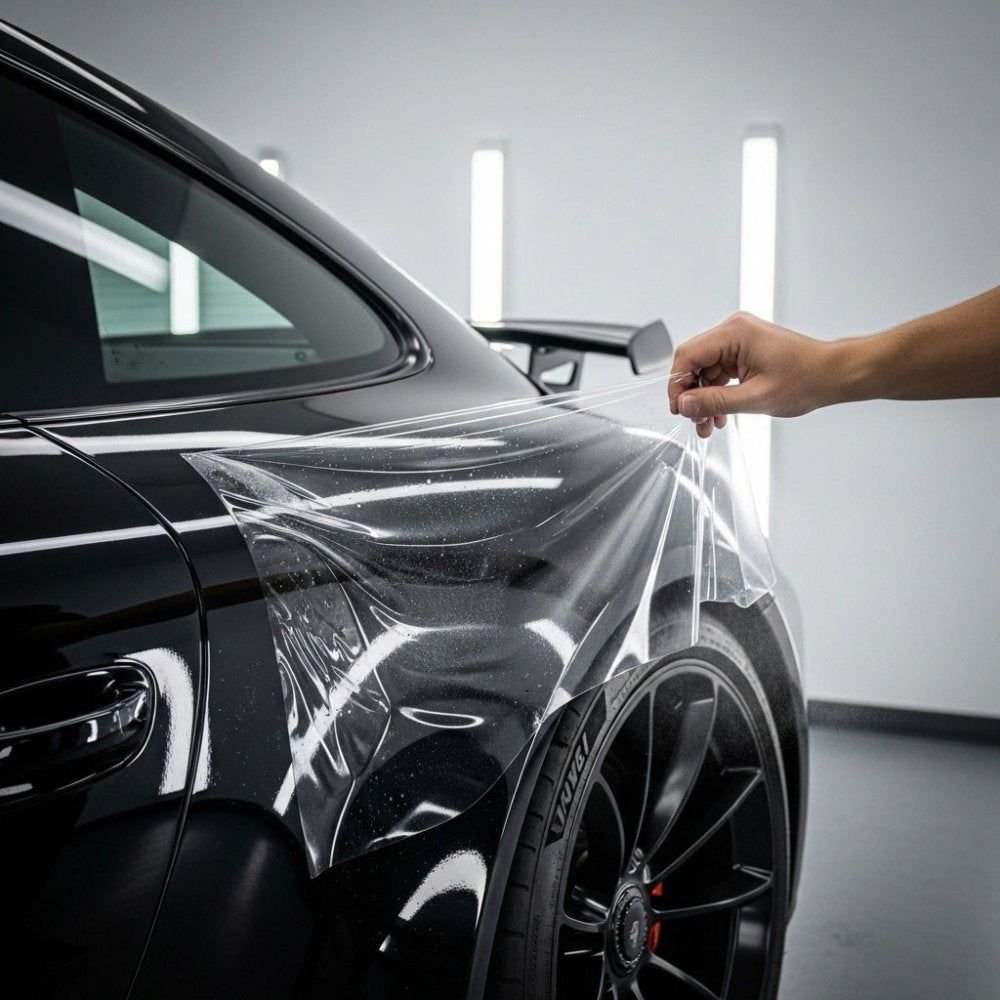
Cover Glass Coating: Powerful Benefits for Durable Optical Surfaces
The cover glass is one of the most exposed surfaces in a modern electronic or optical device.
Whether it is used on a smartphone, camera module, sensor, display, or optical instrument, the cover glass has to perform two jobs at the same time.
It needs to remain clear enough for light to pass through, while also protecting the components underneath from everyday mechanical and environmental exposure.
That combination makes surface engineering extremely important.
A high-quality cover glass coating can modify the surface properties of glass or sapphire without changing the basic role of the transparent substrate. Depending on the coating system, it can improve hardness, wear resistance, scratch resistance, optical performance, chemical stability, or other functional characteristics.
For premium devices, this is more than an additional protective layer.
The coating becomes part of the optical surface.
Its thickness, uniformity, adhesion, refractive properties, and mechanical performance can all influence the final product.
This is particularly important when cover glass is exposed to frequent touching, cleaning, dust, oils, and other forms of everyday use.
What Is Cover Glass Coating?
Cover glass coating is a functional surface treatment applied to transparent glass or similar optical substrates to improve or modify their surface properties.
The exact purpose depends on the application.
A coating may be designed to provide:
- Scratch resistance
- Wear resistance
- Higher surface hardness
- Anti-reflective performance
- Better light transmission
- Chemical resistance
- Easier cleaning
- Environmental protection
Some coating systems are primarily protective, while others are optical coatings designed to control reflection and transmission.
Advanced systems can combine multiple functions in a thin-film structure.
For cover glass applications, the most important consideration is that the coating must improve the desired property without compromising transparency or optical quality.
Why Cover Glass Needs Surface Protection
Glass is transparent and visually attractive, but its surface is still exposed to the outside environment.
A cover glass may experience repeated contact with:
- Fingers
- Cleaning cloths
- Dust particles
- Clothing
- Bags
- Other surfaces
Over time, repeated contact can create wear.
Even minor surface damage can become visible under certain lighting conditions.
For optical components, surface defects can also influence the way light passes through or reflects from the surface.
A functional coating can therefore provide an additional layer of protection between the external environment and the optical substrate.
Cover Glass Coating for Smartphones
Smartphone cover glass is one of the clearest examples of a surface that needs both optical and mechanical performance.
Users interact with the front and rear glass surfaces continuously.
The surface needs to support:
- Clear viewing
- Touch interaction
- Good optical transmission
- Scratch resistance
- Repeated cleaning
- Chemical exposure
- Long-term appearance
For premium devices, the surface must also maintain a refined appearance throughout daily use.
This creates a strong need for carefully engineered protective and functional coatings.
Cover Glass Coating for Optical Components
Cover glass isn’t limited to displays.
Transparent protective windows are also used in:
- Camera modules
- Optical sensors
- Imaging systems
- Laser equipment
- Industrial instruments
- Consumer electronics
In these applications, optical performance may be even more important.
A coating must maintain the required transmission and reflection characteristics while protecting the surface from the operating environment.
This makes optical coating technology a key part of the component design.
Sapphire as a Cover Glass Material
Sapphire is an attractive material for demanding transparent applications because of its combination of optical transparency, hardness, and chemical stability.
Compared with conventional glass, sapphire can provide a very hard surface.
However, coating technology can still be useful.
A functional surface layer can be designed to add specific characteristics or modify the optical behavior of the interface.
This is particularly relevant when the application requires both strong mechanical performance and precise optical control.
Sapphire Super Hard Coating
SRNC’s Sapphire Super Hard Coating is developed for applications where sapphire and other demanding optical substrates require advanced surface coating technology.
The focus is on combining surface protection with the requirements of precision optical components.
A properly engineered coating system can help address requirements such as:
- Surface hardness
- Wear resistance
- Scratch resistance
- Optical quality
- Surface stability
- Long-term durability
The coating should be considered as part of the complete optical surface rather than as an isolated material.
How Cover Glass Coating Improves Surface Hardness
Surface hardness describes how well a material resists certain types of deformation and mechanical damage.
For cover glass, higher surface hardness can be valuable because the component is frequently exposed to contact and friction.
A hard coating can help protect the underlying substrate against certain surface stresses.
Potential benefits include:
- Reduced surface damage
- Better resistance to repeated contact
- Improved wear performance
- Longer-lasting surface quality
However, hardness isn’t the only factor that determines coating performance.
Adhesion, toughness, thickness, and environmental stability also matter.
Scratch Resistance and Cover Glass
Scratches can be particularly noticeable on transparent surfaces.
A scratch can scatter light and become visible when the surface is viewed from certain angles.
For a display or camera window, this can be more than a cosmetic issue.
A well-engineered coating can improve resistance to certain types of scratching.
The actual level of protection depends on the coating material, substrate, test method, and type of contact involved.
For this reason, manufacturers should evaluate scratch resistance using test conditions that reflect the intended application.
Cover Glass Coating and Optical Transparency
The coating must allow light to pass through the surface efficiently.
This means coating development needs to consider:
- Transmission
- Reflection
- Absorption
- Haze
- Coating thickness
- Surface uniformity
Even a very thin coating can influence optical behavior because light interacts with the coating-substrate interface.
This is why optical cover glass coatings require precise thickness and process control.
A coating that protects the surface but reduces optical quality may not be suitable for the application.
Anti-Reflective Performance
Cover glass can reflect a portion of incident light.
In bright environments, excessive reflection can reduce perceived image clarity.
For optical applications, reflection can also affect the performance of imaging systems.
An anti-reflective coating can be designed to reduce unwanted surface reflection over a selected wavelength range.
Multilayer thin-film structures are commonly used when more precise optical control is required.
This allows manufacturers to optimize the balance between reflection, transmission, and surface protection.
Cover Glass Coating and Camera Performance
Camera cover glass is particularly sensitive to optical surface quality.
Unwanted reflections can contribute to effects such as:
- Glare
- Ghost images
- Flare
- Reduced contrast
A suitable optical coating can help control reflection at the surface.
At the same time, the coating needs to remain mechanically stable because camera windows can be exposed to cleaning, handling, dust, and environmental conditions.
This creates a need for multifunctional surface engineering.
Cover Glass Coating and Light Transmission
High transmission is important for many optical applications.
The objective is to allow as much useful light as possible to reach the underlying optical system.
A coating can be engineered to control reflection and improve transmission within a selected wavelength range.
For imaging applications, this can support optical efficiency.
However, transmission requirements vary by wavelength and device architecture.
A coating designed for visible light may have very different requirements from one intended for infrared or ultraviolet applications.
The Importance of Coating Uniformity
A cover glass coating needs to be highly uniform.
Variation in thickness can affect both appearance and optical performance.
Potential problems include:
- Uneven reflection
- Color shift
- Transmission variation
- Localized defects
- Visual non-uniformity
For precision optical components, uniform deposition is therefore essential.
The manufacturing process must control coating thickness and surface quality across the entire component.
Adhesion Between Coating and Glass
A coating can only provide long-term protection if it remains securely attached.
Poor adhesion may lead to:
- Peeling
- Delamination
- Surface defects
- Reduced protection
- Optical degradation
The coating process needs to be compatible with the substrate.
Surface preparation is also important.
Cleanliness, activation, and process conditions can all influence the quality of the coating-substrate interface.
Chemical Resistance
Cover glass can encounter many substances during normal use.
These may include:
- Skin oils
- Sweat
- Cosmetics
- Cleaning agents
- Solvents
- Environmental contaminants
Chemical resistance helps the coating maintain its intended properties after exposure to relevant substances.
For consumer electronics, repeated exposure is often more important than a single event.
Therefore, testing should reflect realistic use conditions whenever possible.
Cover Glass Coating and Cleaning
Users regularly clean their devices.
A cover glass surface may be wiped hundreds or thousands of times during its service life.
Repeated cleaning introduces mechanical friction and potential chemical exposure.
A durable coating should maintain its:
- Optical properties
- Surface appearance
- Adhesion
- Hardness
- Functional characteristics
after the required cleaning cycles.
This is especially important for products where visual clarity is central to the user experience.
Cover Glass Coating for Optical Windows
Optical windows need to protect sensitive components while allowing light to pass through.
Depending on the application, the coating may need to balance:
Protection + Transmission + Reflection Control + Environmental Stability
This can require advanced thin-film deposition and careful process control.
Applications may include:
- Cameras
- Sensors
- Machine vision
- Optical instruments
- Laser systems
- Measurement equipment
The exact coating specification depends on the wavelength and environmental requirements.
Cover Glass Coating and Environmental Durability
Outdoor and industrial optical components may face more demanding environments than consumer devices.
Potential conditions include:
- High humidity
- Temperature changes
- Dust
- Chemical exposure
- Repeated cleaning
- Long-term UV exposure
The coating system needs to be evaluated according to the actual operating environment.
A coating that performs well in a controlled indoor environment may require different characteristics for outdoor or industrial applications.
How Thin-Film Coating Technology Helps
Thin-film deposition makes it possible to modify the surface without adding a large amount of material.
A coating can be extremely thin while still changing optical and mechanical behavior.
This is particularly useful for cover glass because manufacturers generally want to preserve:
- Transparency
- Dimensions
- Weight
- Surface flatness
- Optical geometry
Precise thin-film technology allows functional properties to be engineered at the surface while keeping the underlying substrate largely unchanged.
Nine Benefits of Cover Glass Coating
Depending on the coating design, a high-performance cover glass coating can provide:
- Improved surface hardness
- Better scratch resistance
- Enhanced wear resistance
- Controlled optical reflection
- High light transmission
- Improved chemical stability
- Better environmental durability
- Longer-lasting optical surface quality
- Additional protection for precision components
The exact performance depends on the coating structure, substrate, deposition process, and application requirements.
Cover Glass Coating vs. Surface Protection Film
A coating and a removable protective film are not the same technology.
A film is a separate physical layer that can usually be seen or removed.
A coating is deposited or formed directly on the substrate surface.
This can provide advantages when the product requires:
- Very thin surface treatment
- High optical clarity
- Precise optical control
- Permanent surface functionality
- Minimal dimensional impact
The right solution depends on the product design and performance requirements.
How to Select a Cover Glass Coating
Manufacturers should define the complete application before selecting a coating.
1. Identify the Substrate
Determine whether the component uses conventional glass, strengthened glass, sapphire, or another transparent material.
2. Define the Optical Range
Specify whether the application covers visible, infrared, ultraviolet, or another wavelength range.
3. Define Mechanical Requirements
Determine the required hardness, scratch resistance, and wear performance.
4. Consider Environmental Conditions
Review temperature, humidity, chemicals, and cleaning exposure.
5. Determine Reflection Requirements
Decide whether the application requires standard transmission, low reflection, or specialized optical control.
6. Check Adhesion
The coating must remain stable on the selected substrate.
7. Evaluate Production Requirements
Coating thickness and uniformity must be reproducible at the required manufacturing volume.
How Cover Glass Coating Is Tested
No single test can describe complete coating performance.
Manufacturers may evaluate:
- Hardness
- Scratch resistance
- Abrasion resistance
- Adhesion
- Chemical resistance
- Humidity resistance
- Thermal stability
- Optical transmission
- Reflection
- Haze
- Surface uniformity
The final test program should be based on the actual product requirements.
Why Application-Specific Testing Matters
A smartphone display, camera window, and industrial optical window don’t experience the same conditions.
A smartphone may prioritize:
- Touch interaction
- Repeated cleaning
- Finger contact
- Scratch resistance
A camera window may prioritize:
- Transmission
- Low reflection
- Flare control
- Surface cleanliness
An industrial optical window may prioritize:
- Chemical exposure
- Temperature stability
- Long-term environmental durability
Therefore, the coating should be evaluated against the conditions that matter most for the intended application.
The Future of Cover Glass Coating
As optical and electronic devices become more compact and sophisticated, cover glass coatings are likely to become increasingly multifunctional.
Future surface systems may combine:
- High hardness
- Anti-reflection
- High transmission
- Anti-glare performance
- Easy cleaning
- Anti-smudge characteristics
- Chemical resistance
- Wear resistance
- Environmental durability
The challenge is achieving these properties in thin, uniform layers without compromising optical performance.
For premium optical components, the surface coating can become just as important as the substrate itself.
Frequently Asked Questions
What is cover glass coating?
Cover glass coating is a functional surface treatment applied to transparent glass or optical substrates to improve properties such as hardness, scratch resistance, optical transmission, reflection control, or chemical durability.
Can cover glass coating be applied to sapphire?
Yes. Sapphire can be used as a substrate for advanced protective and optical coating systems when the coating process is properly matched to the material.
Does cover glass coating improve scratch resistance?
A suitable coating can improve resistance to certain types of scratches and surface damage. Actual performance depends on the coating, substrate, and testing method.
Can cover glass coating be anti-reflective?
Yes. Optical thin-film structures can be designed to reduce reflection and improve transmission over selected wavelength ranges.
Is cover glass coating transparent?
Optical cover glass coatings can be designed to remain highly transparent. Their optical performance depends on material selection, layer thickness, and deposition accuracy.
Can cover glass coating be used for camera windows?
Yes. Camera cover glass can use protective and optical coatings to help balance surface durability, light transmission, and reflection control.
What is the difference between cover glass coating and protective film?
A protective film is a separate layer attached to the surface, while a coating is directly formed or deposited on the substrate. Coatings can provide very thin and permanent surface functionality.
Does cover glass coating improve durability?
It can improve several aspects of surface durability, including resistance to wear, scratches, chemical exposure, and environmental stress, depending on the coating system.
How is cover glass coating tested?
Testing may include hardness, scratch, abrasion, adhesion, chemical, humidity, thermal, transmission, reflection, haze, and surface-uniformity measurements.
Conclusion
Cover glass is an optical surface first and a protective barrier second. It needs to remain clear while dealing with repeated contact, cleaning, environmental exposure, and mechanical stress.
A properly engineered cover glass coating can help achieve this balance.
By modifying the surface without significantly changing the underlying transparent substrate, advanced coating technology can provide a combination of surface hardness, scratch resistance, optical transmission, reflection control, chemical stability, and long-term durability.
For sapphire-based optical applications, SRNC’s Sapphire Super Hard Coating provides a surface-coating solution for applications where demanding mechanical and optical requirements need to work together.
The key is not simply to add a protective layer. It’s to engineer the coating as an integral part of the optical surface so that the finished component can maintain its clarity, functionality, and surface quality throughout its intended service life.