


Anti Smudge Coating: A Practical Solution for Cleaner Smartphone Surfaces
A clean-looking smartphone surface can make a product feel newer, more refined, and better designed.
But keeping that surface clean isn’t always easy.
Every time a user holds a phone, skin oils, moisture, sweat, dust, and other residues can transfer onto the housing. These contaminants may spread into visible marks or patches, especially on dark, smooth, glossy, or highly polished surfaces.
This is where anti smudge coating technology can play an important role.
An anti-smudge coating is engineered to reduce the tendency of contaminants to spread and adhere to a surface. It can help make oily marks less noticeable and easier to remove, supporting a cleaner appearance during everyday use.
For smartphone manufacturers, the technology can be particularly valuable when combined with decorative textures and other functional surface properties.
What Is Anti Smudge Coating?
Anti smudge coating is a functional surface treatment designed to reduce visible smearing and contamination caused by oils, moisture, fingerprints, and everyday handling.
The term “smudge” describes a visible mark or film left when contaminants spread across a surface.
Unlike a single fingerprint, a smudge can cover a larger area.
This means anti-smudge performance is concerned not only with whether contamination reaches the surface, but also with:
- How easily it spreads
- How strongly it adheres
- How visible it becomes
- How easily it can be removed
An effective coating can modify the surface’s interaction with contaminants to improve these characteristics.
Why Smudge Resistance Matters
Smudges can have a surprisingly large effect on product appearance.
A premium phone with a carefully designed back panel may lose some of its visual appeal when the surface becomes covered with oily marks.
This is especially noticeable with:
- Dark colors
- Glossy finishes
- Smooth glass
- Metallic-looking surfaces
- Highly polished decorative coatings
For product designers, controlling surface contamination is therefore part of maintaining the intended appearance.
How Anti Smudge Coating Works
Anti-smudge performance is closely related to surface chemistry and wetting behavior.
When skin oils reach a conventional surface, they may spread easily.
This creates a thin, visible film.
An engineered anti-smudge surface can reduce the interaction between the contaminant and the substrate.
The objective is to limit spreading and make the residue easier to wipe away.
Important factors can include:
- Surface energy
- Chemical composition
- Surface roughness
- Coating uniformity
- Coating thickness
- Substrate material
The result is a surface that can remain visually cleaner between cleaning cycles.
Anti Smudge Coating vs. Anti Fingerprint Coating
These technologies overlap, but they aren’t exactly the same.
Anti fingerprint coating focuses strongly on reducing visible fingerprint marks.
Anti smudge coating has a broader focus on reducing visible surface contamination and spreading.
| Characteristic | Anti Smudge Coating | Anti Fingerprint Coating |
|---|---|---|
| Main concern | Visible smearing | Fingerprint marks |
| Oil resistance | Important | Important |
| Surface contamination | Broad focus | Primarily touch-related |
| Easy cleaning | Major benefit | Major benefit |
| User experience | Clean-looking surface | Reduced fingerprint visibility |
A well-designed coating can provide both functions.
Anti Smudge Coating for Smartphone Back Panels
The back panel is constantly exposed to hands and surrounding surfaces.
When users hold a smartphone, the contact area can quickly accumulate oils and moisture.
An anti-smudge coating can reduce the visual impact of this contamination.
For manufacturers, the challenge is balancing cleanability with decorative appearance.
The coating shouldn’t significantly alter:
- Color
- Gloss
- Texture
- Haze
- Tactile feel
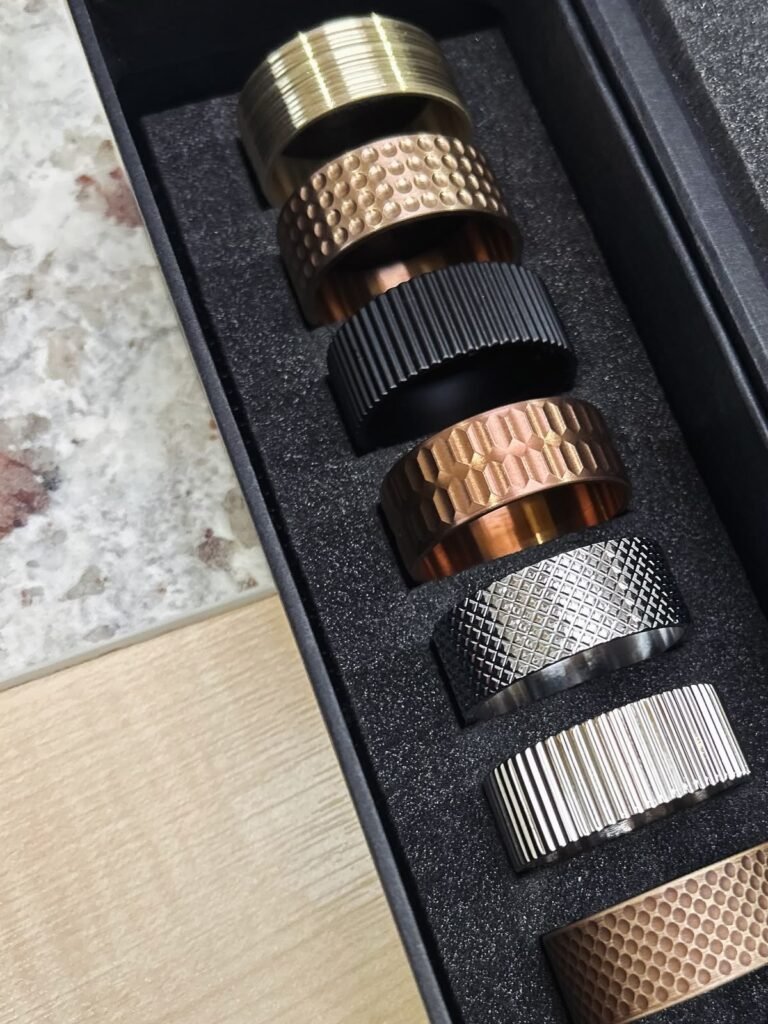
For textured smartphone back panels, this balance becomes even more important.
SRNC’s Texture Coating for Cell Phone Back Panel is relevant to manufacturers developing decorative and functional surface finishes for mobile-device housings.
Surface Texture and Smudge Visibility
Surface texture can affect how contaminants appear.
A fine texture may scatter reflected light differently from a perfectly smooth surface.
As a result, an oily residue may be less visually obvious on certain textured finishes.
However, texture alone shouldn’t be assumed to provide reliable anti-smudge performance.
The coating and texture need to be engineered together.
A good combination should preserve:
- Texture definition
- Tactile feedback
- Visual uniformity
- Smudge resistance
- Cleanability
This is especially important for premium smartphone back panels.
Oil Spreading and Surface Energy
Oil spreading is an important factor in smudge formation.
When an oily contaminant spreads over a large area, it creates a more noticeable film.
Surface chemistry can influence how strongly the oil interacts with the substrate.
By adjusting surface energy, coating engineers can reduce the tendency of oily substances to spread.
This doesn’t mean the surface becomes completely contamination-proof.
Instead, the goal is to make contamination less persistent and easier to remove.
Easy-Clean Performance
Anti-smudge performance is closely connected with easy cleaning.
A coating that reduces residue adhesion can make wiping more effective.
This can reduce the effort needed to restore the surface to its original appearance.
Easy-clean performance is particularly useful for products that are cleaned frequently, such as:
- Smartphones
- Tablets
- Touch displays
- Smartwatches
- Automotive interfaces
Repeated cleaning also creates mechanical stress, so the coating needs sufficient durability.
Hydrophobic and Oleophobic Characteristics
Anti-smudge coatings may be combined with hydrophobic and oleophobic properties.
Hydrophobicity addresses water.
Oleophobicity addresses oils.
Anti-smudge performance focuses on the visible result of contamination and its cleanability.
For a smartphone surface, combining these characteristics can provide broader protection.
A multifunctional surface may therefore be designed with:
Hydrophobic + Oleophobic + Anti Smudge + Easy Clean
The exact specification depends on the product.
Materials for Anti Smudge Coating
Anti-smudge coatings can be engineered for different substrates.
Glass
Glass provides a smooth and premium surface.
An anti-smudge treatment can improve its resistance to visible contamination while maintaining its visual clarity.
Plastic
Plastic housings can benefit from anti-smudge functionality, but surface preparation is important because different plastics have different surface characteristics.
Ceramic
Ceramic surfaces are often selected for their premium appearance and tactile properties.
An anti-smudge coating can help maintain a cleaner appearance during daily handling.
Metal
Metal housings may require suitable surface preparation and adhesion control.
The coating should also be compatible with any decorative or protective layer underneath.
Anti Smudge Coating and Durability
A coating’s initial performance isn’t enough.
Smartphone surfaces experience continuous contact, rubbing, cleaning, and environmental exposure.
Over time, these conditions can change the outermost coating surface.
Durability testing should therefore evaluate performance after:
- Repeated rubbing
- Cleaning cycles
- Abrasion
- Chemical exposure
- Temperature changes
- Humidity
The objective is to determine whether the anti-smudge effect remains effective throughout the expected product life.
Chemical Resistance
Smartphone surfaces can come into contact with a wide range of substances.
Examples include:
- Hand sanitizer
- Alcohol
- Sweat
- Skin oils
- Sunscreen
- Cosmetics
- Cleaning products
Some chemicals can affect surface chemistry and reduce functional performance.
A suitable anti-smudge coating should therefore be evaluated against chemicals relevant to the final application.
Abrasion Resistance
Repeated contact can gradually wear a surface.
A phone may be placed in:
- Pockets
- Bags
- On desks
- On vehicle surfaces
It can also rub against other objects.
For this reason, abrasion resistance is an important consideration.
The coating should maintain its surface characteristics after realistic mechanical testing.
How Anti Smudge Coating Is Applied
The exact process depends on the coating technology and substrate.
A typical manufacturing sequence may include:
Surface Cleaning
The substrate is cleaned to remove dust, oil, and other contamination.
Surface Preparation
Additional treatment may be used to improve adhesion.
Coating Application
The functional coating is deposited under controlled conditions.
Curing or Stabilization
The coating is processed to achieve the required surface properties.
Inspection
The finished component is inspected for visual and functional quality.
Testing
Smudge resistance, cleanability, adhesion, abrasion, and chemical resistance are evaluated.
How Anti Smudge Performance Is Tested
Different tests can evaluate different aspects of performance.
| Test | Purpose |
|---|---|
| Oil contamination test | Evaluates interaction with oily residues |
| Smudge visibility test | Measures visible contamination |
| Wipe test | Evaluates cleaning performance |
| Repeated wiping | Measures functional durability |
| Abrasion test | Evaluates wear resistance |
| Chemical exposure | Measures chemical stability |
| Surface-energy testing | Characterizes wetting behavior |
Testing should ideally use realistic contaminants rather than relying only on pure laboratory liquids.
Human sebum and fingerprint simulants can provide more application-relevant information.
Appearance and Tactile Requirements
An anti-smudge coating shouldn’t solve one problem by creating another.
For a decorative smartphone back panel, the coating needs to preserve the intended finish.
Depending on the design, this can include:
- Matte appearance
- Fine texture
- Micro texture
- Metallic appearance
- Soft-touch feel
- Consistent color
The coating should be uniform enough to avoid unwanted changes in visual appearance.
How to Choose an Anti Smudge Coating
Before selecting a coating, manufacturers should define the complete surface specification.
Substrate
What material is being coated?
Surface Finish
Is the surface glossy, matte, textured, or soft-touch?
Contamination Type
Will the main contaminants be skin oils, sweat, water, cosmetics, or cleaning chemicals?
Durability
How many touch and cleaning cycles should the coating withstand?
Chemical Exposure
Which substances will contact the surface during normal use?
Appearance
What gloss, color, texture, and tactile properties must remain unchanged?
Manufacturing Process
Can the coating be integrated into the existing production process at the required volume?
Applications Beyond Smartphones
Anti-smudge technology has potential applications across many products.
These include:
- Tablets
- Smartwatches
- Automotive displays
- Touchscreen devices
- Consumer electronics
- Smart appliances
- Industrial control panels
- Portable electronic equipment
Any frequently handled surface can benefit from better contamination control.
Frequently Asked Questions
What is anti smudge coating?
Anti smudge coating is a functional surface treatment designed to reduce visible oily marks and contamination while making the surface easier to clean.
Is anti smudge coating the same as anti fingerprint coating?
They are closely related, but anti-smudge performance has a broader focus on visible contamination and spreading, while anti-fingerprint coatings specifically target marks caused by fingerprints.
Does anti smudge coating repel oil?
It can reduce the spreading and adhesion of oily contaminants. The exact level of oil repellency depends on the coating formulation and surface design.
Can anti smudge coating be used on smartphone back panels?
Yes. It can be developed for suitable glass, plastic, ceramic, metal, and other housing materials.
Can anti smudge coating be combined with hydrophobic properties?
Yes. Combining water-repellent and oil-repellent characteristics can provide more comprehensive surface protection.
Does anti smudge coating prevent fingerprints completely?
No. It doesn’t stop skin oils from reaching the surface. Its purpose is to reduce spreading, visibility, adhesion, and cleaning difficulty.
Does texture help reduce smudges?
Certain textures can make contamination less visually obvious, but texture alone doesn’t guarantee anti-smudge performance. Surface chemistry and coating design remain important.
How durable is anti smudge coating?
Durability depends on the coating, substrate, abrasion, cleaning frequency, and chemical exposure. Repeated wiping and abrasion tests can help evaluate expected service performance.
How do manufacturers test anti-smudge performance?
Testing can include oil contamination, fingerprint simulation, smudge visibility, wipe-clean testing, abrasion, chemical resistance, and surface-energy measurements.
Conclusion
A smartphone’s surface has to withstand far more than simple environmental exposure. It is touched repeatedly, exposed to skin oils and sweat, wiped clean, placed against other surfaces, and expected to maintain its original appearance.
Anti smudge coating provides a way to manage this everyday contamination by modifying how oils and other residues interact with the surface.
For smartphone back panels, the best solution isn’t simply an oil-repellent film. The coating needs to work together with the substrate, texture, appearance, tactile properties, and durability requirements.
SRNC’s Texture Coating for Cell Phone Back Panel can be considered when developing functional and decorative surface solutions for mobile-device housings.
A well-engineered anti-smudge surface ultimately aims for a simple result: less visible contamination, easier cleaning, and a smartphone surface that stays closer to its intended appearance during everyday use.