

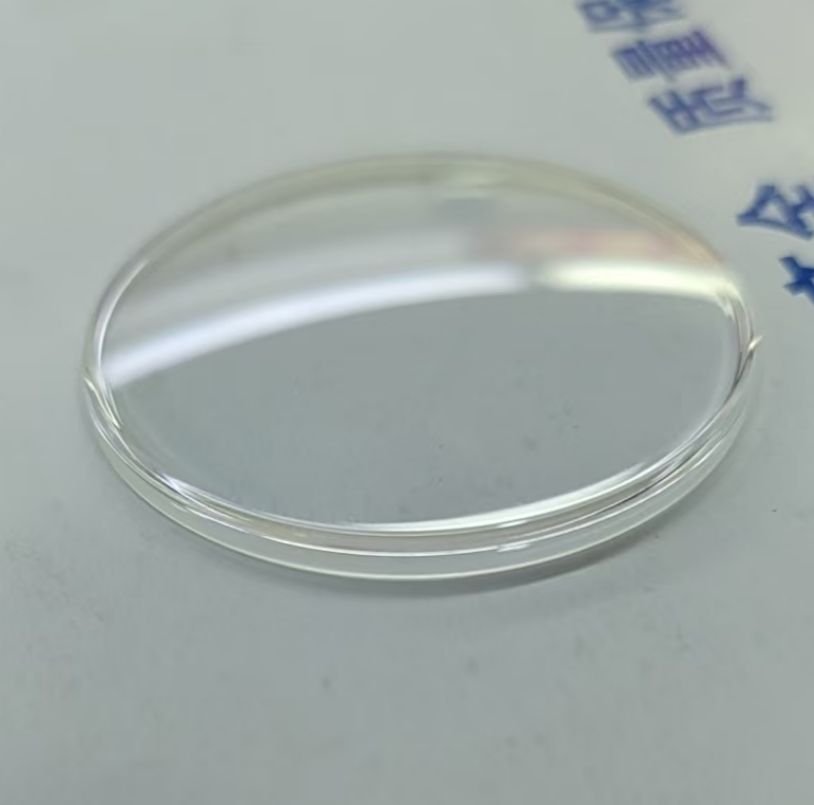
Hard Coating for VR Devices: Protecting Precision Optics and Headset Components
Introduction
Virtual reality (VR) devices rely on carefully engineered optical systems to create immersive visual experiences. Headsets commonly incorporate lenses, optical windows, display-cover components, and precision mechanical assemblies that must work together to deliver clear images and comfortable viewing.
These components face practical durability challenges. Repeated handling, dust, fingerprints, cleaning, and accidental contact can affect exposed surfaces. Scratches and abrasion may reduce visual quality, while unsuitable coatings can introduce unwanted reflections, haze, or other optical effects.
This makes hard coating for VR devices an important consideration in the design of durable VR hardware. A properly selected coating can improve resistance to mechanical damage and help preserve surface quality throughout manufacturing, assembly, and everyday use.
However, VR coating requirements are not identical to those of ordinary consumer electronics. Optical components may have strict requirements for transmission, reflection, image quality, and surface uniformity. Coating design must therefore balance protection with the performance of the complete optical system.
For VR manufacturers, component suppliers, and product development teams, understanding this balance is essential when specifying coatings for next-generation headsets.
What Is Hard Coating for VR Devices?
Hard coating for VR devices refers to a protective coating applied to suitable headset components to improve their resistance to scratches, abrasion, and other forms of surface damage.
Depending on the component and intended use, a coating may be applied to an optical surface, an external protective window, a display cover, or a non-optical housing component. Each application has different technical priorities.
Potential coating objectives include:
- Improving surface hardness and scratch resistance
- Reducing damage from repeated contact and handling
- Improving abrasion resistance during cleaning
- Supporting resistance to selected chemicals
- Maintaining surface appearance
- Protecting underlying functional layers
- Supporting long-term product durability
The coating may use a single-layer or multilayer structure, depending on the required properties and deposition technology.
Importantly, not every VR lens should receive the same hard coating. The appropriate solution depends on the lens material, optical design, coating location, and whether the surface is exposed or protected within the headset.
Why VR Devices Need Surface Protection
VR headsets are worn close to the user’s face and are handled repeatedly. Their optical and external surfaces can experience different types of contact throughout the product lifecycle.
Repeated Cleaning
Facial oils, dust, and fingerprints may accumulate on accessible surfaces. Users may clean these surfaces frequently, creating repeated friction between the cleaning material and the component.
Over time, unsuitable surfaces may develop fine scratches or visible wear.
A coating designed for the relevant cleaning conditions can help improve durability. The cleaning method and approved materials should still be considered because even a hard coating can be damaged by inappropriate tools or chemicals.
Dust and Particles
Small particles trapped between a cleaning cloth and a surface can produce scratches during wiping.
Hard coating can improve resistance to some forms of surface damage, but performance depends on the coating system, substrate, particle characteristics, and applied force.
Assembly and Manufacturing
Optical components may contact fixtures, packaging, handling tools, or adjacent components during production.
Protective coating can help reduce damage risk, although manufacturing controls and proper handling remain necessary.
Long-Term Appearance
Scratches, scuffs, and surface deterioration can affect perceived product quality. For components visible to the user, consistent appearance can be as important as the underlying mechanical performance.
Understanding the Different VR Components
A VR headset contains multiple components, and their coating requirements should be evaluated separately.
1. Optical Lenses
Lenses are central to the visual experience. Depending on the headset design, they may use Fresnel, aspherical, pancake-optics, or other optical arrangements.
A protective coating on a lens must be compatible with the lens material and optical design. Hardness alone is not sufficient: the coating must also preserve the required transmission, reflection characteristics, and image quality.
Some optical surfaces may already contain anti-reflective or other functional layers. Adding a protective layer requires evaluating its interaction with the existing coating stack.
2. Display Cover Components
A protective window or cover positioned over a display may need to resist scratches and repeated handling while maintaining the required optical clarity.
Depending on the architecture, this component may be separate from the actual display panel. Its coating requirements should be defined according to its location and function.
3. External Optical Windows
Some VR systems include external windows, sensors, or optical elements that face the surrounding environment.
These parts may need to resist dust, fingerprints, cleaning agents, and incidental contact. If the window serves an optical sensor, wavelength response and transmission may also be important.
4. Headset Housing and Decorative Surfaces
The outer housing has different priorities from the optical system. Appearance, texture, wear resistance, and resistance to cleaning products may be the primary considerations.
Decorative or protective hard coatings can be evaluated for compatible housing substrates, but the chosen process must suit the material and required finish.
Hardness Versus Optical Clarity
One of the most important challenges in VR coating design is improving surface durability without compromising optical performance.
A coating may be mechanically hard yet unsuitable for a lens if it introduces excessive reflection, absorption, scattering, haze, or non-uniformity.
Optical performance can depend on several variables:
- Refractive index of the coating
- Film thickness
- Surface roughness
- Layer structure
- Substrate quality
- Coating uniformity
- Wavelength range
- Angle of incidence
In a VR headset, small optical changes can affect image contrast, brightness, or the appearance of artifacts. The acceptable limits depend on the headset’s optical architecture and performance targets.
For this reason, hard coating for VR optics should be evaluated as part of the complete optical system, not solely through a mechanical hardness measurement.
The Role of Anti-Reflective Coatings
Hard coatings and anti-reflective coatings serve related but distinct functions.
A hard coating primarily targets surface durability. An anti-reflective (AR) coating is designed to reduce reflection over specified wavelengths and operating conditions.
Some optical components require both functions. In such cases, the coating stack must be engineered to achieve the required mechanical and optical performance together.
Potential design considerations include:
- Compatibility between protective and optical layers
- Adhesion between adjacent layers
- Film thickness and uniformity
- Reflection across the relevant wavelength range
- Resistance to repeated cleaning
- Stability under temperature and humidity exposure
The exact layer arrangement depends on the optical design. A protective layer should not be added without evaluating its impact on the existing optical system.
Suitable Coating Technologies
Vacuum deposition is an important family of technologies for producing thin functional films. Depending on the substrate, coating materials, and performance requirements, possible approaches include magnetron sputtering and evaporation-based deposition.
Magnetron Sputtering
Magnetron sputtering uses a plasma to transfer material from a target onto a substrate. It can support the deposition of controlled thin films and multilayer structures.
The suitability of sputtering depends on the coating system, substrate sensitivity, component geometry, and production requirements.
Evaporation-Based Deposition
Evaporation technologies transfer coating material into the vapor phase, allowing it to condense onto the substrate under controlled vacuum conditions.
These processes can be used for various optical and functional thin-film applications. The required film characteristics determine whether a particular evaporation process is appropriate.
Multilayer Coating Structures
A multilayer design can combine different materials or layers to achieve a more balanced set of properties.
For example, an optical component may require an optical layer stack together with a protective function. The design must account for the interactions between the layers, including stress, adhesion, thickness, and optical behavior.
No single deposition technology is automatically best for every VR component. Process selection should follow the actual material and product specifications.
Substrate Compatibility for VR Coatings
VR optical components may be manufactured from glass, optical polymers, or other specialized materials.
Each substrate introduces different coating considerations.
Glass
Glass is used in many optical applications because of its established optical properties and dimensional stability. Surface preparation and coating adhesion remain important, particularly when several functional layers are involved.
Optical Polymers
Polymer optics can offer weight and manufacturing advantages, but some polymers are more sensitive to heat, solvents, or surface preparation conditions.
The deposition process must be compatible with the substrate’s thermal and mechanical limits.
Sapphire and Other Specialized Materials
Sapphire is known for its high hardness and is used in selected applications where its material properties are valuable. However, it is not a universal solution for VR optics, and the choice of substrate depends on optical design, weight, cost, and component requirements.
Additional coatings may still be considered when specific optical or surface functions are required.
The key principle is to select the coating and deposition process for the actual substrate, rather than assuming that one formulation is suitable for every VR component.
Scratch Resistance and Abrasion Performance
Scratch resistance and abrasion resistance are related but different properties.
Scratch resistance describes how well a surface withstands localized damage from contact with an object. Abrasion resistance concerns progressive surface wear caused by repeated friction.
For VR headsets, abrasion may result from routine cleaning, handling, or repeated contact with protective accessories.
Performance depends on more than hardness. Other important factors include:
- Coating adhesion
- Film structure and internal stress
- Substrate hardness and stiffness
- Surface roughness
- Contact force
- Type of contacting material
- Number of repeated cycles
A coating should therefore be tested under conditions relevant to the intended product. Results from one test method should not automatically be interpreted as a guarantee against every type of scratch or wear.
Chemical Resistance and Cleaning Durability
VR devices may encounter skin oils, sweat, cleaning solutions, and disinfectants. These exposures can affect coating performance depending on their composition and frequency.
A coating intended for repeated cleaning should be evaluated against the actual cleaning agents and procedures expected during use.
Relevant factors may include:
- Chemical composition
- Concentration
- Contact time
- Temperature
- Cleaning frequency
- Wiping pressure
- Compatibility with other coating layers
Chemical resistance should be verified through an appropriate test plan. A coating described as chemically resistant should not be assumed to tolerate every solvent or disinfectant.
Manufacturers should also provide clear cleaning instructions for the finished device.
Hydrophobic and Oleophobic Surface Functions
Some optical components benefit from water-repellent or oil-repellent surface treatments.
Hydrophobic properties reduce the tendency of water to spread across a surface. Oleophobic properties can help reduce the adhesion of oils and fingerprints.
These functions may improve cleanability, but they are not equivalent to hard coating.
A surface can have excellent water repellency while still being vulnerable to abrasion. Conversely, a mechanically durable hard coating may not provide strong fingerprint resistance.
Where a VR component needs both durability and easier cleaning, the coating design should evaluate the compatibility of these functions and the retention of surface properties after repeated use.
Quality Testing for VR Hard Coatings
A reliable coating specification should define how performance will be measured.
Depending on the component, the testing program may include the following:
| Performance Area | Potential Evaluation |
|---|---|
| Adhesion | Appropriate adhesion testing for the coating and substrate |
| Scratch resistance | Controlled scratch testing |
| Abrasion resistance | Repeated-contact or abrasion testing |
| Optical performance | Transmission, reflection, haze, or other relevant optical measurements |
| Film thickness | Suitable thin-film thickness measurement |
| Chemical resistance | Exposure to specified cleaning agents or chemicals |
| Environmental durability | Temperature and humidity testing |
| Surface functionality | Contact-angle or cleanability assessment where relevant |
| Appearance | Inspection for defects, color variation, or surface non-uniformity |
Not every test applies to every component. A headset housing and an optical lens have different performance priorities.
Acceptance criteria should be established before qualification begins so that the coating can be assessed objectively.
From Prototype to Mass Production
A coating that performs well on a small number of samples may behave differently under high-volume manufacturing conditions.
For VR hardware, scale-up should consider the geometry of the components, fixture design, loading arrangement, deposition uniformity, cleaning process, and inspection method.
A structured production qualification process can include:
- Confirming the component drawing and substrate specifications.
- Defining coating performance requirements.
- Preparing representative prototype samples.
- Evaluating optical and mechanical performance.
- Optimizing the coating process.
- Establishing inspection and acceptance criteria.
- Validating repeatability under representative production conditions.
- Monitoring quality across ongoing production batches.
The goal is not only to achieve the required performance once, but to reproduce it consistently.
How to Select a VR Hard Coating Supplier
When evaluating a coating supplier for VR products, manufacturers should focus on technical fit and process control.
Optical Application Experience
Determine whether the supplier understands the difference between optical and non-optical surfaces. Optical components require attention to transmission, reflection, haze, surface defects, and coating uniformity.
Substrate and Process Compatibility
Confirm that the supplier can work with the intended substrate and component geometry. For polymer optics, discuss temperature limits and material sensitivity before selecting a deposition method.
Testing Capabilities
Ask which mechanical, optical, chemical, and environmental tests can be performed, and whether the supplier can support the required documentation.
Customization and Engineering Support
Some projects require an established coating process, while others need additional development. Clarify whether the supplier can support sample evaluation, process adjustment, and production qualification.
Production Consistency
Discuss batch-to-batch variation, inspection procedures, traceability, and how changes to the process are controlled.
Total Cost and Yield
The coating price is only one part of the overall manufacturing cost. Rework, rejected optical components, testing, process development, and production yield can significantly affect the final economics.
SRNC and Advanced Surface Coating Technology
SRNC specializes in vacuum coating technology and the development and manufacturing of nanocomposite materials and advanced coating equipment. Its product range includes solutions for electronic and decorative applications.
For projects that require advanced surface hardness and protective performance, explore SRNC Sapphire Super Hard Coating.
For camera-related optical applications, Functional Coating for Cell Phone Camera provides a relevant reference for understanding functional coating requirements in compact optical devices.
These product pages are useful starting points for exploring related coating technologies. The specific suitability of a coating for VR lenses, display covers, or headset windows should be confirmed against the component’s substrate, optical design, and performance requirements.
Conclusion
Hard coating for VR devices is a surface engineering challenge that requires a careful balance between durability and optical performance.
VR lenses, protective windows, display covers, and external housing components do not share identical requirements. Each component needs a coating strategy suited to its substrate, operating environment, optical function, and expected service life.
A successful solution considers hardness, adhesion, abrasion resistance, chemical compatibility, film thickness, optical behavior, and manufacturing repeatability. Testing should reflect real product conditions, especially where repeated cleaning and close-range optical performance are involved.
For VR manufacturers and component suppliers, the most effective approach is to treat coating selection as part of the complete product development process. With appropriate material selection, process control, and validation, hard coatings can help protect critical surfaces while supporting the durability and quality expectations of modern VR hardware.