

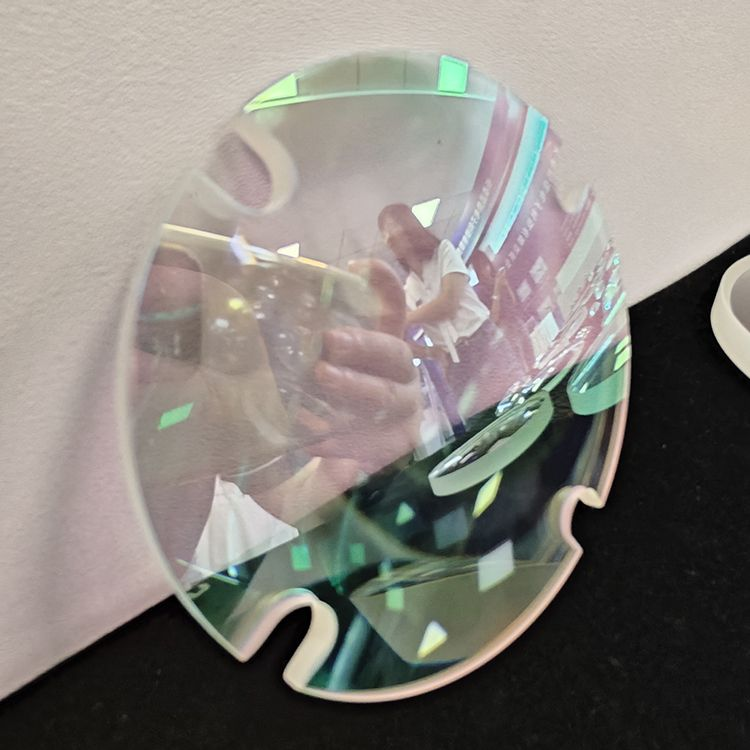
Hard Coating for Camera Lens: Protecting Optical Surfaces Without Compromising Performance
What Is Hard Coating for Camera Lens?
A hard coating for camera lens is an engineered thin surface layer designed to improve the mechanical durability of an optical lens while maintaining the optical characteristics required by the imaging system.
Camera lenses have a difficult engineering requirement: the surface needs to be protected from scratches, abrasion, contamination, and handling, but the coating must also interact with light in a controlled way.
This makes camera-lens coating fundamentally different from applying a generic protective layer to a non-optical component.
A suitable coating system may need to balance:
- Surface hardness
- Scratch resistance
- Abrasion resistance
- Adhesion
- Optical transmission
- Reflection
- Haze
- Surface uniformity
- Chemical resistance
- Environmental stability
The exact combination depends on the lens material, optical design, application, and manufacturing requirements.
Why Camera Lenses Need Hard Coatings
The surface of a camera lens can encounter mechanical and environmental stress throughout its service life.
Potential sources of damage include:
- Dust particles
- Repeated cleaning
- Finger contact
- Abrasion from cloths
- Contact with other objects
- Oils and fingerprints
- Cleaning chemicals
- Humidity
- Temperature variation
Even a small scratch can become important when it is located within an optical path.
Surface damage may affect not only appearance but also light transmission and scattering behavior.
For this reason, lens protection must be engineered around both mechanical durability and optical performance.
Hardness Alone Is Not Enough
A common mistake in evaluating optical hard coatings is to focus only on hardness.
A very hard film may still be unsuitable if it:
- Has poor adhesion
- Produces excessive reflection
- Reduces transmission
- Creates haze
- Develops cracks
- Has poor environmental stability
- Shows non-uniform thickness
A successful optical coating is therefore a balanced system.
The coating must provide adequate mechanical protection while remaining compatible with the optical requirements of the lens.
Optical Performance Must Be Preserved
Light passing through a coated lens interacts with the coating surface and its material structure.
The coating can influence:
- Transmission
- Reflection
- Absorption
- Scattering
- Refractive behavior
- Spectral response
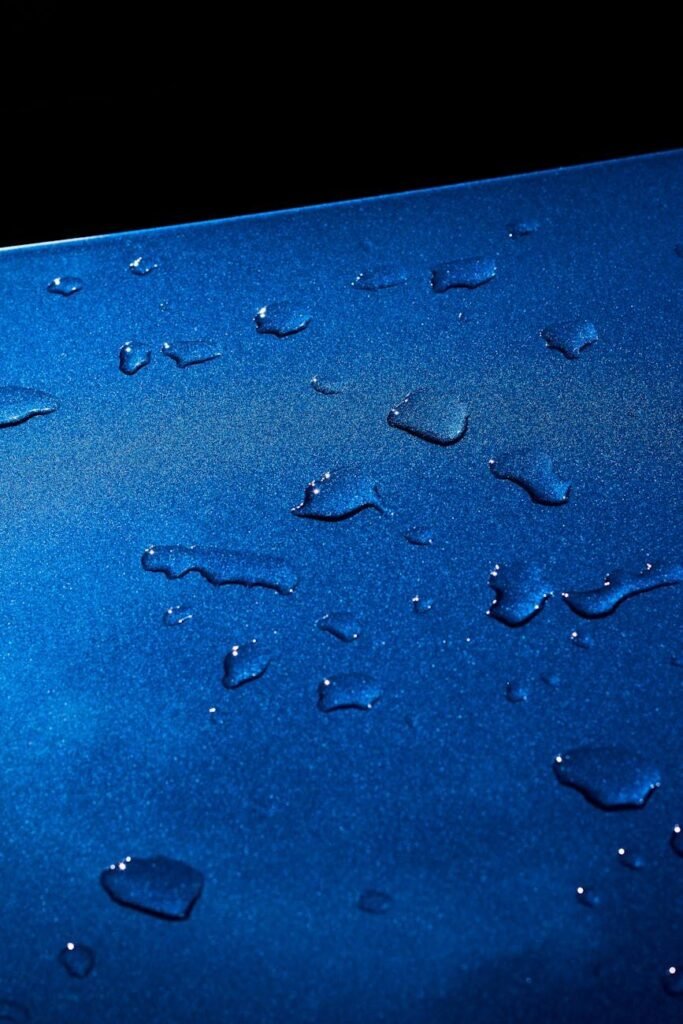
For camera applications, these characteristics can influence the amount and quality of light reaching the image sensor.
Therefore, a hard coating should be engineered with optical parameters in mind from the beginning.
Important variables can include:
- Refractive index
- Film thickness
- Layer structure
- Surface roughness
- Uniformity
- Wavelength range
- Angle of incidence
The objective is not simply to make the lens surface harder, but to create a durable optical surface that remains compatible with the imaging system.
Thin-Film Technology for Camera Lens Protection
Vacuum deposition is widely used for precision optical thin films because it allows controlled material deposition under carefully managed conditions.
Depending on the application, processes may include:
- Magnetron sputtering
- Physical vapor deposition
- Electron beam evaporation
- Ion-assisted deposition
- Other vacuum thin-film technologies
These processes can produce controlled films with specific thickness and optical characteristics.
For camera lenses, the selected technology should be compatible with the substrate and the required optical performance.
Surface Preparation Is Critical
The quality of an optical coating begins with the surface before deposition.
Microscopic contamination can affect both adhesion and optical quality.
Typical preparation stages may include:
- Incoming material inspection
- Precision cleaning
- Removal of particles and organic contaminants
- Surface conditioning
- Drying
- Loading into the coating system
- Vacuum treatment
- Thin-film deposition
- Optical and process inspection
The exact procedure depends on the lens material and coating design.
For optical surfaces, cleanliness requirements can be particularly strict because defects may become visible or influence light scattering.
Hard Coating for Glass Camera Lenses
Glass remains an important optical material because of its optical properties and dimensional stability.
However, a glass lens can still be scratched or abraded during handling and cleaning.
A hard coating can provide additional surface protection.
For glass optical components, the coating needs to maintain:
- Optical clarity
- Surface quality
- Strong adhesion
- Mechanical durability
- Environmental stability
Film thickness and uniformity are particularly important because variations can affect optical behavior.
Hard Coating for Polymer Camera Lenses
Some camera systems use polymer-based optical materials.
These materials can have different thermal and mechanical characteristics from glass.
As a result, coating development may need to account for:
- Thermal expansion
- Surface hardness
- Surface chemistry
- Adhesion
- Deposition temperature
- Film stress
A coating process suitable for glass cannot necessarily be transferred directly to a polymer lens without modification.
This is why substrate compatibility should be evaluated during the earliest stages of coating development.
Scratch Resistance for Camera Lenses
Scratch resistance is one of the most important functions of a hard optical coating.
A lens surface can be exposed to particles and objects with different hardness levels.
During cleaning, particles trapped between a cloth and the lens surface can create localized mechanical stress.
A properly engineered hard film can reduce the likelihood of permanent surface damage.
However, scratch resistance depends on more than film hardness.
Other factors include:
- Coating thickness
- Film structure
- Adhesion
- Substrate properties
- Surface roughness
- Counter-body hardness
- Contact pressure
Testing should therefore reflect the actual cleaning and handling conditions expected during product use.
Abrasion Resistance for Repeated Cleaning
Camera lenses are often cleaned repeatedly.
This makes abrasion resistance particularly relevant.
Repeated wiping can produce gradual wear even when no individual event creates a significant scratch.
An optical hard coating should therefore be evaluated for both:
Localized scratch resistance
and
Repeated abrasion resistance.
These represent different failure mechanisms.
A coating that performs well under one test may not necessarily provide equivalent performance under the other.
Film Thickness and Optical Uniformity
Film thickness is one of the most important parameters in optical coating design.
If the coating is too thin, it may provide insufficient mechanical protection.
If it is too thick or poorly controlled, it can influence optical behavior and create additional process challenges.
Uniformity is equally important.
A lens with non-uniform coating thickness may exhibit variations in:
- Transmission
- Reflection
- Color
- Surface appearance
- Mechanical performance
Precision coating equipment and controlled fixture design are therefore essential for optical applications.
Adhesion Between the Coating and Lens
Long-term lens protection depends heavily on adhesion.
If the film begins to separate from the substrate, even a highly durable coating material cannot provide reliable protection.
Adhesion can be affected by:
- Surface contamination
- Surface preparation
- Substrate chemistry
- Pretreatment
- Deposition energy
- Film stress
- Thermal conditions
The coating-substrate interface should therefore be considered a critical part of the lens coating system.
Hard Coating and Anti-Reflection Performance
In many optical applications, mechanical protection and anti-reflection performance need to coexist.
A hard coating can potentially be integrated into a multilayer optical structure.
Different layers can be designed to provide different functions.
For example:
- An adhesion-related layer can improve interface stability.
- A hard layer can improve mechanical durability.
- Optical layers can control reflection and transmission.
- Surface-functional layers can modify interaction with contaminants or moisture.
The exact structure depends on the optical specification.
This type of multilayer engineering allows manufacturers to address several requirements within a controlled thin-film system.
Hydrophobic and Oleophobic Surface Functions
Camera lens surfaces can also benefit from controlled surface-wetting characteristics.
Hydrophobic and oleophobic treatments can reduce the tendency of water or oily contaminants to remain on the surface.
This can help maintain a cleaner optical path and make the surface easier to clean.
However, these functions must be compatible with the underlying hard coating.
A complete lens surface may therefore combine:
Mechanical protection + optical performance + contamination management.
Environmental Stability
Camera lenses may be used under changing environmental conditions.
Potential exposure includes:
- Humidity
- Temperature cycling
- Dust
- Sweat
- Cleaning agents
- Condensation
- Outdoor environments
A coating should remain stable under the conditions relevant to its application.
Temperature changes are particularly important because different materials can have different thermal expansion behavior.
This can create stress at the interface between coating and substrate.
Environmental qualification can help identify potential long-term failure mechanisms.
Testing Hard Coating for Camera Lenses
A camera lens coating should be validated through application-specific testing.
Scratch Testing
Evaluates resistance to localized mechanical damage.
Abrasion Testing
Measures performance under repeated mechanical contact.
Adhesion Testing
Determines how securely the coating remains attached.
Optical Transmission Testing
Measures how much light passes through the coated lens.
Reflection Testing
Evaluates surface reflection behavior.
Haze and Surface Inspection
Helps identify optical defects and surface irregularities.
Environmental Testing
Temperature and humidity testing can evaluate stability under controlled conditions.
SRNC’s testing capabilities include film abrasion testing, reflection testing, automatic contact angle testing, cross-cut testing, resistance testing, and constant temperature and humidity testing.
The specific qualification program should be determined according to the lens and imaging system.
Hard Coating for Smartphone Camera Lenses
Smartphone cameras present a particularly demanding application because camera modules are compact while optical requirements remain strict.
The camera cover surface may need to withstand:
- Pocket contact
- Fingerprints
- Cleaning
- Abrasion
- Dust
- Environmental exposure
At the same time, the optical path must remain highly controlled.
SRNC’s Functional Coating for Cell Phone Camera is designed around functional surface requirements for cell phone camera applications.
For smartphone camera components, coating development should consider the complete optical stack rather than treating the protective film as an isolated layer.
Hard Coating for Other Optical Components
The same surface-engineering principles can apply to other optical components.
Potential applications include:
- Optical windows
- Protective glass
- Camera modules
- Sensors
- Precision lenses
- Imaging components
Each application has its own optical wavelength range, geometry, environmental conditions, and mechanical requirements.
Therefore, coating parameters should be adapted to the actual component.
Manufacturing Consistency Matters
A coating that works on one prototype is not automatically a production-ready solution.
Mass production requires consistent control of:
- Cleaning
- Surface preparation
- Vacuum conditions
- Deposition parameters
- Film thickness
- Layer structure
- Fixture positioning
- Inspection
For optical components, small process variations can sometimes create measurable optical differences.
This makes production repeatability an essential part of optical coating qualification.
From Prototype to Mass Production
A reliable camera lens coating program can follow a structured development process.
1. Define Optical Requirements
Identify wavelength range, transmission, reflection, and other optical specifications.
2. Define Mechanical Requirements
Specify scratch, abrasion, adhesion, and environmental requirements.
3. Characterize the Substrate
Evaluate glass, polymer, sapphire, or other optical materials.
4. Develop the Thin-Film Structure
Select suitable materials, layer structure, thickness, and deposition parameters.
5. Conduct Performance Testing
Evaluate optical and mechanical characteristics.
6. Optimize the Process
Adjust surface preparation and deposition conditions.
7. Validate Pilot Production
Confirm repeatability under realistic manufacturing conditions.
8. Establish Mass Production Controls
Monitor critical parameters and maintain consistent inspection procedures.
This process helps connect laboratory coating development with real-world optical manufacturing.
How to Choose a Camera Lens Coating Supplier
When selecting a supplier for hard coating for camera lens applications, manufacturers should consider several capabilities.
Optical Understanding
Can the supplier balance mechanical protection with optical performance?
Thin-Film Technology
Does the supplier have suitable vacuum deposition capabilities?
Substrate Compatibility
Can the supplier process the required optical materials?
Testing
Can optical and mechanical properties be verified?
Process Control
Can film thickness and uniformity be maintained during production?
Scale-Up
Can the supplier support the transition from prototype to mass production?
These factors are often more important than simply comparing a nominal coating hardness value.
Conclusion
A hard coating for camera lens applications must solve two problems at the same time: protecting a delicate optical surface and preserving the optical behavior required by the imaging system.
Scratch resistance, abrasion resistance, adhesion, film thickness, surface uniformity, optical transmission, reflection, and environmental stability all contribute to the final performance.
Advanced vacuum deposition technologies provide a practical way to create precisely controlled thin films for glass, polymer, sapphire, and other optical substrates.
The most reliable approach is to design the coating around the complete optical component—from substrate preparation and film structure to optical testing, mechanical qualification, and mass-production process control.
For camera manufacturers and optical component suppliers, this integrated approach can help create surfaces that remain both durable and optically functional throughout the intended service life.