

Precision Coating: Engineering High-Accuracy Surface Performance for Advanced Components
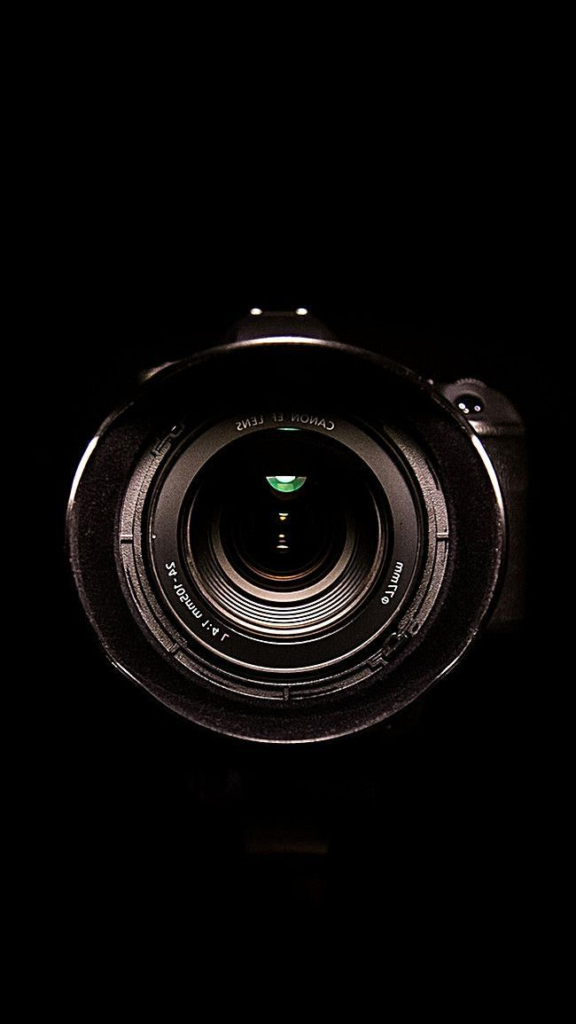
Modern electronic and optical components increasingly require surface treatments that deliver several performance characteristics at the same time. A component may need high scratch resistance, stable optical behavior, strong adhesion, chemical durability, controlled appearance, and consistent performance across large production volumes. Meeting these requirements depends not simply on applying a coating, but on controlling the entire coating process with a high degree of precision.
Precision coating refers to coating processes in which material deposition, film thickness, surface uniformity, composition, adhesion, and other critical parameters are carefully controlled to achieve defined performance targets. This approach is particularly important when coatings are applied to optical glass, sapphire, camera components, smartphone surfaces, sensors, and other high-value products where small variations can affect appearance or functional performance.
For manufacturers, precision coating is therefore a combination of material engineering, vacuum deposition technology, process control, substrate preparation, inspection, and production management.
What Is Precision Coating?
Precision coating can be understood as a controlled surface-engineering process designed to place a functional or protective thin film onto a substrate with tightly managed characteristics.
Unlike a basic decorative treatment, a precision coating process may need to control:
- Film thickness
- Thickness uniformity
- Coating composition
- Surface coverage
- Adhesion
- Optical properties
- Surface hardness
- Scratch resistance
- Abrasion resistance
- Chemical resistance
- Environmental stability
- Surface appearance
The required level of precision depends on the application.
For a decorative electronic component, color and texture consistency may be the dominant requirements. For an optical component, transmission, reflection, spectral response, and film uniformity can be much more critical. For a protective surface, hardness, adhesion, wear resistance, and chemical durability may take priority.
The key principle is that coating precision should be defined by the final product requirements, rather than by coating thickness alone.
Why Precision Matters in Advanced Surface Engineering
A thin film can be extremely small in thickness while having a significant effect on the performance of the underlying component.
A coating that is slightly different from the intended specification can potentially influence:
- Optical transmission
- Reflectance
- Surface color
- Gloss
- Haze
- Scratch resistance
- Friction behavior
- Surface energy
- Adhesion
- Long-term durability
This becomes particularly important for optical and consumer-electronics applications.
For example, a coating applied to a camera-related component must work within an optical system where unwanted reflection or absorption can influence the amount of light reaching the sensor. Meanwhile, a protective coating on a smartphone surface needs to withstand repeated contact, cleaning, fingerprints, and everyday abrasion without significantly changing the intended appearance.
Precision coating provides the process control needed to balance these competing requirements.
Precision Coating and Substrate Compatibility
The substrate is one of the first variables that should be considered when developing a precision coating.
Different substrates have different surface characteristics, thermal behavior, hardness, chemical stability, and adhesion requirements. Common materials in advanced electronics and optical applications include:
- Glass
- Sapphire
- Ceramic materials
- Metal
- Stainless steel
- Aluminum
- Engineering plastics
- Composite materials
A coating system that performs well on one substrate may require modification when applied to another.
Surface preparation is particularly important. Contamination, particles, oils, moisture, or inconsistent surface conditions can reduce adhesion and introduce defects. A precision manufacturing process therefore begins before the deposition stage, with appropriate cleaning and substrate preparation.
For high-value components, substrate handling and loading can be just as important as the deposition process itself.
Vacuum Deposition for Precision Coating
Vacuum deposition technologies are widely used when manufacturers require controlled thin-film structures and repeatable surface performance.
Depending on the coating design and application, technologies can include:
- Magnetron sputtering
- Electron-beam evaporation
- Ion-assisted deposition
- Other controlled physical vapor deposition processes
Vacuum environments allow coating materials to be deposited under carefully controlled conditions. Process variables such as deposition rate, pressure, power, substrate temperature, and film structure can be managed according to the requirements of the coating system.
This makes vacuum coating particularly suitable for applications where relatively thin films must deliver precise functional or protective characteristics.
For optical applications, the control of individual layers can be especially important. For protective coatings, deposition parameters influence the resulting film structure, hardness, adhesion, and durability.
Film Thickness and Uniformity
Film thickness is one of the most important variables in precision coating.
A coating that is too thin may not provide sufficient protection or achieve the desired optical effect. A coating that is excessively thick can alter optical behavior, appearance, stress characteristics, or other performance parameters.
Uniformity is equally important.
If different areas of a component receive significantly different coating thicknesses, the resulting performance may vary across the surface. On an optical component, this can affect optical behavior. On a decorative component, it can create visible differences in color, gloss, or texture. On a protective component, it may produce inconsistent durability.
Precision coating therefore requires attention to both the target thickness and the distribution of that thickness across the coated surface.
Precision Coating for Optical Components
Optical applications represent one of the clearest examples of why coating accuracy matters.
Optical surfaces can require carefully designed thin films to manage:
- Reflection
- Transmission
- Spectral response
- Surface durability
- Environmental protection
- Optical clarity
Multilayer structures may be used when a single film cannot provide the required optical behavior.
The thickness and refractive characteristics of each layer influence how light interacts with the coating system. Consequently, manufacturing consistency becomes essential when a coating is used across large numbers of optical components.
This is particularly relevant to cameras, sensors, optical windows, lenses, and other components where the coating forms part of the optical path.
For additional information about camera-related coating applications, see SRNC’s Functional Coating for Cell Phone Camera.
Precision Coating for Scratch and Wear Resistance
Precision coating is not limited to optical performance. It can also be used to engineer durable protective surfaces.
Everyday electronic products are exposed to repeated mechanical contact. Surfaces may experience:
- Finger contact
- Sliding friction
- Abrasion
- Contact with hard objects
- Cleaning
- Transportation and handling
- Repeated assembly operations
High surface hardness can help reduce damage from mechanical interaction, but hardness alone does not determine practical durability.
A reliable protective coating also needs appropriate adhesion and resistance to repeated wear. The relationship between coating structure and substrate is therefore important.
SRNC’s Sapphire Super Hard Coating is designed around advanced surface protection requirements where hardness and durability are important considerations.
Adhesion: The Foundation of Coating Reliability
Even a highly sophisticated coating provides limited value if it does not remain securely attached to the substrate.
Coating adhesion can be influenced by:
- Substrate cleanliness
- Surface preparation
- Surface chemistry
- Deposition conditions
- Film structure
- Thermal compatibility
- Internal coating stress
Poor adhesion can result in peeling, delamination, cracking, or premature coating failure.
For this reason, precision coating should be evaluated as a complete system. The coating material, substrate, pretreatment, deposition process, and post-coating handling all contribute to final reliability.
Adhesion testing and cross-cut evaluation can be useful parts of a coating qualification program, depending on the application.
Chemical and Environmental Durability
Advanced components may encounter more than mechanical stress.
Smartphones and other consumer electronics can be exposed to:
- Human sweat
- Skin oils
- Cosmetics
- Cleaning agents
- Moisture
- Temperature changes
- High humidity
- Environmental contaminants
A coating intended for long-term use should therefore be evaluated under realistic environmental conditions.
Chemical resistance helps maintain the surface when it encounters potentially aggressive substances, while environmental durability helps reduce performance degradation during storage and operation.
For manufacturers, accelerated testing can provide valuable information before products enter full-scale production.
Surface Appearance Is Also a Precision Requirement
Precision does not necessarily mean that a coating is invisible.
In consumer electronics, surface engineering can be used to create controlled visual effects such as:
- Matte finishes
- Satin finishes
- Fine textures
- Metallic appearances
- Controlled gloss
- Decorative colors
In these applications, precision means reproducing the intended appearance consistently.
A product design may specify a particular visual character, but converting that design into a repeatable manufacturing process requires control over substrate preparation, coating structure, deposition parameters, and inspection.
This is particularly important when components from different production batches must maintain a consistent appearance after assembly.
Testing and Quality Control
A precision coating program should include testing that corresponds directly to the intended application.
Potential evaluation methods include:
Hardness Testing
Hardness evaluation helps characterize resistance to deformation and mechanical damage.
Abrasion Testing
Abrasion testing evaluates how a coating performs under repeated rubbing or mechanical contact.
Adhesion Testing
Adhesion tests help determine whether the coating remains securely attached to the substrate.
Contact Angle Testing
Contact-angle measurement can provide information about surface wetting characteristics and is useful when hydrophobic or oleophobic behavior is relevant.
Optical Testing
For optical applications, reflection and transmission measurements can help verify whether the coating achieves the intended optical characteristics.
Environmental Testing
Temperature, humidity, and salt-spray testing can be used where environmental durability is part of the product specification.
The appropriate testing program should always reflect the actual service conditions and performance requirements of the finished component.
Precision Coating in Smartphone Manufacturing
Smartphones combine many coating requirements within a single product.
Different components may require different surface treatments, including:
- Camera cover components
- Optical elements
- Display-related glass
- Back panels
- Decorative metal components
- Functional electronic surfaces
A smartphone surface may need to combine attractive appearance with resistance to scratching, fingerprints, chemicals, and repeated handling.
Optical components introduce additional requirements because coating performance must be compatible with the optical path.
This means manufacturers often need coating suppliers capable of handling different substrates, coating architectures, testing requirements, and production volumes.
From Prototype to Mass Production
One of the most important differences between laboratory coating and industrial precision coating is repeatability.
A prototype may demonstrate that a coating can achieve the required performance. However, production qualification requires the same characteristics to be reproduced consistently across:
- Different batches
- Different production runs
- Large quantities of components
- Different substrate lots
- Extended manufacturing periods
A robust production workflow typically includes incoming material inspection, substrate cleaning, coating, process inspection, final inspection, packaging, and shipment.
Process documentation and inspection data can help manufacturers identify variation and maintain stable production conditions.
How to Evaluate a Precision Coating Supplier
When selecting a coating partner, buyers should look beyond the coating name itself.
Important questions include:
- Can the supplier work with the required substrate?
- What deposition technologies are available?
- How is film thickness controlled?
- How is coating uniformity evaluated?
- What adhesion and durability tests are available?
- Can the supplier support prototype development?
- Can the process transition from samples to mass production?
- How are batch-to-batch variations controlled?
- Can optical requirements be integrated with mechanical protection?
- Is the supplier experienced with the specific component geometry?
These questions help distinguish a supplier that simply applies a coating from one that provides a broader surface-engineering solution.
Precision Coating and Total Product Performance
The real value of a precision coating is not the coating itself. It is the performance improvement it contributes to the finished component.
For manufacturers, that can include:
- Longer surface service life
- Better scratch resistance
- More stable appearance
- Improved optical performance
- Better chemical resistance
- More reliable adhesion
- Consistent production quality
The best coating specification is therefore rarely based on a single property.
Instead, it should establish a balanced performance target that reflects the complete application environment.
Why Process Control Matters
Precision coating requires repeatable control of many interconnected variables.
A small change in substrate cleanliness can influence adhesion. A change in deposition conditions can influence film structure. A variation in film thickness can affect optical or visual properties. Handling after coating can introduce surface defects.
This interconnected nature makes process control fundamental.
Manufacturers should consider the entire production chain rather than treating coating as an isolated final step.
Choosing the Right Precision Coating Approach
There is no universal coating that is ideal for every component.
The appropriate solution depends on:
- Substrate material
- Component geometry
- Optical requirements
- Mechanical requirements
- Chemical exposure
- Environmental conditions
- Appearance requirements
- Expected service life
- Production volume
- Cost and process constraints
For a highly demanding component, the development process may begin with specification analysis and sample trials, followed by coating optimization, performance testing, pilot production, and eventually mass-production validation.
This engineering approach helps reduce the risk of discovering coating problems only after large-scale manufacturing begins.
Conclusion
Precision coating is fundamentally about controlled surface engineering. It combines coating materials, substrate preparation, vacuum deposition, film-thickness management, adhesion control, testing, and production consistency to create surfaces that meet demanding technical requirements.
For optical components, precision can determine whether a thin-film system provides the intended transmission, reflection, and spectral behavior. For consumer electronics, it can help combine scratch resistance, wear protection, chemical durability, and controlled appearance. For high-performance components, it provides a pathway toward repeatable surface performance at production scale.
As electronic and optical products become thinner, more sophisticated, and more demanding, coating processes must become increasingly controlled. Working with an experienced coating manufacturer can help transform surface-performance requirements into a practical, repeatable manufacturing process.
Learn more about SRNC’s advanced coating capabilities through the SRNC official website or explore its Sapphire Super Hard Coating for advanced surface-protection applications.