

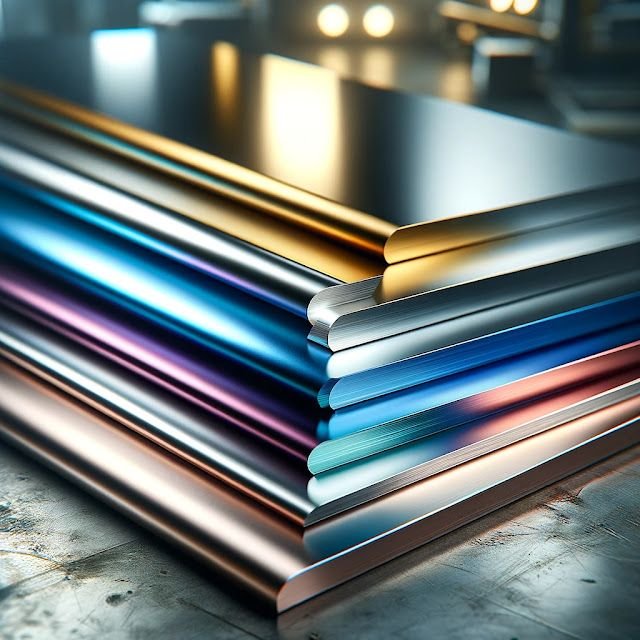
Corrosion Resistant Coating: Advanced Surface Protection for Metal and Electronic Components
Why Corrosion Protection Matters for Modern Electronics
Corrosion is a gradual process, but its impact on manufactured products can be significant.
Metal components used in consumer electronics, electrical equipment, decorative panels, and precision assemblies may be exposed to moisture, humidity, salts, contaminants, and other environmental factors.
Over time, these conditions can affect the surface and potentially compromise appearance, dimensional stability, electrical characteristics, or mechanical performance.
For manufacturers, preventing corrosion is therefore more than an aesthetic consideration.
It can be an important part of product reliability.
A corrosion resistant coating provides a protective surface layer designed to reduce the interaction between the underlying material and its surrounding environment.
The effectiveness of the coating depends on the complete surface-engineering system, including substrate selection, surface preparation, coating structure, adhesion, deposition conditions, and testing.
What Is a Corrosion Resistant Coating?
A corrosion resistant coating is a protective film or surface treatment designed to reduce corrosion-related degradation of an underlying substrate.
The coating can function as a barrier between the substrate and environmental factors that contribute to corrosion.
These factors may include:
- Moisture
- Oxygen
- Salt
- Humidity
- Contaminants
- Chemical exposure
- Repeated environmental cycling
For metal components, controlling access to the substrate is particularly important.
If moisture or corrosive substances reach a vulnerable metal surface, chemical or electrochemical reactions can begin.
A properly engineered coating can help reduce this exposure and extend the useful performance of the surface.
Corrosion Is Different From General Chemical Damage
Corrosion and chemical degradation are related but should not be treated as identical.
Chemical exposure can cause staining, discoloration, swelling, softening, or other forms of surface change.
Corrosion specifically involves deterioration of a material through chemical or electrochemical reactions with its environment.
This distinction matters when developing a coating.
A coating that performs well against one type of chemical exposure may not automatically provide the required corrosion protection for a metal substrate.
The coating must be evaluated under conditions that reflect the actual corrosion mechanisms expected in the application.
Common Causes of Corrosion
Several environmental conditions can accelerate corrosion.
Moisture
Water provides an important medium for many corrosion reactions.
Even relatively small amounts of moisture can become significant when exposure occurs repeatedly over a long period.
High Humidity
High-humidity environments can increase the risk of moisture-related surface degradation.
Salt Exposure
Salt-containing environments can be particularly aggressive toward certain metals.
Salt spray testing is therefore commonly used as a controlled method of evaluating corrosion resistance for appropriate applications.
Temperature Cycling
Changes in temperature can create stresses between coating layers and substrates.
Repeated expansion and contraction may influence interface integrity over time.
Surface Contamination
Contaminants can alter surface chemistry and potentially create localized corrosion conditions.
A high-quality coating process therefore begins before the actual coating step.
The Coating Acts as a Protective Barrier
One of the fundamental functions of a corrosion protective coating is barrier protection.
The coating separates the substrate from the surrounding environment.
A well-controlled coating can reduce the opportunity for moisture, oxygen, salts, and other corrosive substances to reach the underlying material.
However, the barrier must remain intact.
Pinholes, cracks, weak interfaces, coating defects, or damaged areas can create pathways toward the substrate.
This makes coating uniformity and adhesion important parts of corrosion protection.
Why Coating Adhesion Matters
Strong adhesion is essential for long-term corrosion resistance.
If a coating separates from the substrate, the exposed interface can become vulnerable to environmental attack.
Potential failure modes include:
- Peeling
- Flaking
- Delamination
- Blistering
- Edge lifting
- Localized corrosion
The coating-substrate interface therefore deserves as much attention as the surface film itself.
A properly engineered interface helps the protective layer remain attached when the component experiences mechanical handling, environmental changes, or repeated exposure.
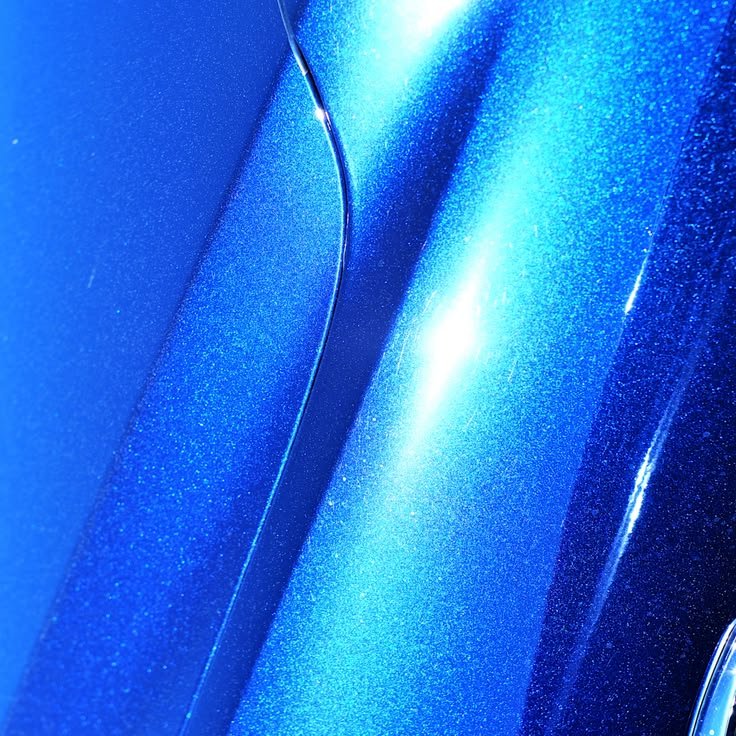
Surface Preparation Comes First
Before coating, the substrate must be properly prepared.
This is particularly important for corrosion protection because contamination at the interface can undermine coating adhesion.
Common surface contaminants include:
- Oils
- Dust
- Fingerprints
- Particles
- Processing residues
- Cleaning residues
A controlled cleaning process helps create a suitable surface for coating deposition.
The general manufacturing sequence can include:
Incoming Material Inspection → Cleaning → Coating → Process Inspection → Testing → Final Inspection
Each stage contributes to the final performance of the protective surface.
Vacuum Coating for Corrosion Protection
Advanced vacuum deposition technologies can be used to create thin protective and functional films.
Depending on the product and coating architecture, technologies such as sputtering and evaporation can be used.
Controlled vacuum deposition allows manufacturers to manage parameters related to:
- Film composition
- Layer thickness
- Deposition conditions
- Film uniformity
- Interface quality
- Surface characteristics
For corrosion protection, the objective is to create a stable and sufficiently continuous coating layer that helps isolate the substrate from environmental exposure.
The deposition process therefore needs to be carefully controlled.
Why Coating Architecture Matters
A corrosion protective system does not necessarily have to consist of one layer.
Multilayer coating architectures can be engineered so that different layers contribute different functions.
A coating system may be designed to provide:
- Adhesion
- Barrier protection
- Surface hardness
- Abrasion resistance
- Decorative appearance
- Optical characteristics
- Environmental stability
This is particularly useful in consumer electronics, where corrosion protection may need to coexist with strict appearance requirements.
For example, a metal housing may require both corrosion protection and a specific decorative finish.
The coating system must satisfy both requirements simultaneously.
Corrosion Protection for Aluminum Components
Aluminum is widely used in electronics because of its combination of low weight, strength, and manufacturing flexibility.
However, its surface still requires careful engineering when exposed to demanding environments.
A coating can provide an additional protective layer and may also contribute to the appearance of the finished component.
Key considerations include:
- Surface preparation
- Oxide condition
- Coating adhesion
- Film uniformity
- Environmental exposure
- Mechanical durability
The coating process should be developed specifically for the aluminum substrate rather than assuming that one process works equally well for every material.
Corrosion Protection for Stainless Steel
Stainless steel has good inherent corrosion resistance, but its surface can still be affected by environmental conditions and manufacturing processes.
A protective coating may be used when additional surface performance or decorative characteristics are required.
For coated stainless steel components, manufacturers may need to balance:
- Corrosion resistance
- Surface hardness
- Adhesion
- Appearance
- Abrasion resistance
This illustrates why coating development should consider the complete product specification.
Corrosion Protection for Consumer Electronics
Consumer electronics may not be exposed to extreme industrial corrosion environments, but their surfaces can still experience repeated environmental exposure.
A smartphone or electronic housing can encounter:
- Hand perspiration
- Humidity
- Moisture
- Cleaning products
- Salt-containing residues
- Repeated handling
Over an extended service life, these exposures can contribute to surface degradation if the coating system is inadequate.
A protective coating can help maintain both the appearance and integrity of the surface.
Corrosion Resistance and Decorative Finishes
Decorative surfaces create an additional challenge.
The coating must protect the substrate while maintaining the visual characteristics specified by the product designer.
Important appearance requirements can include:
- Color
- Gloss
- Texture
- Metallic appearance
- Surface uniformity
For smartphone back panels, for example, manufacturers may require a distinctive texture combined with mechanical and environmental durability.
SRNC provides Texture Coating for Cell Phone Back Panel for advanced smartphone surface applications.
The objective is to integrate protection with the intended visual and tactile experience.
Corrosion Resistance and Surface Hardness
Corrosion resistance and hardness address different types of surface challenges.
Hardness helps resist mechanical deformation and certain forms of wear.
Corrosion resistance helps protect the substrate from environmental degradation.
In demanding applications, both properties can be important.
A coating system may therefore be engineered to provide a combination of:
Surface Hardness + Corrosion Resistance + Adhesion + Abrasion Resistance
For applications where enhanced hardness is a major requirement, SRNC’s Sapphire Super Hard Coating can be considered as part of an advanced surface-protection strategy.
The exact coating configuration should still be matched to the substrate and environmental requirements.
Salt Spray Testing
Salt spray testing is a widely used accelerated evaluation method for suitable corrosion-related applications.
The test exposes coated samples to a controlled salt-containing environment and allows engineers to observe the development of corrosion or coating failure.
Evaluation may consider:
- Corrosion spots
- Blistering
- Peeling
- Delamination
- Surface discoloration
- Corrosion propagation
The exact test method and acceptance criteria should be established according to the relevant product requirements.
Salt spray results should also be interpreted carefully.
A laboratory salt spray result does not necessarily reproduce every aspect of a product’s real operating environment.
It is one component of a broader qualification program.
Humidity Testing
Humidity can be an important contributor to corrosion.
High humidity may increase the availability of moisture at the surface and interface.
Controlled temperature and humidity testing can help evaluate whether the coating remains stable under prolonged environmental exposure.
Potential observations include:
- Adhesion loss
- Surface discoloration
- Blistering
- Film degradation
- Substrate corrosion
Combining humidity testing with other mechanical and environmental tests provides a more complete picture of coating performance.
The Importance of Coating Uniformity
A coating is only as protective as its weakest areas.
Variations in thickness or coverage can create localized vulnerabilities.
For this reason, uniform deposition is important, especially for components with:
- Complex geometry
- Edges
- Corners
- Recessed areas
- Large surface areas
Vacuum coating equipment and process parameters must be configured to achieve the required coverage.
Consistent loading, substrate positioning, and deposition conditions can all influence uniformity.
Edge Protection and Coating Failure
Edges can sometimes be more vulnerable than flat surfaces.
Mechanical handling may cause localized damage, while coating thickness can behave differently around sharp geometries.
During development, engineers should consider the complete component geometry rather than evaluating only a flat test coupon.
Representative samples can provide more meaningful information about the performance of the coating on the actual product.
Corrosion and Coating Damage
Mechanical damage can compromise corrosion protection.
A scratch, impact mark, or abrasion site can expose the underlying material.
This is why corrosion resistance and mechanical durability should often be evaluated together.
A robust surface system may need to withstand both:
- Environmental exposure
- Mechanical wear
This is particularly relevant for products that are frequently handled.
A coating that provides excellent initial corrosion resistance but rapidly loses integrity through abrasion may not provide adequate long-term protection.
Chemical Exposure and Corrosion
Chemical exposure can also interact with corrosion processes.
Cleaning products, salts, perspiration, and other substances can influence surface conditions.
For this reason, corrosion testing may sometimes need to be complemented by chemical-resistance testing.
A related surface-engineering consideration is described in SRNC’s Functional Coating for Cell Phone Camera for smartphone camera components, where surface protection must coexist with functional requirements.
The appropriate coating system always depends on the component’s intended environment.
Developing a Corrosion Resistant Coating
A successful coating development process starts with the application.
Step 1: Identify the Substrate
Determine whether the component is made from aluminum, stainless steel, glass, ceramic, composite, or another material.
Step 2: Define the Environment
Identify humidity, moisture, salt, chemical exposure, temperature variation, and other relevant conditions.
Step 3: Establish Performance Targets
Define corrosion, adhesion, hardness, abrasion, and appearance requirements.
Step 4: Select the Coating Architecture
Choose suitable materials and layer structures.
Step 5: Prepare Development Samples
Use representative substrate materials and product geometries where possible.
Step 6: Conduct Testing
Evaluate the coating under application-relevant conditions.
Step 7: Optimize the Process
Adjust cleaning, deposition, layer structure, or other parameters according to test results.
Step 8: Validate Mass Production
Confirm that the qualified coating can be manufactured consistently at commercial scale.
This structured approach reduces the risk of treating corrosion protection as a simple material-selection problem.
Quality Control in Corrosion-Resistant Coating Manufacturing
Manufacturing consistency is critical.
A coating that passes testing during development must continue to meet specifications during production.
Important process variables can include:
- Incoming substrate quality
- Cleaning conditions
- Vacuum conditions
- Deposition parameters
- Coating material
- Film thickness
- Equipment condition
- Production environment
Inspection and testing should therefore be integrated into the manufacturing workflow.
SRNC’s production process includes incoming material inspection, cleaning, coating, process inspection, packaging, outgoing inspection, and shipping, providing a structured framework for controlling coated products.
Choosing a Corrosion Resistant Coating Manufacturer
When sourcing a coating for corrosion-sensitive components, buyers should evaluate the supplier’s technical capabilities rather than relying solely on product descriptions.
Important questions include:
Does the supplier understand the substrate?
The coating process should be compatible with the material being protected.
Can the supplier customize the coating?
Different environments may require different coating architectures.
What deposition technologies are available?
Vacuum deposition capabilities can be important for advanced thin-film applications.
What testing equipment is available?
Look for relevant corrosion, humidity, adhesion, abrasion, and surface-performance testing.
Can the supplier support product development?
A capable technical partner should be able to move from samples to engineering validation and production.
Can the supplier maintain batch consistency?
Mass production requires stable process parameters and quality control.
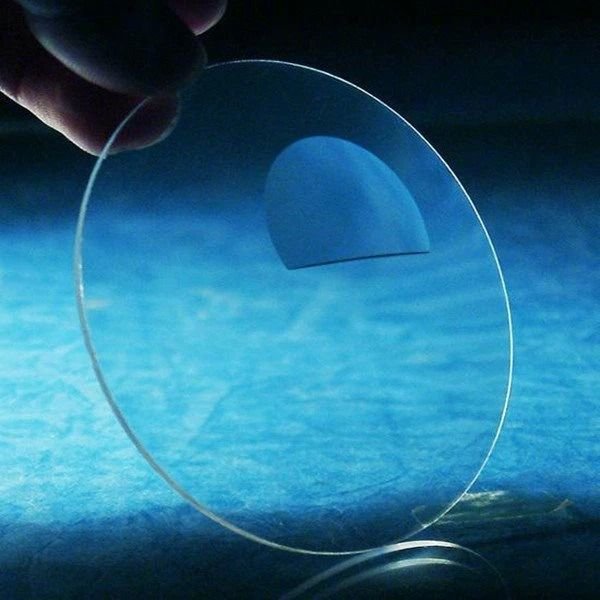
Why Testing Equipment Matters
A coating manufacturer needs appropriate testing tools to verify performance.
Depending on the application, useful equipment can include:
- Salt spray tester
- Constant temperature and humidity tester
- Film abrasion tester
- Cross-cut tester
- Reflection tester
- Contact angle tester
- Resistance tester
Testing allows manufacturers to connect process conditions with measurable product performance.
This is especially important when a coating must satisfy several requirements at the same time.
Corrosion Protection From Prototype to Mass Production
The development phase should establish more than whether a coating works once.
It should demonstrate whether the coating can be reproduced.
A production-ready process should answer questions such as:
- Can the same coating structure be deposited repeatedly?
- Is adhesion stable between batches?
- Is film thickness controlled?
- Are appearance characteristics consistent?
- Can the required tests be passed reliably?
- Can production volume be increased without compromising performance?
These questions are essential for electronics manufacturers working with demanding quality requirements.
Why Long-Term Surface Reliability Matters
Corrosion protection ultimately contributes to product reliability.
When the surface remains stable, manufacturers can better preserve:
- Appearance
- Mechanical integrity
- Surface functionality
- Product consistency
- Perceived quality
For premium consumer electronics, these characteristics can have a direct effect on the user’s experience.
For industrial components, the consequences may be even more significant because surface degradation can affect component performance and service life.
Conclusion
A corrosion resistant coating provides an engineered barrier that can help protect metal and electronic components from moisture, humidity, salts, and other environmental factors that contribute to surface degradation.
Effective corrosion protection depends on the entire coating system.
Substrate compatibility, surface preparation, adhesion, coating architecture, vacuum deposition, film uniformity, mechanical durability, and environmental testing all contribute to the final result.
For demanding applications, corrosion resistance should be evaluated under clearly defined conditions, including relevant humidity, salt, chemical, and temperature exposures.
At the same time, manufacturers should consider how corrosion protection interacts with hardness, abrasion resistance, appearance, and long-term adhesion.
For applications requiring enhanced surface hardness as part of a broader protective strategy, SRNC’s Sapphire Super Hard Coating is a relevant solution to evaluate.
Ultimately, the strongest corrosion protection strategy is not based on a single coating claim. It comes from matching the coating architecture and manufacturing process to the substrate, environment, performance requirements, and production conditions of the finished product.