

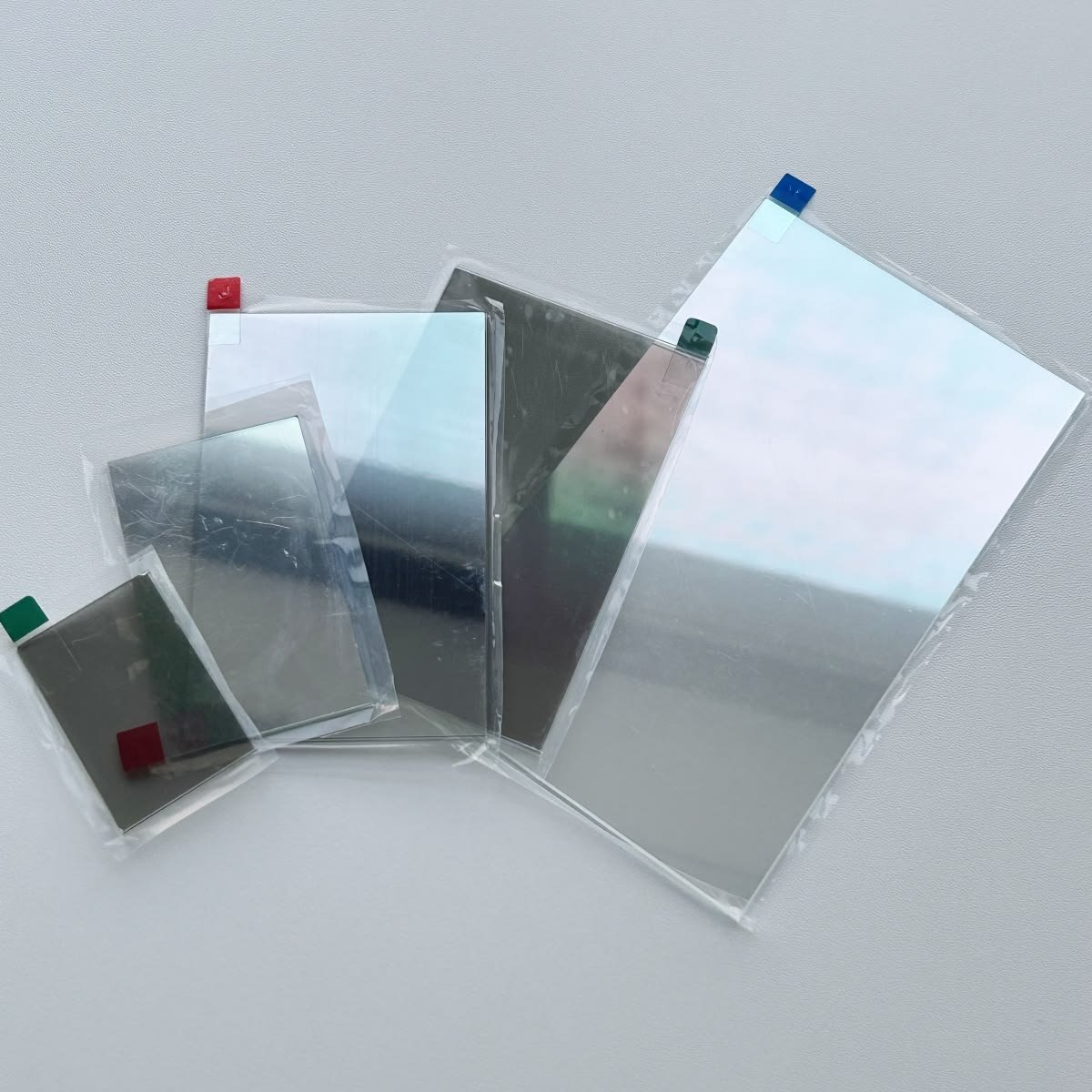
Excellent Hardness: Engineering High-Performance Coatings for Consumer Electronics
Why Excellent Hardness Matters in Surface Coating
The exterior surface of a consumer electronic device is constantly exposed to physical contact.
Smartphones, electronic housings, optical components, decorative panels, and other high-value products may experience friction, impact, handling, and contact with harder objects throughout their service life.
Once the surface becomes damaged, the original appearance can quickly deteriorate.
Scratches, abrasion marks, surface deformation, and coating failure can affect the perceived quality of a finished product. For premium electronics, maintaining the original surface condition is therefore an important part of product durability.
This is where excellent hardness becomes valuable.
A hard surface can provide greater resistance to deformation and mechanical damage. However, achieving excellent hardness is not simply a matter of selecting the hardest available coating material.
The final performance depends on the complete coating system, including the substrate, surface preparation, film structure, deposition process, adhesion, and quality control.
For manufacturers developing demanding electronic components, hardness should therefore be treated as an engineered property rather than a standalone specification.
What Does Excellent Hardness Mean?
Hardness describes a material’s resistance to localized deformation.
In surface coating applications, high hardness can help a treated surface resist damage caused by contact with harder materials.
This can be particularly useful when a component is exposed to:
- Repeated handling
- Mechanical contact
- Abrasive particles
- Surface friction
- Hard objects
- Assembly processes
- Transportation
- Daily consumer use
However, hardness is only one aspect of coating performance.
A coating can have high hardness but still require strong adhesion, suitable toughness, and environmental stability to perform effectively in a real product.
Therefore, when a manufacturer specifies excellent hardness, it is useful to evaluate the complete set of properties that support long-term surface performance.
Hardness Is Different From Scratch Resistance
Hardness and scratch resistance are closely related, but they are not identical.
Hardness describes resistance to localized deformation.
Scratch resistance describes how well a surface resists visible damage from a scratching action.
A harder surface may have better resistance to certain types of scratching, but scratch behavior also depends on:
- Coating structure
- Surface roughness
- Counter-material hardness
- Contact force
- Coating adhesion
- Film thickness
- Internal stress
- Substrate properties
Similarly, abrasion resistance describes the ability to withstand repeated surface wear.
For this reason, a comprehensive coating evaluation may consider hardness, scratch resistance, abrasion resistance, and adhesion separately.
This provides a more realistic understanding of how the coating will perform in its intended application.
The Substrate Provides the Foundation
A coating does not exist independently from the material underneath it.
Consumer electronics can use substrates such as:
- Glass
- Aluminum
- Stainless steel
- Ceramic
- Composite materials
- Engineering plastics
The mechanical properties of the substrate can influence the behavior of the coating.
If the substrate deforms significantly under load, a very hard surface layer may not perform as expected. Likewise, inadequate surface preparation can compromise the bond between the coating and substrate.
Before developing a hard coating, engineers may therefore evaluate:
Substrate Hardness
The mechanical characteristics of the base material affect the overall surface system.
Surface Condition
Existing defects or unevenness can influence coating quality.
Surface Cleanliness
Contaminants can reduce coating adhesion.
Thermal Compatibility
The substrate must tolerate the selected coating process.
Geometry
Component shape and dimensions can affect coating uniformity and equipment configuration.
The best hard coating is therefore one that has been engineered for the specific substrate and application.
How Vacuum Deposition Creates Hard Surface Layers
Vacuum deposition is an important technology for producing advanced hard coatings.
In a controlled vacuum environment, coating materials can be deposited onto prepared substrates to form thin, engineered surface layers.
Depending on the coating system and application, vacuum technologies may include sputtering or evaporation.
A controlled deposition process can influence:
- Film composition
- Layer thickness
- Density
- Surface structure
- Adhesion
- Optical properties
- Mechanical performance
The process needs to be carefully controlled because small changes in deposition conditions can affect the final film.
Important variables can include:
- Vacuum conditions
- Deposition parameters
- Material selection
- Substrate temperature
- Deposition time
- Equipment configuration
- Layer structure
This is why equipment capability and process engineering are both important when developing coatings with excellent hardness.
Coating Structure Determines More Than Surface Hardness
A high-performance hard coating may use a carefully designed multilayer structure.
Different layers can contribute different characteristics.
For example, a coating architecture may be designed to provide:
- Strong substrate adhesion
- Mechanical hardness
- Surface protection
- Optical characteristics
- Decorative appearance
- Environmental stability
The exact structure depends on the requirements of the finished component.
A surface designed for an optical component may require a different coating architecture from a decorative smartphone back panel.
The coating manufacturer therefore needs to optimize the complete layer structure rather than focusing only on one hardness measurement.
Why Adhesion Is Essential
Excellent hardness has limited practical value if the coating cannot remain securely attached to the substrate.
Strong adhesion helps prevent:
- Peeling
- Delamination
- Flaking
- Localized coating failure
This becomes particularly important when a hard coating is exposed to mechanical stress.
The coating and substrate experience forces together. If the interface is weak, mechanical damage can cause the coating to separate even when the coating itself has high hardness.
For this reason, adhesion testing should form part of a comprehensive coating validation program.
Cross-cut adhesion testing is one example of a method that can provide information about coating adhesion.
Surface Preparation Supports Hard Coating Performance
Before deposition, the substrate needs to be properly prepared.
Cleaning is particularly important because contaminants can interfere with the interface between the substrate and coating.
Potential contaminants can include:
- Dust
- Oil
- Fingerprints
- Processing residues
- Particles
- Other surface contaminants
A controlled preparation process helps create a suitable surface for coating deposition.
The general workflow can include:
Incoming Material Inspection → Cleaning → Surface Preparation → Vacuum Deposition → Process Inspection → Testing → Final Inspection
The quality of the final coating depends partly on how consistently these preparation steps are performed.
Even an advanced hard coating system cannot fully compensate for an unstable or contaminated substrate surface.
Excellent Hardness and Surface Durability
A coating with excellent hardness can contribute to broader surface durability.
However, durability is a multidimensional property.
A durable surface may need to resist:
- Scratching
- Abrasion
- Deformation
- Adhesion failure
- Environmental degradation
This means that hardness should be considered alongside other coating properties.
For example, a smartphone component may require a hard surface while also maintaining a specific color, gloss, or texture.
The coating architecture must therefore achieve the required mechanical performance without compromising the appearance or other functional characteristics of the product.
Testing Hardness and Related Properties
A coating’s performance should be verified through appropriate testing rather than assumed from its material description.
Depending on the product specification, manufacturers may evaluate:
- Surface hardness
- Scratch resistance
- Abrasion resistance
- Adhesion
- Reflection
- Contact angle
- Environmental stability
- Corrosion resistance where applicable
Testing methods should be selected according to the actual application.
A hardness value obtained under one testing method may not directly predict how a finished consumer electronic product behaves during daily use.
Therefore, engineers should establish test methods and acceptance criteria that reflect the intended application.
Abrasion Resistance Provides a Different Perspective
Hardness and abrasion resistance are related, but they measure different aspects of surface durability.
Abrasion involves repeated mechanical contact.
For example, a smartphone surface can experience thousands of small friction events over its service life rather than one severe contact event.
Abrasion testing can help determine whether repeated rubbing causes:
- Loss of gloss
- Surface wear
- Texture changes
- Coating removal
- Visible marks
SRNC’s coating manufacturing capabilities include film abrasion testing, allowing surface performance to be evaluated through controlled testing.
Combining abrasion testing with hardness and adhesion evaluation gives manufacturers a more complete view of coating performance.
Environmental Stability Should Not Be Ignored
A coating’s mechanical properties can be only part of its long-term performance.
Electronic products may be exposed to changing temperature and humidity conditions during storage, transportation, and use.
Environmental exposure can influence:
- Coating adhesion
- Substrate behavior
- Layer interfaces
- Surface appearance
- Long-term stability
Testing under controlled temperature and humidity conditions can help identify potential weaknesses.
Other tests, such as salt spray testing, may be relevant for specific materials and applications.
The exact test program should reflect the product’s expected operating environment.
Excellent Hardness for Smartphone Components
Smartphones combine multiple components with different surface requirements.
The back panel may prioritize decorative appearance, tactile characteristics, and mechanical durability.
The camera area has substantially different optical requirements.
Other components may prioritize surface protection or extreme hardness.
For specialized camera applications, SRNC provides Functional Coating for Cell Phone Camera, where coating performance is designed around the requirements of smartphone camera components.
For applications where exceptional surface hardness is a primary objective, SRNC’s Sapphire Super Hard Coating provides a dedicated coating solution.
This distinction is important: coating technology should be selected according to the function and performance requirements of the component.
Sapphire-Based Super Hard Coating
Sapphire is widely associated with exceptional hardness and surface durability.
In advanced coating applications, sapphire-related hard coating technology can be used where manufacturers require enhanced surface protection and hardness characteristics.
The value of such a coating depends not only on the coating material but also on how the coating system is deposited and integrated with the substrate.
Important considerations can include:
- Substrate compatibility
- Film adhesion
- Deposition parameters
- Surface preparation
- Coating uniformity
- Thickness control
- Performance testing
A properly engineered super hard coating can provide a valuable surface-engineering solution for components where mechanical durability is a major requirement.
Balancing Hardness With Other Surface Requirements
Maximum hardness is not necessarily the correct objective for every product.
A consumer electronics component may need to combine excellent hardness with:
- Attractive appearance
- Low or controlled gloss
- Specific texture
- Color consistency
- Strong adhesion
- Abrasion resistance
- Environmental stability
For example, a decorative smartphone component may require both a distinctive finish and high surface durability.
Similarly, an optical component may require controlled optical performance while also protecting the underlying surface.
The ideal coating is therefore not necessarily the hardest coating available. It is the coating system that delivers the best balance of properties for the intended application.
Manufacturing Consistency Matters
A coating that demonstrates excellent hardness on one laboratory sample still needs to perform consistently in production.
Mass manufacturing introduces additional variables.
These may include:
- Substrate batch variation
- Cleaning conditions
- Coating material variation
- Equipment loading
- Vacuum conditions
- Deposition parameters
- Equipment maintenance
- Production environment
If these factors are not adequately controlled, coating performance may vary between batches.
A capable coating manufacturer should establish a stable process window and monitor critical parameters during production.
This helps ensure that the coating characteristics achieved during development can be reproduced at manufacturing scale.
From Prototype to Mass Production
Developing a hard coating should follow a structured validation process.
A practical workflow can include:
1. Define the Application
Identify the component, substrate, operating environment, and expected mechanical exposure.
2. Establish the Performance Target
Define hardness, scratch, abrasion, adhesion, and environmental requirements.
3. Select the Coating Architecture
Determine appropriate materials and layer structures.
4. Produce Development Samples
Use representative substrates and production-relevant processes whenever possible.
5. Conduct Testing
Measure the relevant mechanical and environmental characteristics.
6. Optimize the Process
Adjust surface preparation and deposition parameters based on test results.
7. Validate Production
Confirm that the coating can be reproduced consistently at the required manufacturing volume.
This development path reduces the risk of discovering performance problems after mass production begins.
Quality Control for High-Hardness Coatings
Quality control should cover the complete manufacturing workflow.
A controlled process can include:
Incoming Material Inspection
Verify substrate condition before processing.
Cleaning
Remove contaminants that could affect coating quality.
Coating
Deposit the engineered coating under controlled conditions.
Process Inspection
Monitor the coating and identify abnormalities during production.
Performance Testing
Verify relevant mechanical and environmental characteristics.
Outgoing Inspection
Confirm that finished products meet the established specifications.
This approach helps connect coating performance with manufacturing consistency.
How Manufacturers Should Evaluate a Hard Coating Supplier
For a project requiring excellent hardness, buyers should evaluate more than a supplier’s marketing claims.
Important questions include:
What substrates can the manufacturer process?
Compatibility should be confirmed before development.
What coating technologies are available?
The deposition method needs to match the required coating architecture.
How is hardness verified?
Ask which test methods are used and what acceptance criteria apply.
How is adhesion evaluated?
A hard surface still needs reliable attachment to the substrate.
Can the manufacturer conduct abrasion and environmental testing?
Testing capabilities can simplify qualification.
Can the coating be customized?
Some applications require a combination of hardness and decorative or optical properties.
Can the process support mass production?
A laboratory result is not enough for a commercial product.
Hard Coating as a Product-Engineering Tool
The greatest value of excellent hardness is not simply a higher test result.
It is the ability to maintain the surface characteristics of a finished product under real operating conditions.
For manufacturers, this can mean:
- Better appearance retention
- Reduced surface wear
- Greater product durability
- More stable decorative finishes
- Improved component reliability
In premium consumer electronics, preserving the original appearance can contribute significantly to perceived product quality.
This makes surface hardness an important part of the overall product-engineering strategy.
Conclusion
Excellent hardness is an important characteristic for advanced surface coatings, particularly where electronic components must withstand repeated mechanical contact and maintain their appearance over time.
However, hardness should never be evaluated in isolation.
A high-performance coating must combine appropriate substrate preparation, coating architecture, adhesion, vacuum deposition, surface uniformity, and validated mechanical performance.
For demanding applications, manufacturers should evaluate hardness together with scratch resistance, abrasion resistance, environmental stability, and production consistency.
SRNC’s Sapphire Super Hard Coating provides a specialized solution for applications where enhanced surface hardness is a key requirement, while its broader coating capabilities can support other decorative and functional requirements.
Ultimately, the most effective hard coating is not simply the one with an impressive hardness claim. It is the one that delivers reliable mechanical protection, stable adhesion, consistent production quality, and the performance required by the finished product.