

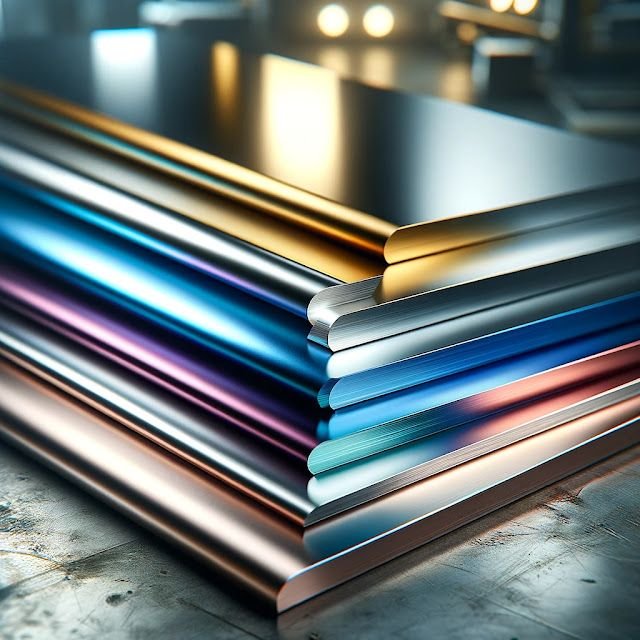
High Scratch Resistance: Engineering Durable Coatings for Smartphone Surfaces
Why High Scratch Resistance Matters for Smartphone Surfaces
A smartphone surface is exposed to repeated physical contact throughout its life.
It may be placed on tables, carried in pockets or bags, handled hundreds of times a day, and exposed to contact with other objects. Even when a product is carefully designed, everyday use can gradually affect its surface appearance.
Small scratches can change the way light reflects from a surface. On a premium smartphone, this can reduce visual uniformity and make the product appear worn.
This is why high scratch resistance has become an important consideration when developing advanced surface coatings.
Scratch resistance is not simply a matter of making a coating harder. The final performance depends on the interaction between the substrate, coating structure, adhesion, surface preparation, deposition process, and intended use.
For manufacturers developing smartphone back panels and other consumer electronics, achieving a durable surface requires a complete surface-engineering strategy.
What Does High Scratch Resistance Mean?
Scratch resistance describes a material or surface’s ability to resist visible damage caused by contact with another object.
In practical product development, this can involve resistance to:
- Sharp contact
- Repeated rubbing
- Abrasive particles
- Hard objects
- Handling during assembly
- Transportation-related contact
- Everyday consumer use
However, scratch resistance and abrasion resistance are not exactly the same.
Scratch resistance generally focuses on localized surface damage caused by a harder or sharper object.
Abrasion resistance concerns progressive surface wear caused by repeated friction.
A coating may perform well in one type of test and differently in another. Therefore, manufacturers should define the specific performance requirement rather than treating all forms of surface durability as interchangeable.
Hardness Alone Does Not Guarantee Scratch Resistance
It is tempting to assume that a harder coating automatically provides superior scratch resistance.
In reality, surface durability is more complicated.
The coating system needs to balance several characteristics, including:
- Surface hardness
- Toughness
- Adhesion
- Film structure
- Thickness
- Surface condition
- Substrate properties
- Internal stress
- Process stability
A very hard coating with poor adhesion can still fail if the coating separates from the substrate.
Similarly, a coating with excellent hardness may not deliver the desired performance if the underlying surface contains defects or if the coating structure is not optimized for the application.
This is why high-performance surface engineering focuses on the complete coating system rather than one isolated property.
The Substrate Is Part of the Durability System
The performance of a surface coating begins with the material beneath it.
Smartphone back panels can use substrates such as:
- Glass
- Aluminum
- Stainless steel
- Ceramic
- Composite materials
- Engineering plastics
Each material has different mechanical and surface characteristics.
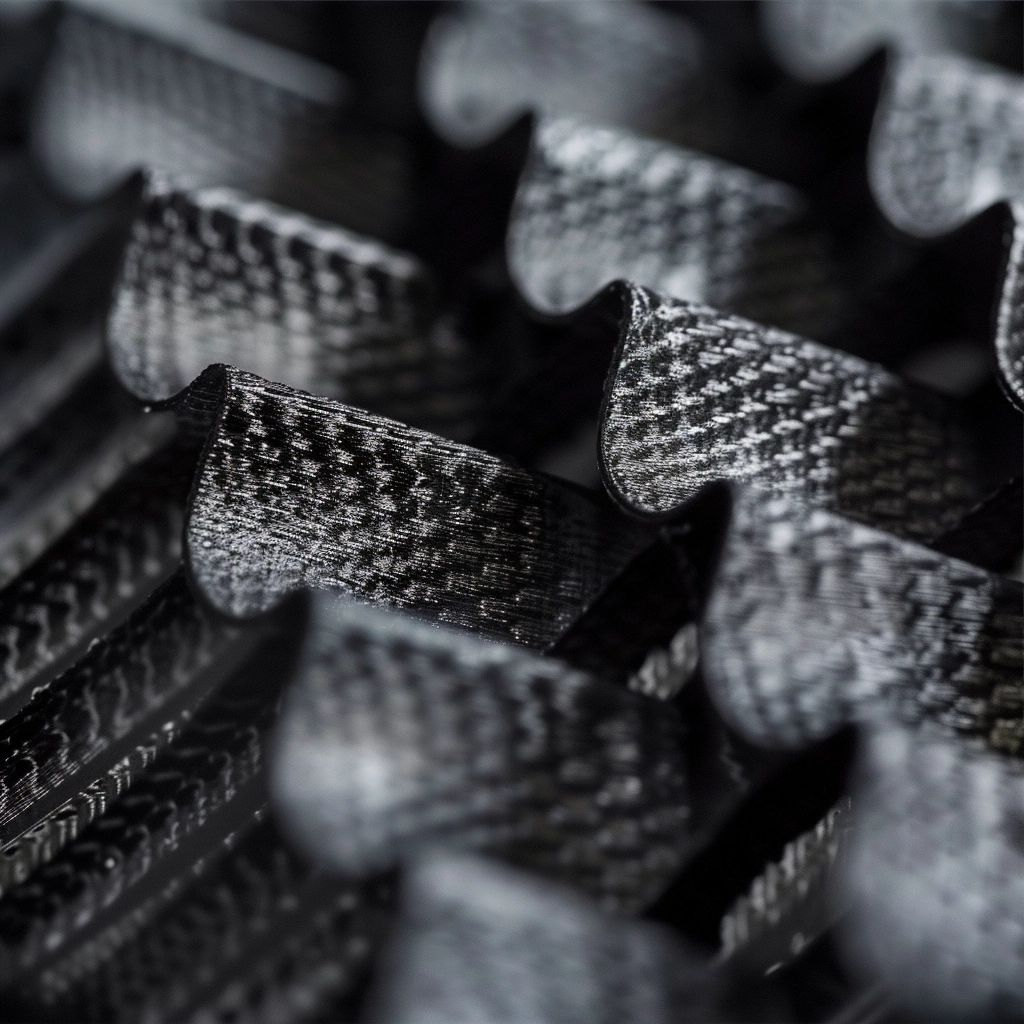
A coating must adhere effectively to the substrate and remain stable during the expected mechanical and environmental conditions.
Before developing a coating, engineers may need to evaluate:
Surface Condition
Scratches, particles, contamination, or uneven surfaces can affect the final coating.
Surface Cleanliness
Contamination can reduce adhesion and contribute to coating defects.
Mechanical Properties
The substrate’s hardness, flexibility, and dimensional stability influence the behavior of the coating system.
Thermal Characteristics
The substrate must be compatible with the temperature and processing conditions of the coating technology.
For this reason, a high-scratch-resistance solution should be developed together with the substrate rather than selected as an independent material.
How Vacuum Coating Can Support Scratch-Resistant Surfaces
Vacuum deposition is an important technology for producing advanced thin-film coatings.
Depending on the application, technologies such as sputtering and evaporation can be used to deposit controlled coating layers onto prepared substrates.
A typical process can involve:
Substrate Inspection → Cleaning → Surface Preparation → Vacuum Deposition → Process Inspection → Performance Testing
The deposition process needs to be controlled carefully because film characteristics can be influenced by multiple variables.
These can include:
- Vacuum conditions
- Deposition parameters
- Material composition
- Substrate temperature
- Layer structure
- Deposition time
- Equipment configuration
Stable process control is therefore essential when developing coatings intended for high durability.
Coating Architecture Influences Scratch Performance
Advanced surface coatings may contain multiple layers rather than one simple film.
Different layers can serve different purposes.
For example, a coating system may be engineered to combine:
- Adhesion support
- Decorative appearance
- Optical characteristics
- Surface hardness
- Protective performance
The exact structure depends on the product requirements.
For smartphone back panels, this can become especially important when manufacturers want to combine a decorative texture with strong surface durability.
The coating must maintain the desired visual effect while resisting mechanical damage.
This requires optimization rather than simply increasing coating thickness.
Texture and Scratch Resistance Must Work Together
Textured surfaces create additional engineering challenges.
Texture changes the way light interacts with the surface and can provide a distinctive tactile experience. However, the surface structure must also remain stable during handling and use.
A coating designed for a textured smartphone back panel may need to balance:
- Texture definition
- Surface uniformity
- Gloss
- Reflectivity
- Scratch resistance
- Abrasion resistance
- Adhesion
SRNC’s Texture Coating for Cell Phone Back Panel is specifically relevant to this type of application.
The objective is to preserve the intended surface character while providing the durability expected from a consumer electronic product.
Surface Preparation Has a Major Impact
Before the coating is deposited, the substrate needs to be properly prepared.
A clean, stable surface provides a better foundation for coating adhesion.
Potential contaminants include:
- Dust
- Oil
- Fingerprints
- Residual processing materials
- Particles
- Other surface contaminants
If these materials remain on the substrate, they may create weak areas or visible defects.
A controlled cleaning process is therefore a critical part of achieving reliable coating performance.
Surface preparation may include cleaning and other process steps selected according to the substrate and coating system.
The key principle is simple: a sophisticated coating cannot compensate indefinitely for poor substrate preparation.
Adhesion and Scratch Resistance Are Closely Connected
A coating must remain attached to the substrate when exposed to mechanical stress.
Good adhesion helps prevent:
- Peeling
- Delamination
- Flaking
- Local coating failure
This is why adhesion testing should often accompany scratch and abrasion evaluation.
Cross-cut adhesion testing, for example, can provide information about how strongly a coating remains attached to its substrate.
The result does not replace scratch testing, but it provides another important piece of information about the reliability of the coating system.
A coating that combines good surface durability with strong adhesion is more likely to maintain its intended performance during use.
How Is Scratch Resistance Tested?
Scratch performance should be evaluated using defined testing methods appropriate to the application.
Depending on the product specification, manufacturers may evaluate surface behavior using controlled mechanical testing.
Testing can examine whether scratching causes:
- Visible lines
- Loss of gloss
- Color change
- Localized coating removal
- Surface deformation
- Exposure of an underlying layer
The test conditions matter.
Load, scratching material, number of cycles, contact geometry, and evaluation method can all affect the result.
Therefore, a statement such as “high scratch resistance” should ideally be supported by a clearly defined test specification.
For product developers, the most useful approach is to establish an agreed test method and acceptance criterion with the coating manufacturer.
Abrasion Testing Adds Another Layer of Information
Scratch testing and abrasion testing provide different information.
A scratch test may evaluate localized damage.
An abrasion test can evaluate how the surface changes after repeated mechanical contact.
This distinction is important for smartphone surfaces because daily handling often involves repeated friction rather than one severe scratching event.
A coating may therefore need to demonstrate both localized scratch resistance and resistance to gradual surface wear.
SRNC’s manufacturing capabilities include film abrasion testing as part of its coating quality-control approach.
Combining different test methods provides a more complete understanding of coating durability.
Environmental Conditions Can Affect Surface Performance
Mechanical durability is only one part of long-term coating performance.
Consumer electronics can experience changes in:
- Temperature
- Humidity
- Storage conditions
- Handling environments
Environmental exposure can influence the substrate, coating layers, and interface between them.
For demanding applications, environmental testing such as constant temperature and humidity testing can provide additional information about coating stability.
Salt spray testing may also be relevant to particular applications where corrosion resistance or environmental durability is a consideration.
The appropriate tests depend on the product’s actual use conditions.
Manufacturing Consistency Is Essential
A coating may demonstrate excellent scratch resistance in a laboratory sample but perform inconsistently if the manufacturing process is unstable.
Mass production introduces variables that can affect coating quality.
These may include:
- Substrate batch variation
- Cleaning consistency
- Coating material condition
- Equipment loading
- Vacuum conditions
- Deposition parameters
- Equipment maintenance
- Production environment
A reliable manufacturing process must control these variables sufficiently to reproduce the approved coating characteristics.
This is particularly important for smartphone products because large production volumes leave little room for uncontrolled surface variation.
Quality Control From Incoming Material to Shipment
A comprehensive coating workflow can be organized into multiple quality-control stages:
Incoming Material Inspection
The substrate is checked before processing.
Loading
Components are positioned appropriately for the coating operation.
Cleaning
The surface is prepared for deposition.
Coating
The required film structure is deposited under controlled conditions.
Process Inspection
Production results are monitored to identify abnormalities.
Packaging
Finished components are protected against contamination and handling damage.
Outgoing Inspection
Final products are checked against the established specifications.
Shipping
Approved products are released for delivery.
This process-based approach helps ensure that high scratch resistance is supported by overall manufacturing quality.
High Scratch Resistance Without Sacrificing Appearance
Premium consumer electronics rarely prioritize durability alone.
The surface still needs to look attractive.
A manufacturer may require a coating to deliver:
- A specific color
- A particular gloss
- A fine texture
- Controlled reflectivity
- A premium tactile effect
- High scratch resistance
These requirements can sometimes compete with one another.
For example, changing surface structure can alter optical appearance. Changing the coating structure can affect both visual characteristics and mechanical performance.
This is why coating development involves optimization.
The goal is to identify a coating architecture and process window that satisfies the complete specification rather than maximizing one property at the expense of others.
High Scratch Resistance for Different Applications
Scratch-resistant coating technology can be useful in many consumer electronics applications.
Potential applications include:
- Smartphone back panels
- Electronic housings
- Decorative panels
- Metal components
- Glass components
- Other high-contact surfaces
The appropriate coating depends on the substrate and application.
For optical components, for example, coating requirements can include specialized optical performance in addition to surface protection.
SRNC’s Functional Coating for Cell Phone Camera addresses coating requirements for smartphone camera components.
For applications where surface hardness is a primary concern, Sapphire Super Hard Coating provides another specialized surface-coating approach.
This illustrates why coating development should always begin with the actual performance requirements of the component.
How to Develop a High-Scratch-Resistance Coating
A structured development process can reduce trial-and-error during product development.
Step 1: Define the Substrate
Identify the material, surface condition, dimensions, and existing treatments.
Step 2: Define the Appearance
Specify color, gloss, texture, reflectivity, and other visual characteristics.
Step 3: Define the Durability Target
Establish scratch, abrasion, adhesion, and environmental requirements.
Step 4: Develop the Coating Structure
Select suitable materials and layer configurations.
Step 5: Produce Samples
Use representative production substrates whenever possible.
Step 6: Test Performance
Evaluate appearance and mechanical characteristics using agreed testing methods.
Step 7: Optimize the Process
Adjust deposition and preparation parameters based on test results.
Step 8: Validate Production
Confirm that the coating can be reproduced consistently under production conditions.
This approach makes the development process measurable and easier to manage.
What Buyers Should Ask a Coating Manufacturer
When sourcing a coating for a product requiring high durability, procurement and engineering teams should ask practical questions.
What substrate materials can you process?
Material compatibility should be confirmed early.
What scratch and abrasion tests can you perform?
Testing capability should match the intended application.
How is adhesion evaluated?
A coating’s durability depends partly on its connection to the substrate.
Can you develop customized textures?
This matters when the product has a proprietary surface design.
Can the coating be scaled into mass production?
A successful prototype is only the beginning.
How do you control batch-to-batch consistency?
Process control is critical for high-volume manufacturing.
Can you support both decorative and functional requirements?
Many modern products require several surface characteristics simultaneously.
Why Scratch Resistance Should Be Designed Into the Product
It is often more efficient to consider surface durability during product development rather than after the design is finalized.
Early involvement allows coating engineers to evaluate:
- Substrate selection
- Surface geometry
- Texture requirements
- Coating architecture
- Testing methods
- Production process
- Durability targets
This can prevent late-stage redesign.
For example, if a specific decorative texture makes it difficult to meet the required abrasion performance, engineers can investigate alternative surface structures before the product enters final production validation.
Early collaboration can therefore reduce both technical risk and development time.
The Difference Between a Hard Coating and a Durable Coating
The terms “hard coating” and “durable coating” are sometimes used interchangeably, but they can describe different performance objectives.
Hardness generally refers to resistance to deformation or indentation.
Durability is broader.
A durable coating may need to combine:
- Hardness
- Adhesion
- Scratch resistance
- Abrasion resistance
- Environmental stability
- Appearance retention
For this reason, the hardest coating is not automatically the best coating for every product.
The correct solution is the one that provides the required balance of characteristics for the application.
Conclusion
Achieving high scratch resistance on smartphone and consumer electronics surfaces requires more than selecting a hard material.
The final result depends on substrate preparation, coating architecture, adhesion, vacuum deposition parameters, surface characteristics, testing, and manufacturing consistency.
For textured smartphone back panels, the challenge becomes even more demanding because the coating must protect the surface while preserving its intended texture, color, gloss, and visual identity.
A structured development process—from substrate evaluation and sample production to scratch testing, abrasion testing, process optimization, and production validation—can help manufacturers create surfaces that remain attractive and reliable throughout their intended service life.
Ultimately, high scratch resistance should be treated as an engineered property of the complete surface system, not simply as a label applied to a coating.