

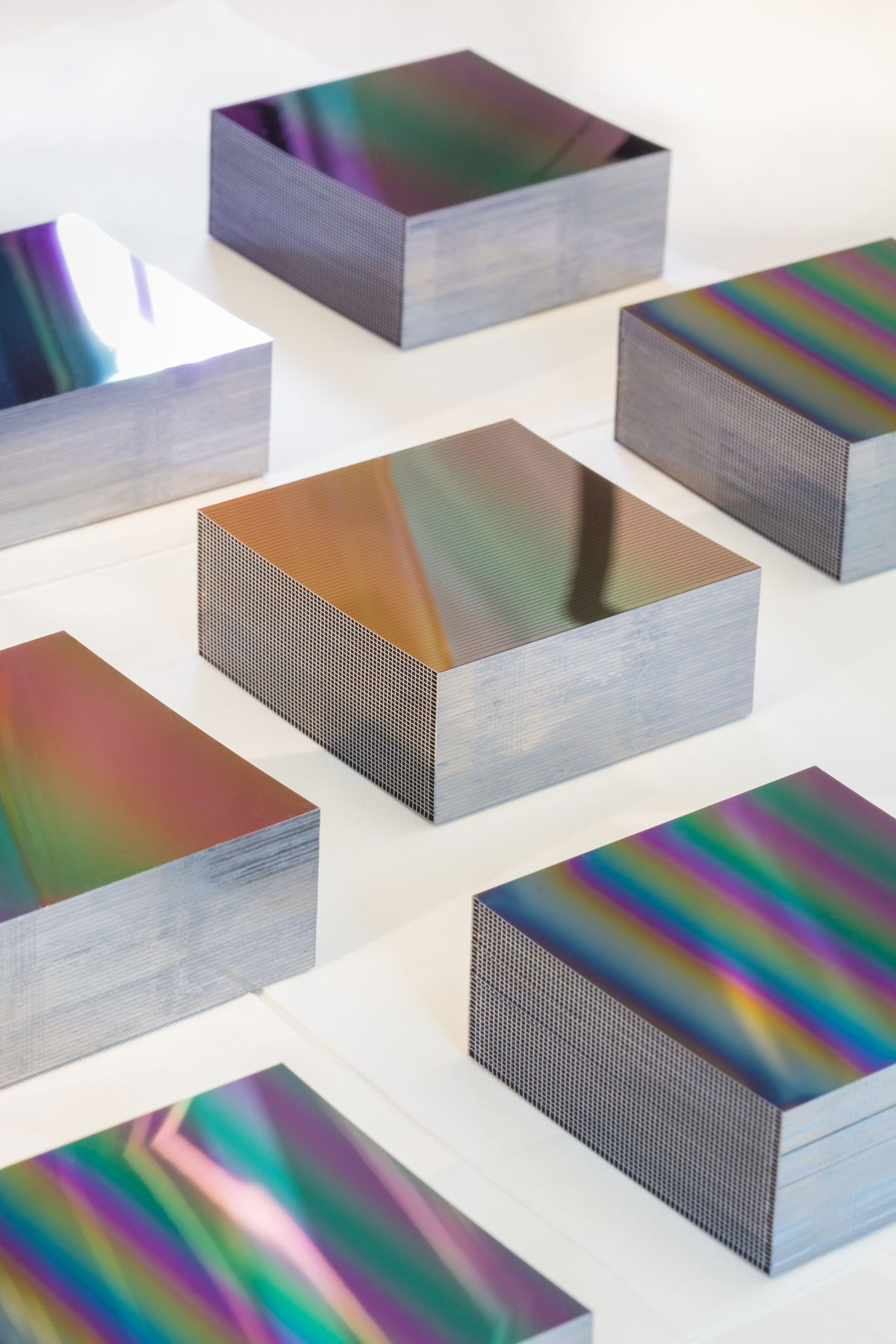
Surface Treatment Supplier: Selecting the Right Partner for Advanced Electronics Finishes
Why Surface Treatment Has Become a Product Development Decision
The surface of a consumer electronic product is no longer treated as a simple finishing detail.
For smartphones and other compact electronic devices, the exterior surface contributes directly to visual identity, tactile perception, durability, and overall product quality. A carefully engineered surface can make a device appear more refined, create differentiation between product models, and provide protection against everyday wear.
At the same time, modern product development demands increasingly precise and repeatable finishes. A coating that looks excellent on a prototype must also remain consistent across production batches, different substrate lots, and large manufacturing volumes.
This is why selecting the right surface treatment supplier is an important engineering and sourcing decision.
The supplier needs to understand more than coating application. It needs to connect substrate preparation, surface design, coating technology, testing, and production control into one repeatable process.
For manufacturers of smartphone back panels and other consumer electronics components, this integrated approach can reduce development risk while improving the consistency of the finished product.
What Is Surface Treatment?
Surface treatment refers to processes used to modify the characteristics of a material’s exterior surface.
Depending on the application, treatment may be used to improve:
- Appearance
- Texture
- Color
- Gloss
- Reflectivity
- Scratch resistance
- Abrasion resistance
- Adhesion
- Environmental durability
- Surface functionality
Surface treatment can involve different technologies depending on the substrate and performance requirements.
For consumer electronics, vacuum deposition is one important approach for creating controlled thin-film surfaces. Sputtering and evaporation technologies can be used to produce decorative and functional coating structures on suitable substrates.
The correct process depends on the complete product specification rather than on the coating technology alone.
Surface Treatment Starts With the Substrate
One of the first questions a supplier should ask is: what material is being treated?
A surface treatment designed for one substrate may not produce the same result on another.
Consumer electronic components can be manufactured from materials such as:
- Glass
- Aluminum
- Stainless steel
- Ceramic
- Composite materials
- Engineering plastics
- Specialty substrates
Each material has its own surface characteristics, thermal behavior, mechanical properties, and adhesion considerations.
Before coating begins, the supplier may need to evaluate:
- Surface cleanliness
- Existing surface roughness
- Material composition
- Surface energy
- Dimensional requirements
- Thermal limitations
- Compatibility with pretreatment
- Required coating adhesion
This is why an experienced surface treatment supplier should be involved early enough to evaluate the substrate and recommend a suitable treatment strategy.
Turning a Design Concept Into a Surface Specification
Product designers often begin with a visual target rather than a technical coating specification.
They may want a smartphone back panel to have a:
- Fine matte appearance
- Satin texture
- Frosted effect
- Metallic finish
- Subtle reflective surface
- Premium tactile feel
- Distinctive decorative pattern
The challenge is translating these design intentions into measurable production characteristics.
A professional supplier can help establish specifications for characteristics such as:
Gloss
Gloss affects how strongly the surface reflects incident light and can dramatically change perceived product appearance.
Texture
Texture can influence both visual appearance and tactile feedback. Fine differences in surface structure may be noticeable under different lighting conditions.
Color
Color consistency is essential when a coating forms part of a product’s recognizable visual identity.
Reflectivity
Controlled reflectivity can be used to create metallic, glossy, satin, or other visual effects.
Surface Durability
The final surface must remain within acceptable appearance and performance limits after handling and environmental exposure.
By converting design objectives into measurable parameters, the coating development process becomes easier to validate and reproduce.
The Role of Vacuum Deposition
Vacuum coating technologies are widely used in applications where controlled thin-film deposition is required.
The basic principle involves placing prepared substrates into a controlled vacuum environment and depositing coating materials onto their surfaces.
Depending on the required result, different processes and equipment configurations can be used.
Sputtering, for example, can provide controlled deposition of thin films and is suitable for many decorative and functional coating applications.
Evaporation is another vacuum deposition approach that can be incorporated into coating systems depending on the required material and process.
The selection of technology depends on factors including:
- Substrate type
- Product geometry
- Desired appearance
- Coating architecture
- Production volume
- Required performance
- Equipment capabilities
A supplier with multiple coating technologies can have greater flexibility when developing customized surface solutions.
Surface Treatment for Smartphone Back Panels
Smartphone back panels are a particularly demanding application because appearance and durability must coexist.
The back panel may be one of the most visually prominent surfaces on a device. At the same time, it is exposed to repeated handling and friction throughout the product’s life.
Texture treatment can help create differentiated finishes including:
- Matte surfaces
- Satin surfaces
- Frosted textures
- Fine decorative effects
- Metallic visual finishes
- Controlled-reflection surfaces
For manufacturers looking specifically at this application, SRNC provides a dedicated Texture Coating for Cell Phone Back Panel solution.
The treatment should be developed according to the substrate, appearance requirements, and performance specifications of the final product.
Why Customization Matters
There is rarely a single surface treatment that works equally well for every product.
A smartphone manufacturer may have a proprietary design language requiring a particular combination of color, texture, reflectivity, and tactile characteristics.
This can require customization at several levels:
- Material selection
- Surface preparation
- Coating layer structure
- Deposition parameters
- Texture development
- Color development
- Protective characteristics
- Quality-control specifications
The supplier’s role is to identify which process variables influence the customer’s target and then establish a repeatable production window.
This is particularly important for OEM and ODM projects where surface treatment can become part of the product’s differentiation strategy.
Prototype Development Before Mass Production
A strong surface treatment program should include a structured development stage.
Instead of immediately moving from design concept to mass production, engineering teams can use samples to evaluate the relationship between process parameters and final surface characteristics.
A typical development sequence may include:
Design Requirement → Substrate Evaluation → Surface Preparation → Initial Samples → Appearance Review → Performance Testing → Process Optimization → Production Validation
This allows potential issues to be identified before production quantities increase.
For example, an initial sample may achieve the correct appearance but show insufficient abrasion performance. Engineers can then modify the coating structure or process parameters before production validation.
The objective is to develop a surface that satisfies both visual and technical requirements.
Quality Control Is Part of the Treatment Process
Surface treatment quality cannot be guaranteed simply by inspecting finished parts at the end of production.
Quality needs to be controlled throughout the process.
A manufacturing workflow can include:
Incoming Material Inspection → Loading → Cleaning → Coating → Process Inspection → Packaging → Outgoing Inspection → Shipping
Each stage has a specific role.
Incoming Inspection
Substrate condition should be checked before processing. Surface contamination, scratches, dimensional issues, or material variation can affect the final result.
Cleaning
Cleaning removes contaminants that could interfere with coating adhesion or appearance.
Coating
Deposition conditions need to remain within established process parameters.
Process Inspection
Intermediate inspection can identify abnormalities before large quantities are completed.
Final Inspection
Finished products can be evaluated against defined visual and performance specifications.
This process-oriented approach is essential when the supplier is supporting high-volume consumer electronics manufacturing.
Testing Surface Treatment Performance
Appearance is important, but measurable performance provides additional confidence.
Depending on the application, surface treatment may be evaluated using tests such as:
- Film abrasion testing
- Cross-cut adhesion testing
- Reflection testing
- Contact angle measurement
- Resistance testing
- Constant temperature and humidity testing
- Salt spray testing
Different tests answer different questions.
Abrasion testing can help evaluate resistance to repeated rubbing. Adhesion testing examines how strongly the coating remains attached to the substrate. Environmental testing can reveal how the surface responds to temperature and humidity conditions.
For an electronics manufacturer, these results can become part of supplier qualification, engineering validation, and production quality control.
Equipment Capability Should Match the Application
When selecting a surface treatment supplier, equipment lists should not be evaluated simply by quantity.
The more important question is whether the supplier has equipment suitable for the customer’s actual application.
Relevant production capabilities can include:
- Molecular pump optical coating systems
- Multifunctional evaporation equipment
- Optical coating machines
- Vertical multifunctional sputtering systems
- Flat-surface cleaning equipment
- Continuous sputtering lines
- Automated film laminating equipment
Different equipment configurations can support different product geometries, coating materials, production requirements, and process conditions.
Equipment flexibility can therefore be valuable when a customer needs to move from initial development into larger-scale manufacturing.
How to Compare Surface Treatment Suppliers
Price is naturally part of a sourcing decision, but it should not be the only criterion.
A more complete evaluation can include the following areas.
Technical Capability
Can the supplier understand the substrate, coating requirements, and final application?
Custom Development
Can the supplier create samples based on customer-specific appearance and performance requirements?
Process Control
Are critical parameters documented and monitored during production?
Testing Capability
Can the supplier conduct the tests necessary to verify coating performance?
Manufacturing Capacity
Can the supplier maintain consistent output when production volume increases?
Quality Management
Does the supplier have a structured approach to incoming inspection, process inspection, and outgoing inspection?
Engineering Communication
Can engineers work efficiently together during development and troubleshooting?
Long-Term Scalability
Can the coating solution developed during prototyping be transferred successfully into stable mass production?
These factors are often more important than the initial quotation because coating failures can generate costs through rework, scrap, delayed assembly, and product-quality problems.
Surface Treatment and Production Consistency
A common misconception is that once a coating formula has been established, production becomes automatic.
In reality, coating consistency depends on maintaining a controlled manufacturing environment.
Potential sources of variation include:
- Substrate differences
- Surface cleanliness
- Coating material condition
- Equipment loading
- Vacuum conditions
- Deposition parameters
- Temperature
- Production timing
- Equipment maintenance
A reliable supplier therefore needs a process-control system capable of keeping critical variables within an appropriate operating range.
The result should be a consistent surface appearance and performance from one production batch to another.
Surface Treatment Beyond Smartphone Back Panels
Although smartphone back panels are a major application for decorative surface engineering, the same principles can apply to many other electronic components.
Surface treatment technology can be used where manufacturers require combinations of:
- Decorative appearance
- Surface protection
- Controlled reflectivity
- Texture
- Durability
- Functional performance
For optical components, coating requirements can be substantially different from decorative back panels.
SRNC’s Functional Coating for Cell Phone Camera demonstrates how coating technology can be developed around the specific requirements of camera components.
For applications where exceptional surface hardness is important, Sapphire Super Hard Coating represents another specialized coating direction.
The key principle is that surface treatment should be selected according to the actual engineering requirements of the component.
When Should You Involve a Surface Treatment Supplier?
Ideally, coating suppliers should be involved before the product design is completely locked.
Early technical cooperation gives the supplier an opportunity to contribute to:
- Substrate selection
- Surface design
- Texture feasibility
- Coating architecture
- Production process planning
- Testing strategy
- Manufacturing validation
This can prevent situations where a visually attractive design later proves difficult to manufacture consistently.
Early collaboration is especially valuable for products with complex textures, demanding durability requirements, or high production volumes.
Building a Long-Term Coating Partnership
The best supplier relationship extends beyond individual purchase orders.
A long-term surface treatment partnership can involve continuous improvement in:
- Yield
- Appearance consistency
- Process efficiency
- Coating performance
- Material utilization
- Production scalability
- Quality control
When the supplier understands the customer’s product requirements and historical development experience, future projects can often move more efficiently from concept to validation.
This is particularly useful for consumer electronics companies that launch multiple generations of products and require consistent surface-engineering capabilities across product families.
Conclusion
Selecting a surface treatment supplier is ultimately a decision about technical capability, manufacturing reliability, and long-term development support.
For consumer electronics, advanced surface treatment needs to achieve much more than an attractive appearance. It may need to combine texture, color, reflectivity, adhesion, abrasion resistance, environmental durability, and production consistency within one carefully controlled system.
The right supplier should therefore be capable of supporting the complete journey from substrate evaluation and surface design through coating development, testing, process optimization, and mass production.
For smartphone back panels and other high-value electronic components, this integrated approach can turn surface treatment from a final decorative step into a genuine product-engineering advantage.