

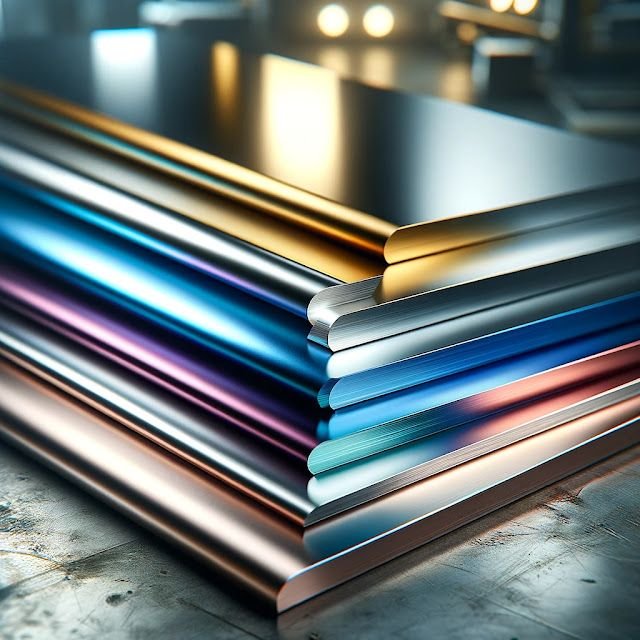
ODM Texture Coating: Integrating Surface Design and Manufacturing for Consumer Electronics
Introduction
In consumer electronics manufacturing, product development increasingly depends on the ability to combine industrial design with practical manufacturing technology.
The surface of a smartphone, smart device, or electronic housing can play an important role in this process. Color, texture, gloss, reflectivity, and tactile characteristics can all influence how users perceive a finished product.
For ODM companies, this creates a particular challenge.
An ODM may be responsible for transforming a product concept into an engineered, manufacturable device while coordinating multiple technical requirements at the same time. Surface finishing cannot be treated as an isolated final-stage operation. It needs to work with the substrate, component geometry, industrial design, assembly process, quality requirements, and production plan.
This is where ODM texture coating becomes valuable.
An effective ODM coating program connects surface design with coating engineering and manufacturing. It can help transform a visual concept into a physical finish that can be tested, refined, qualified, and eventually produced at scale.
What Is ODM Texture Coating?
ODM texture coating refers to customized texture and surface coating solutions developed to support an original design manufacturer’s product development and manufacturing requirements.
Unlike a standard coating selected from a fixed catalog, an ODM coating solution can be developed around a particular product concept.
The development may involve customization of:
- Surface texture
- Color
- Gloss level
- Matte effect
- Metallic appearance
- Reflectivity
- Tactile characteristics
- Coating structure
- Durability requirements
- Substrate compatibility
The objective is to create a surface finish that fits both the product design and the manufacturing process.
For an ODM, this integration can be particularly important because the coating may need to be developed while other aspects of the product are still changing.
Why Texture Matters to ODM Product Development
Surface design can influence the perceived quality of consumer electronics.
A device with a carefully engineered matte finish may feel different from one with a highly reflective surface. A subtle texture can create a more refined appearance, while a metallic effect may communicate a different design character.
Texture can also influence how a product interacts with light.
Depending on the surface structure, it can affect:
- Reflection
- Visual depth
- Gloss
- Light diffusion
- Color perception
This means texture coating is closely connected to industrial design.
For ODM manufacturers, the coating should therefore be considered during product development rather than added after the mechanical design is complete.
ODM Coating Connects Design and Engineering
One of the major differences between ODM and conventional component purchasing is the level of development coordination involved.
An ODM product may begin with a design concept, rendering, sample, or performance target.
The engineering team then needs to determine how to manufacture the product.
Surface coating is part of that translation process.
A designer may specify a fine matte texture with a particular visual effect. Engineers then need to determine:
- Which substrate is appropriate?
- How should the surface be prepared?
- Which coating technology is suitable?
- What coating structure should be used?
- How can the effect be reproduced consistently?
- What testing is required?
The coating manufacturer becomes part of the engineering chain that converts the design concept into a production-ready component.
The Substrate Is the Foundation
An ODM coating project needs to begin with the actual substrate.
Potential smartphone back panel materials include:
- Glass
- Aluminum
- Stainless steel
- Ceramic
- Engineering plastics
- Composite materials
The characteristics of each material can influence the coating process.
Glass Back Panels
Glass offers a smooth and visually refined base for many surface treatments.
A coating system can be developed to create different decorative appearances while maintaining appropriate adhesion and surface performance.

Metal Components
Metal substrates can support a wide range of visual effects, but surface preparation and coating compatibility need to be considered carefully.
Ceramic
Ceramic can provide a distinctive tactile and visual experience. Its surface characteristics should be evaluated before selecting the coating process.
Plastic and Composite Materials
Plastics and composites can have different thermal and surface properties from glass and metals.
For ODM projects involving these materials, coating parameters need to be adapted accordingly.
The important principle is simple: the coating should be developed with the substrate, not separately from it.
From ODM Design Brief to Coating Prototype
A typical ODM texture coating development project can move through several stages.
Stage 1: Product Requirement Definition
The ODM establishes the target surface appearance and technical requirements.
This can include texture, color, gloss, tactile feel, and durability.
Stage 2: Material and Component Review
The coating team evaluates the substrate and component geometry.
This helps identify potential processing limitations.
Stage 3: Coating Technology Selection
Potential vacuum deposition or other surface treatment technologies are considered.
Stage 4: Sample Development
Initial samples are produced for evaluation.
Stage 5: Design Review
The ODM’s industrial design and engineering teams evaluate the physical samples.
Stage 6: Performance Testing
Samples are tested according to the relevant product requirements.
Stage 7: Process Optimization
Coating parameters and surface preparation are refined.
Stage 8: Production Validation
The optimized process is evaluated under realistic manufacturing conditions.
Stage 9: Mass Production
The qualified process moves into controlled production.
This development cycle allows design and manufacturing considerations to evolve together.
Why Physical Samples Matter in ODM Projects
Surface finishes can be difficult to evaluate from digital designs alone.
A rendering can represent color and texture, but the actual physical surface interacts with light differently depending on viewing angle and environment.
The physical sample reveals characteristics such as:
- Actual tactile feel
- Surface reflection
- Texture visibility
- Gloss
- Color perception
- Edge appearance
This makes sampling a critical part of ODM development.
Multiple iterations may be necessary before the desired appearance and technical performance are achieved simultaneously.
Vacuum Deposition for ODM Surface Development
Vacuum coating technology can provide a controlled method for developing thin-film surface structures.
Physical vapor deposition technologies such as sputtering and evaporation can be used in decorative and functional coating applications.
Depending on the product requirements, vacuum deposition can contribute to:
- Decorative color
- Metallic effects
- Optical characteristics
- Surface appearance
- Functional thin-film properties
The appropriate process depends on the substrate, component geometry, desired appearance, and required performance.
For ODM development, the ability to adjust the coating process can be particularly useful when designers require a distinctive surface effect.
Multi-Layer Coating Architecture
Some advanced surface finishes may require multiple coating layers rather than one simple film.
Different layers can contribute to different properties.
A coating structure may be designed to balance:
- Appearance
- Adhesion
- Hardness
- Abrasion resistance
- Optical behavior
- Environmental stability
The exact architecture depends on the product.
For ODM projects, this layered approach can provide additional flexibility when a surface needs to satisfy both design and technical requirements.
The Engineering Challenge of Consistency
An ODM can approve an attractive sample relatively quickly.
The greater challenge is producing that same surface consistently.
A smartphone back panel may be manufactured in large quantities, and variation can become visible when components are inspected together.
Important production variables can include:
- Cleaning conditions
- Vacuum pressure
- Deposition rate
- Film thickness
- Substrate temperature
- Fixture positioning
- Process sequence
- Equipment condition
A reliable ODM coating process therefore needs clearly controlled parameters.
Quality Control Should Be Integrated Into Development
Quality should not begin only after the coating has been developed.
Testing requirements should be considered during the development stage.
Depending on the product, relevant evaluations can include:
- Abrasion testing
- Adhesion testing
- Reflection testing
- Contact-angle testing
- Environmental testing
- Surface appearance inspection
Establishing these requirements early can help reduce the risk of developing a coating that looks correct but fails during later qualification.
Testing for ODM Texture Coating
Different tests provide different information about coating performance.
Abrasion Resistance
Smartphone surfaces are exposed to repeated friction during everyday use.
Abrasion testing can help evaluate the coating’s resistance to mechanical wear under defined conditions.
Adhesion
The coating needs to remain attached to the substrate.
Cross-cut testing and other adhesion evaluations can provide information about coating bonding performance.
Reflection and Appearance
Reflection measurements can help quantify certain visual properties and support more objective appearance control.
Contact Angle
Contact-angle testing can help characterize surface wetting behavior and can be relevant to specific functional surface requirements.
Environmental Stability
Temperature and humidity testing can help assess how the coating behaves under controlled environmental conditions.
The final test plan should be established according to the ODM product specification.
ODM Texture Coating and Mass Production
The ultimate objective of an ODM development project is usually not simply to produce a successful sample.
The process needs to be manufacturable.
This means evaluating whether the coating can be produced:
- Consistently
- Efficiently
- At the required scale
- Within the specified quality standards
- With appropriate inspection procedures
A coating manufacturer that participates early in the ODM process can identify potential manufacturing problems before the project reaches mass production.
This can be particularly valuable when the surface finish is highly customized.
Reducing the Gap Between Design and Manufacturing
One advantage of involving a coating specialist early is that designers can receive feedback about manufacturing feasibility.
For example, a texture that looks attractive in a concept image may be difficult to reproduce consistently at production scale.
A coating engineer can help determine whether the concept can be achieved through an appropriate surface and deposition process.
The process can then be adjusted before the final design is locked.
This collaborative approach can reduce unnecessary redesign during later production stages.
ODM Texture Coating for Smartphone Back Panels
Smartphone back panels are a strong example of where ODM surface engineering becomes important.
The back panel may need to combine:
- Distinctive appearance
- Controlled texture
- Appropriate tactile response
- Surface durability
- Consistent color
- Stable coating adhesion
The coating also needs to work within the broader manufacturing process.
Manufacturers developing these surfaces can review SRNC’s Texture Coating for Cell Phone Back Panel solution for an application-specific overview.
Manufacturing Infrastructure for ODM Projects
ODM programs benefit from coating manufacturers that have integrated manufacturing capabilities.
SRNC’s manufacturing workflow includes:
Incoming material inspection → Loading → Cleaning → Coating → Process inspection → Packaging → Outgoing inspection → Shipping
This type of workflow helps connect material preparation, coating, inspection, and final product handling.
SRNC’s equipment capabilities include molecular pump optical coaters, multifunction evaporators, optical coating machines, vertical multifunctional sputtering machines, and sputtering continuous lines.
Having different coating equipment and process capabilities can provide flexibility when developing different surface solutions.
ODM Coating for More Than Back Panels
Surface coating technology is not limited to smartphone housings.
ODM manufacturers may also work on:
- Smart devices
- Electronic enclosures
- Portable electronics
- Decorative electronic components
- Optical components
- Other precision consumer electronics
Each application has different requirements.
For example, an optical component may prioritize transmission, reflection, or wavelength-specific performance rather than the decorative texture required for a smartphone housing.
SRNC also provides Functional Coating for Cell Phone Camera solutions for smartphone camera components.
This demonstrates how different coating technologies can serve different components within the same consumer electronics ecosystem.
What Should ODMs Look for in a Coating Partner?
Choosing an appropriate coating partner can have a direct impact on product development.
An ODM should consider:
Technical Development
Can the manufacturer participate in coating development rather than simply apply a standard finish?
Material Knowledge
Can it work with the actual substrate used in the product?
Prototype Capability
Can it produce samples for design and engineering evaluation?
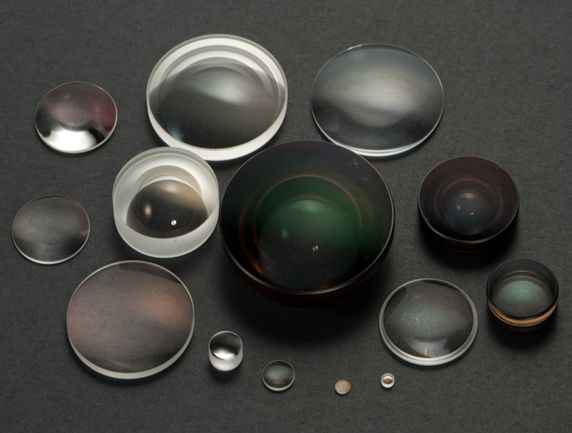
Vacuum Coating Technology
Does it have suitable deposition equipment and process expertise?
Testing Capability
Can the coating be evaluated against relevant performance requirements?
Production Capability
Can the validated process be transferred into stable mass production?
Process Control
Are coating parameters and inspection standards systematically controlled?
These factors can help distinguish a development-oriented coating partner from a basic finishing vendor.
Why ODM Projects Benefit From Early Supplier Involvement
Early supplier involvement can help identify technical issues while there is still flexibility in the product design.
For example, if the selected substrate is difficult to coat using the desired process, the issue can be addressed before tooling and production plans are finalized.
Likewise, if a desired texture requires a different coating structure, the design team can evaluate alternatives earlier.
This can reduce the risk of costly changes later in the product lifecycle.
SRNC and ODM Surface Coating Development
SRNC is a high-tech enterprise specializing in vacuum coating technology, nanocomposite materials, and advanced coating equipment, integrating R&D, manufacturing, and sales.
Its capabilities cover coating development, manufacturing processes, inspection, and testing.
For ODM companies developing customized smartphone surfaces, the Texture Coating for Cell Phone Back Panel page provides a relevant starting point for evaluating texture coating applications.
The company’s broader coating capabilities also include functional optical coating solutions for camera components, which can be explored through its Functional Coating for Cell Phone Camera page.
A Better ODM Workflow for Custom Surface Finishes
An efficient ODM coating workflow can be summarized as:
Design brief → Substrate evaluation → Coating concept → Prototype → Testing → Design approval → Process optimization → Production validation → Mass production
Each stage provides an opportunity to identify and solve potential problems.
The earlier an issue is discovered, the easier it is generally to address.
This is particularly important for customized surfaces because appearance requirements can be highly specific.
The Future of ODM Surface Engineering
Consumer electronics manufacturers are continuing to explore new surface effects as product differentiation becomes more important.
Future ODM projects may involve increasingly sophisticated combinations of:
- Micro-textures
- Matte finishes
- Metallic effects
- Multi-layer coatings
- Optical effects
- Protective layers
- Functional surface treatments
As these requirements evolve, the relationship between ODM product development and coating technology will become increasingly integrated.
Surface coating will not simply be the final decorative step. It will become part of the engineering strategy used to create the product.
FAQ About ODM Texture Coating
What is ODM texture coating?
ODM texture coating is a customized surface coating solution developed to meet the design and manufacturing requirements of an original design manufacturer.
How is ODM coating different from OEM coating?
ODM projects typically involve deeper integration with product design and development, while OEM projects may focus more heavily on manufacturing a product or component according to an established specification. The exact responsibilities can vary by project.
Can ODM texture coating be customized?
Yes. Depending on the substrate and coating technology, texture, color, gloss, visual effects, and other surface characteristics can be developed around specific product requirements.
What substrates can be used?
Potential substrates include glass, metal, ceramic, engineered plastics, and composite materials. Compatibility should be evaluated for each specific project.
Why are prototypes important?
Physical prototypes allow design and engineering teams to evaluate actual texture, tactile feel, reflection, color, adhesion, and other characteristics before mass production.
Can ODM texture coating be mass-produced?
Yes, provided the coating process is properly developed, validated, and controlled for production.
What should an ODM consider when selecting a coating manufacturer?
Important considerations include coating technology, substrate experience, prototype development, testing capability, production equipment, quality control, process stability, and mass-production capability.
Conclusion
ODM texture coating is most effective when surface design and manufacturing engineering are developed together.
For smartphone back panels and other consumer electronics components, the coating needs to do more than create an attractive visual effect. It must be compatible with the substrate, meet technical requirements, remain consistent during production, and fit into the broader product manufacturing process.
An effective ODM workflow begins with the product concept and continues through substrate evaluation, coating development, physical sampling, testing, process optimization, and production validation.
By involving coating expertise early in the product development cycle, ODM manufacturers can make surface design more manufacturable and reduce the risk of unexpected coating problems during mass production.
As consumer electronics continue to compete through increasingly refined industrial design, customized surface engineering will become an even more important part of ODM product development.