

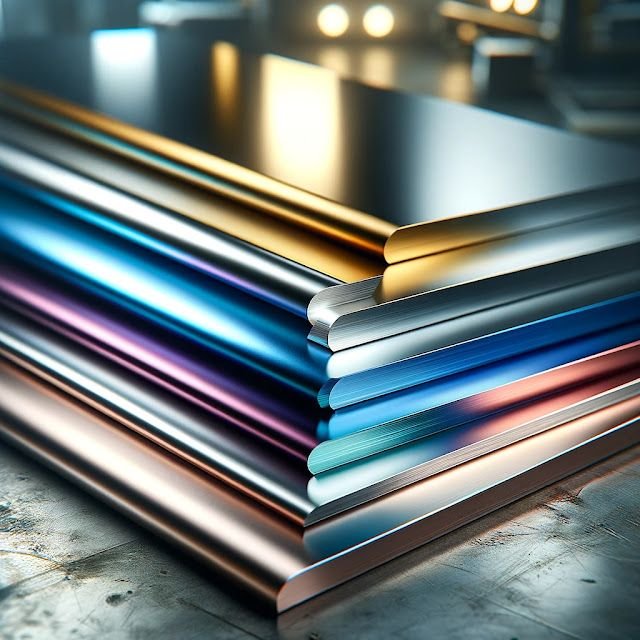
Texture Coating Factory: Inside the Manufacturing Process for Smartphone Back Panels
Introduction
The appearance of a smartphone back panel may look simple from the outside, but achieving a consistent premium surface requires a carefully controlled manufacturing process.
Modern phone designs increasingly combine decorative appearance with functional surface performance. Matte finishes, satin effects, metallic appearances, fine textures, and other surface treatments can all be created through advanced coating technologies. However, producing a visually attractive prototype is only one part of the challenge. Maintaining the same appearance, adhesion, durability, and quality across large production volumes requires appropriate equipment, process control, testing, and manufacturing discipline.
This is where a professional texture coating factory becomes an important part of the consumer electronics supply chain.
A capable factory does more than deposit a coating onto a component. It manages the complete manufacturing workflow, from incoming material inspection and surface preparation to coating, process inspection, final quality control, packaging, and shipment.
For smartphone manufacturers, OEMs, and component manufacturers, understanding what happens inside a texture coating factory can make it easier to evaluate potential coating partners and select an appropriate production solution.
What Is a Texture Coating Factory?
A texture coating factory is a manufacturing facility equipped to produce controlled surface finishes on components and products.
In smartphone applications, the facility may process materials such as:
- Glass
- Metal
- Ceramic
- Engineered plastics
- Composite materials
- Other suitable electronic housing substrates
The purpose of the coating process can vary depending on the product specification.
Some projects primarily require a decorative finish. Others may require a combination of appearance and surface performance, such as improved abrasion resistance, controlled reflectivity, or a particular tactile effect.
The factory therefore needs to coordinate materials, equipment, coating structures, production parameters, inspection standards, and packaging requirements.
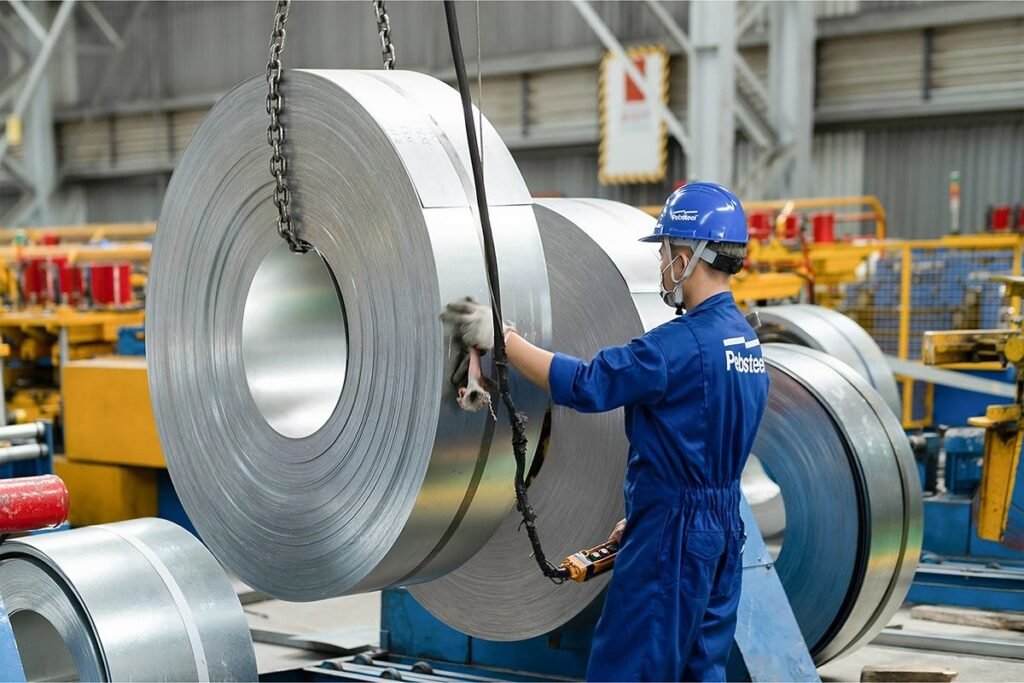
Why Factory Capability Matters for Smartphone Back Panels
Smartphone back panels have demanding appearance requirements.
A slight difference in color, gloss, texture, or coating uniformity can become visible when components are assembled into a finished device.
This is particularly challenging when manufacturers require large production quantities.
A coating process that produces excellent results for a small sample batch may not automatically deliver the same results during continuous production.
Factory capability matters because mass production introduces additional variables, including:
- Equipment stability
- Chamber conditions
- Material variation
- Cleaning consistency
- Fixture positioning
- Deposition parameters
- Production scheduling
- Operator procedures
- Inspection frequency
A professional texture coating factory should have systems in place to control these variables and maintain consistent production.
From Raw Component to Finished Surface
A typical coating manufacturing workflow can be divided into several stages.
1. Incoming Material Inspection
Before coating begins, incoming components should be inspected.
The condition of the substrate can influence the final coating result. Surface defects, contamination, dimensional variation, or inconsistent preparation can potentially affect appearance and adhesion.
Incoming inspection helps identify unsuitable materials before they enter the coating process.
This is particularly useful for high-volume manufacturing because preventing defective material from moving through multiple production stages can reduce unnecessary processing costs.
2. Loading
Qualified components are prepared and loaded into the appropriate production fixtures.
Fixture design and component positioning can influence coating uniformity, particularly when the coating process involves directional deposition or complex geometries.
Correct loading procedures therefore form an important part of production control.
3. Cleaning
Surface cleanliness is critical to coating performance.
Before deposition, components may undergo controlled cleaning processes designed to remove particles, oils, residues, and other contaminants.
Poor cleaning can contribute to problems such as:
- Reduced adhesion
- Surface defects
- Uneven appearance
- Coating contamination
- Increased rejection rates
For this reason, cleaning should be treated as an engineered production step rather than a simple preparation task.
4. Vacuum Coating
After preparation, components enter the coating stage.
Vacuum coating technologies such as physical vapor deposition can be used to create controlled thin-film structures.
Depending on the required result, vacuum deposition can contribute to:
- Decorative color
- Metallic effects
- Reflective characteristics
- Surface protection
- Optical effects
- Functional surface properties
The coating architecture and process parameters need to be selected according to the substrate and product requirements.
5. Process Inspection
Coated components should be inspected during and after production.
Process inspection helps identify deviations before a large quantity of components is completed.
This can involve checking appearance, coating condition, adhesion, and other parameters relevant to the application.
Early detection is particularly important in mass production because it can prevent a process deviation from affecting an entire production batch.
6. Final Inspection
After coating and relevant testing, finished components undergo final inspection.
The purpose is to confirm that products meet established specifications before packaging and shipment.
Final inspection may involve visual inspection as well as measurement and performance testing.
7. Packaging and Shipping
Once products pass final inspection, they can be packaged according to the requirements of the downstream manufacturing process.
Proper packaging is important because even a correctly manufactured coating can be damaged by particles, scratches, handling, or unsuitable transportation conditions.
Vacuum Coating Equipment in a Modern Factory
The equipment used by a texture coating factory plays an important role in determining what types of coating structures and production requirements the facility can support.
SRNC’s manufacturing capabilities include vacuum coating equipment such as molecular pump optical coaters, multifunction evaporators, optical coating machines, vertical multifunctional sputtering machines, and sputtering continuous lines.
Different equipment configurations are suited to different production requirements.
Sputtering
Sputtering is a vacuum deposition technology commonly used for thin-film applications.
It can provide controlled deposition of coating materials and can be incorporated into multi-layer coating structures.
Evaporation
Vacuum evaporation is another physical vapor deposition approach that can be used for various thin-film and decorative applications.
The appropriate technology depends on factors such as the desired coating properties, substrate, geometry, and production requirements.
Continuous Coating Systems
For higher-volume manufacturing, continuous coating equipment can support production workflows designed around greater throughput and process consistency.
The exact equipment configuration should always be evaluated according to the component design and required coating system.
Texture Development Begins With the Surface Design
A texture is not simply a random roughness applied to a component.
The surface effect needs to be engineered according to the desired appearance and user experience.
Design requirements may include:
- Fine matte texture
- Satin appearance
- Frosted effect
- Metallic visual character
- Controlled light diffusion
- Subtle tactile variation
- Smooth premium finish
The final appearance depends on the interaction between the substrate and coating system.
For example, changing the coating structure can alter how light is reflected from the surface. Similarly, changes in the underlying substrate or surface preparation may influence the final appearance.
This means coating development should involve both design understanding and manufacturing knowledge.
Why Process Control Is Critical
A coating factory can have advanced equipment and still produce inconsistent results if process control is weak.
Important variables can include:
- Vacuum conditions
- Deposition rate
- Film thickness
- Substrate temperature
- Cleaning conditions
- Fixture arrangement
- Process sequence
- Material condition
Controlling these variables helps reduce batch-to-batch variation.
For consumer electronics, consistency is especially important because product surfaces are often viewed under strong lighting and compared side by side.
A small variation that may not matter in one application can be highly visible on a premium smartphone.
Testing Equipment and Quality Assurance
Quality assurance is another major characteristic of a professional coating factory.
SRNC’s testing capabilities include equipment for evaluating coating and surface performance, such as:
- Film abrasion testing
- Reflection testing
- Automatic contact-angle measurement
- Cross-cut testing
- Resistance testing
- Constant temperature and humidity testing
- Salt spray testing
The exact tests required depend on the substrate, coating system, and final application.
Abrasion Testing
Abrasion testing can help evaluate how the surface responds to repeated mechanical contact.
This is relevant to smartphone products because the back panel may experience friction against hands, pockets, bags, desks, and other surfaces.
Adhesion Testing
A coating needs to remain properly attached to the substrate.
Cross-cut or related adhesion testing can help assess whether the coating system has sufficient adhesion under specified test conditions.
Contact-Angle Testing
Contact-angle measurement can provide information about surface wetting characteristics.
For certain surface technologies, this can help evaluate changes in surface behavior.
Environmental Testing
Temperature, humidity, salt spray, and other environmental tests can help assess coating stability under defined conditions.
The appropriate testing program should be based on the product’s actual operating and reliability requirements.
Quality Starts Before the Coating Chamber
One of the most important lessons in coating manufacturing is that quality cannot be added at the end.
If the incoming substrate is inconsistent, the coating process may inherit those variations.
If cleaning is inconsistent, adhesion and appearance may be affected.
If equipment parameters are unstable, coating uniformity may change.
If inspection occurs only after mass production is complete, process deviations may be discovered too late.
A strong factory therefore builds quality control into every stage of production.
This includes:
Incoming material → Cleaning → Loading → Coating → Process inspection → Testing → Final inspection → Packaging
Such an integrated approach is particularly valuable for smartphone back panels, where both visual quality and functional performance matter.
Working With Different Smartphone Substrates
A major advantage of an experienced coating manufacturer is the ability to understand different substrate characteristics.
Glass Back Panels
Glass can provide a smooth, premium surface suitable for sophisticated decorative finishes.
However, the coating process needs to account for the condition and characteristics of the glass surface.
Metal Housings
Metal substrates can create strong visual effects and premium industrial design characteristics.
The coating process must be compatible with the specific metal and required surface finish.
Ceramic Components
Ceramic can provide a distinctive tactile and visual experience. Surface condition and processing requirements should be evaluated before coating development.
Plastic and Composite Housings
Engineering plastics and composite materials may have different thermal and surface characteristics from glass or metal.
The coating process therefore needs to be adapted to the substrate rather than applying a single process indiscriminately.
Prototype Production vs. Mass Production
Manufacturers should distinguish between prototype capability and mass-production capability when evaluating a texture coating factory.
Prototype development focuses on questions such as:
- Can the desired appearance be achieved?
- Is the coating compatible with the substrate?
- Does the sample meet initial performance requirements?
Mass production introduces another set of questions:
- Can the appearance be reproduced consistently?
- Can the process remain stable over long production runs?
- Can inspection identify deviations quickly?
- Can production capacity support the required volume?
- Can quality standards remain consistent across batches?
A reliable coating factory should be prepared to address both stages.
How to Evaluate a Texture Coating Factory
When comparing factories, manufacturers can consider several practical criteria.
Manufacturing Equipment
Does the factory have appropriate vacuum coating and surface treatment equipment?
Production Workflow
Is there a clearly controlled process from incoming material through final inspection?
Testing Capability
Can the factory conduct relevant coating and surface performance tests?
Process Engineering
Can the technical team adjust the coating process according to substrate and product requirements?
Quality Management
Are inspection procedures established throughout the production process?
Production Scalability
Can the factory transition from development samples to stable mass production?
These factors provide a more complete picture than simply comparing coating prices.
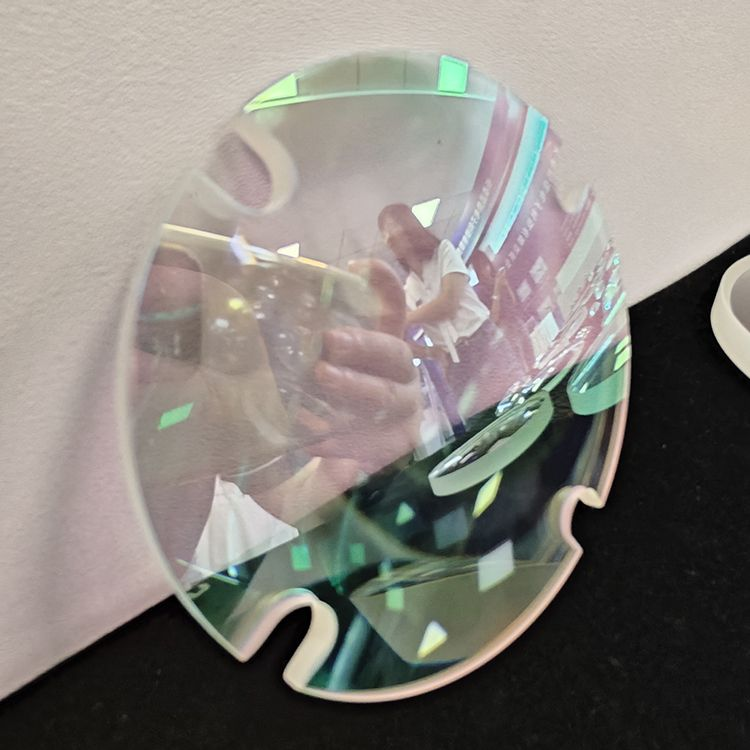
Why In-House Capabilities Can Improve Project Coordination
When coating development, manufacturing, and testing are closely connected within one organization, communication between different stages can become more efficient.
For example, if a coating sample shows an adhesion issue, the technical team can evaluate whether the cause may relate to cleaning, substrate preparation, coating structure, or deposition parameters.
Similarly, if a visual effect needs adjustment, the coating process can be reviewed rather than simply changing the finished product specification.
This integrated approach can be valuable during new product development.
SRNC as a Vacuum Coating Manufacturing Partner
SRNC is a high-tech enterprise specializing in vacuum coating technology, nanocomposite materials, and advanced coating equipment, integrating R&D, manufacturing, and sales.
Its production workflow covers incoming material inspection, loading, cleaning, coating, process inspection, packaging, outgoing inspection, and shipping.
For manufacturers developing textured smartphone surfaces, the Texture Coating for Cell Phone Back Panel page provides information about the relevant coating application.
SRNC also works with functional coating technologies for other electronics components. For smartphone optical components, its Functional Coating for Cell Phone Camera solution covers another important area of advanced surface engineering.
This combination of coating technology, manufacturing equipment, and testing capability supports applications where surface appearance and technical performance need to work together.
The Future of Texture Coating Manufacturing
Consumer electronics manufacturers continue to explore new ways to make devices visually distinctive while maintaining durability and usability.
Future surface technologies are likely to involve increasingly sophisticated combinations of:
- Multi-layer thin films
- Fine surface textures
- Optical effects
- Metallic finishes
- Matte surfaces
- Functional coatings
- Protective layers
- Precision process control
As these technologies evolve, the role of the coating factory will also change.
Instead of simply providing a finishing operation, advanced coating manufacturers can participate earlier in product development, helping engineers and designers translate surface concepts into repeatable manufacturing processes.
FAQ
What does a texture coating factory manufacture?
A texture coating factory manufactures coated components with controlled visual and tactile surface characteristics. In consumer electronics, these can include smartphone back panels and other device housings.
What materials can be texture coated?
The suitable substrate depends on the coating technology and application. Glass, metal, ceramic, engineered plastics, and composite materials can all be considered for appropriate coating systems.
Why is vacuum coating used for phone back panels?
Vacuum coating technologies can create controlled thin-film layers that provide decorative or functional surface characteristics. The exact technology depends on the desired coating structure and substrate.
How does a coating factory maintain consistency?
Consistency is supported through controlled material preparation, cleaning, equipment parameters, coating processes, inspection procedures, and testing.
What should I ask a coating factory before placing an order?
Manufacturers should evaluate equipment, substrate compatibility, development capability, quality control, testing infrastructure, production capacity, and the factory’s ability to maintain consistent results during mass production.
Conclusion
A high-quality smartphone back panel finish is the result of a complete manufacturing system rather than a single coating step.
For companies looking for a texture coating factory, production equipment is important, but it is only one part of the evaluation. Surface preparation, coating technology, process engineering, testing, quality control, and mass-production consistency are equally important.
A capable factory can help transform a surface design concept into a stable, repeatable, and production-ready coating process. This becomes increasingly valuable as smartphones and other consumer electronics demand more distinctive textures, refined visual effects, and durable surface performance.
By evaluating the complete manufacturing workflow rather than focusing only on the final appearance or unit price, manufacturers can make better decisions when selecting a long-term coating partner for advanced electronic products.