

Vacuum Coating Technology: 9 Advanced Applications for Hard, Optical, and Protective Surfaces
Modern products increasingly require surfaces that can perform more than one job.
An optical component may need high transmission and low reflection. A smartphone cover may need scratch resistance and easy cleaning. An industrial window may need to withstand abrasion, chemicals, and temperature changes.
In many of these applications, conventional surface treatments aren’t enough.
This is where vacuum coating technology provides an important advantage.
Vacuum coating uses a controlled low-pressure environment to deposit thin films onto a substrate. Depending on the process, manufacturers can create coatings designed for mechanical protection, optical control, chemical resistance, electrical functionality, decoration, or other specialized requirements.
Technologies such as physical vapor deposition, sputtering, evaporation, and ion-assisted processes fall within the broader field of vacuum-based coating.
For advanced materials such as sapphire, vacuum coating provides a way to engineer the surface while preserving the valuable properties of the underlying substrate.
What Is Vacuum Coating Technology?
Vacuum coating technology refers to coating processes performed inside a vacuum chamber or controlled low-pressure environment.
The basic concept is straightforward:
Create a controlled vacuum → generate coating material → transport it through the chamber → deposit it onto the substrate.
Compared with conventional wet coating processes, vacuum deposition can provide highly controlled thin films with carefully engineered compositions and thicknesses.
Common vacuum coating processes include:
- Physical vapor deposition
- Magnetron sputtering
- Electron-beam evaporation
- Thermal evaporation
- Ion-assisted deposition
- Reactive sputtering
The choice depends on the substrate, coating material, geometry, and required performance.
Why Vacuum Coating Is Important for Advanced Materials
Vacuum processes provide a controlled environment for thin-film formation.
This is particularly useful when manufacturers need precise control over:
- Film thickness
- Film composition
- Deposition rate
- Layer structure
- Surface uniformity
- Optical properties
- Mechanical performance
For high-performance components, these parameters can have a direct effect on the final product.
A coating only a few hundred nanometers or several micrometers thick can significantly change how a surface interacts with light, mechanical contact, chemicals, or the surrounding environment.
9 Applications of Vacuum Coating Technology
1. Super-Hard Protective Coatings
One major application is the deposition of hard protective films.
Depending on the selected coating material, vacuum deposition can produce films with high hardness and good wear resistance.
These coatings can be used on:
- Sapphire
- Glass
- Ceramic
- Metal
- Optical components
For sapphire applications, a hard coating can add another layer of surface protection to an already highly durable substrate.
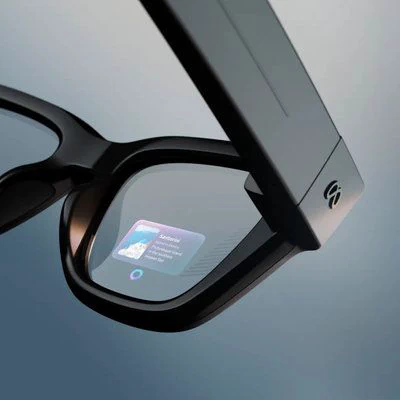
SRNC’s Sapphire Super Hard Coating is developed for applications where advanced surface hardness and protective performance are required.
2. Optical Thin Films
Vacuum deposition is widely used to produce optical thin films.
By controlling the thickness and refractive index of individual layers, manufacturers can engineer how light interacts with the surface.
Possible functions include:
- Anti-reflection
- High reflection
- Partial reflection
- Spectral filtering
- Wavelength control
Multilayer optical structures are particularly useful when precise spectral performance is required.
3. Anti-Reflective Coatings
An optical surface can reflect a portion of incident light.
For lenses, windows, and other transparent components, excessive reflection can reduce useful transmission.
Vacuum deposition can create carefully controlled anti-reflective layers that reduce reflection within a selected wavelength range.
This is important for:
- Camera optics
- Optical windows
- Sensors
- Laser components
- Display covers
4. Decorative Surface Finishes
Vacuum coating isn’t limited to technical components.
PVD-based processes can create decorative finishes on consumer products and electronic housings.
Manufacturers can develop surfaces with different:
- Colors
- Metallic effects
- Gloss levels
- Visual appearances
This makes vacuum coating useful in both functional engineering and industrial design.
5. Wear-Resistant Surfaces
Repeated mechanical contact can cause surface wear.
A suitable vacuum-deposited film can improve resistance to:
- Abrasion
- Scratching
- Sliding contact
- Repeated handling
The actual performance depends on the coating material, substrate, film structure, and operating environment.
6. Chemical-Resistant Surfaces
Some coating materials can provide additional resistance against chemical exposure.
This is useful for components exposed to:
- Cleaning agents
- Oils
- Solvents
- Moisture
- Industrial chemicals
The coating should be qualified against the actual chemicals expected during product use.
7. Functional Electronic Surfaces
Vacuum deposition can also be used to deposit conductive, semiconductive, or other functional thin films.
Applications can include:
- Sensors
- Electronic components
- Conductive layers
- Transparent conductive structures
The film composition and thickness are selected according to the required electrical properties.
8. Surface Friction Control
Thin-film coatings can change how surfaces interact mechanically.
Depending on the material and structure, a coating can be designed to modify:
- Friction
- Sliding behavior
- Surface energy
- Wear behavior
This can be useful in precision components and mechanical assemblies.
9. Multilayer Functional Surfaces
Modern vacuum coating systems can deposit multiple layers in a controlled sequence.
For example:
Substrate → adhesion layer → hard layer → optical layer → functional top layer
Each layer can serve a different purpose.
This makes multilayer deposition one of the most flexible approaches in advanced surface engineering.
Vacuum Coating Technology vs. Conventional Wet Coating
Both technologies have their place.
| Feature | Vacuum Coating | Wet Coating |
|---|---|---|
| Process environment | Vacuum/low pressure | Atmospheric |
| Film formation | Physical deposition | Liquid application and curing |
| Film thickness control | Highly controllable | Depends on application method |
| Multilayer structures | Highly suitable | Possible but process-dependent |
| Optical thin films | Excellent suitability | Application-dependent |
| Decorative finishes | Widely used | Widely used |
| Large complex parts | Depends on chamber geometry | Often easier |
| Material selection | Broad range | Depends on formulation |
The right process depends on the application rather than one technology being universally better.
How Vacuum Coating Technology Works
A typical vacuum coating process includes several stages.
1. Substrate Cleaning
The component is cleaned to remove particles, oils, and organic contamination.
This stage is critical because surface contamination can weaken coating adhesion.
2. Chamber Loading
The prepared components are placed inside the vacuum chamber.
3. Vacuum Generation
Air and unwanted gases are removed from the chamber.
A controlled low-pressure environment is established.
4. Surface Preparation
Depending on the process, plasma or ion cleaning may be used to further prepare the substrate.
5. Material Vaporization
The coating material is converted into a vapor or plasma.
For sputtering, energetic ions bombard a target and eject atoms from its surface.
6. Deposition
The coating material reaches the substrate and forms a thin film.
7. Layer Formation
For multilayer systems, different materials can be deposited sequentially.
8. Inspection
The final coating is tested for thickness, adhesion, appearance, and application-specific performance.
Vacuum Coating for Sapphire
Sapphire is particularly attractive for advanced vacuum coating applications because of its strong bulk properties.
Its combination of hardness, transparency, and chemical stability provides a strong substrate for engineered thin films.
Potential applications include:
- Sapphire optical windows
- Protective covers
- Sensor windows
- Camera components
- Industrial viewing windows
- Precision optical components
The coating can be selected according to whether the main objective is mechanical protection, optical performance, or another surface function.
Film Adhesion and Interface Engineering
One of the most important aspects of vacuum coating is adhesion.
A coating that has excellent intrinsic properties can still fail if it doesn’t bond properly to the substrate.
Factors affecting adhesion include:
- Surface cleanliness
- Surface activation
- Substrate temperature
- Deposition energy
- Film stress
- Interface structure
- Coating composition
Proper surface preparation is therefore an essential part of the process.
Vacuum Coating Technology for Optical Applications
Optical coatings require particularly precise process control.
A small variation in layer thickness can change optical performance.
For multilayer systems, each layer may be designed according to its:
- Refractive index
- Thickness
- Optical absorption
- Wavelength response
This allows manufacturers to engineer sophisticated optical behavior.
Applications include:
- Anti-reflective coatings
- IR coatings
- UV coatings
- Beam splitters
- Optical filters
- Protective optical films
For precision camera applications, SRNC also provides Functional Coating for Cell Phone Camera solutions designed for specialized optical and surface requirements.
Vacuum Coating Technology and Surface Hardness
Hardness isn’t determined solely by the coating material.
Film structure and interface quality also matter.
Important factors include:
- Coating composition
- Crystal structure
- Film density
- Thickness
- Residual stress
- Adhesion
A well-engineered coating system should balance hardness with toughness and adhesion.
An extremely hard film that cracks or delaminates easily isn’t a reliable solution.
Quality Control and Testing
Vacuum-deposited films should be evaluated according to their intended function.
Typical tests include:
| Test | Purpose |
|---|---|
| Film thickness | Confirms deposition control |
| Adhesion | Evaluates bonding |
| Hardness | Measures surface resistance |
| Scratch resistance | Evaluates mechanical damage |
| Abrasion | Measures wear |
| Optical transmission | Evaluates light transmission |
| Reflectance | Measures surface reflection |
| Chemical resistance | Evaluates stability |
| Environmental aging | Checks long-term reliability |
For optical products, spectral measurements are particularly important.
How to Select a Vacuum Coating Supplier
When evaluating a supplier, manufacturers should consider more than equipment capacity.
Important questions include:
Does the supplier understand the substrate?
Sapphire, glass, metal, and ceramic each require different process considerations.
Can the coating be customized?
The supplier should be able to adjust coating composition, thickness, or multilayer architecture when required.
Can the supplier support prototypes?
Sample development helps validate the coating before mass production.
What testing capabilities are available?
Testing should match the final application.
Can the process scale?
Production consistency is essential for commercial applications.
Frequently Asked Questions
What is vacuum coating technology?
Vacuum coating technology is a group of thin-film deposition processes performed in a controlled low-pressure environment to apply functional or decorative films to a substrate.
Is PVD a vacuum coating technology?
Yes. Physical vapor deposition is one of the major categories of vacuum-based coating processes.
What materials can be vacuum coated?
Depending on the process, substrates can include sapphire, glass, ceramic, metal, plastic, and other suitable materials.
What are the main advantages of vacuum coating?
Vacuum coating provides controlled thin-film deposition and can be used to create hard, wear-resistant, optical, decorative, chemical-resistant, or electrically functional surfaces.
Can vacuum coating be used on sapphire?
Yes. Sapphire is a suitable substrate for many advanced vacuum-deposited coatings.
Can vacuum coating improve scratch resistance?
A properly engineered hard coating can improve surface resistance to scratching and abrasion, depending on the coating and substrate combination.
Can vacuum coating produce optical filters?
Yes. Carefully controlled multilayer thin films can be designed to transmit, reflect, or absorb selected wavelength ranges.
What is the difference between sputtering and vacuum evaporation?
Both are vacuum deposition methods. Sputtering ejects material from a target using energetic ions, while evaporation converts a source material into vapor through heating or another energy source.
Why is surface preparation important in vacuum coating?
A clean and properly prepared substrate promotes coating adhesion and reduces defects, which directly affects long-term coating reliability.
Conclusion
Vacuum coating technology has become an important part of modern surface engineering because it allows manufacturers to deposit highly controlled thin films with specialized properties.
From super-hard protective coatings to optical filters and decorative finishes, vacuum-based deposition can be adapted to a wide range of advanced applications.
For sapphire components, the technology is especially useful because it combines the strong inherent properties of sapphire with additional surface functionality.
SRNC’s Sapphire Super Hard Coating provides a dedicated solution for sapphire applications requiring advanced surface protection.
For precision optical and camera applications, SRNC’s Functional Coating for Cell Phone Camera provides another example of how controlled thin-film coating can address demanding surface and optical requirements.
Ultimately, the value of vacuum coating technology lies in its ability to engineer surfaces at the thin-film level. With proper material selection, process control, interface preparation, and testing, manufacturers can develop surfaces that are harder, more durable, more functional, and better suited to demanding optical and electronic applications.