

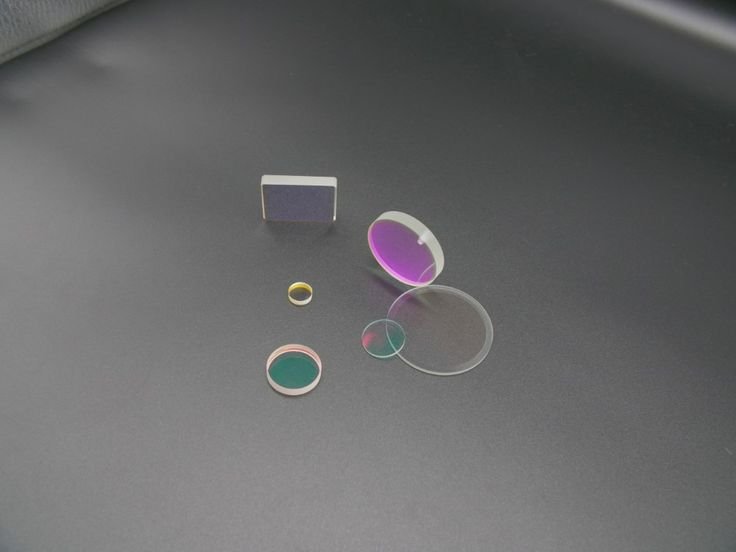
Surface Engineering for Sapphire: 9 Smart Ways to Improve Hardness, Durability, and Performance
Modern optical and electronic components often need to perform under demanding conditions. They may encounter abrasion, repeated contact, chemicals, temperature changes, or strict optical requirements.
The bulk material alone isn’t always enough to meet every requirement.
This is where surface engineering becomes valuable.
Surface engineering is the practice of modifying or controlling the outermost region of a material to improve specific properties while preserving the useful characteristics of the underlying substrate.
For sapphire, this approach is particularly interesting.
Sapphire already offers excellent hardness, optical transparency, chemical stability, and thermal performance. However, advanced applications may still require additional surface characteristics, such as enhanced wear resistance, controlled optical response, lower friction, or specialized protective functionality.
Through techniques such as thin-film deposition, PVD, sputtering, surface treatment, and multilayer coating, manufacturers can engineer the sapphire surface for a particular application.
The result is not simply a harder material. It’s a more precisely designed surface.
What Is Surface Engineering?
Surface engineering involves modifying a material’s surface to achieve specific functional or aesthetic properties.
Unlike changing the entire bulk material, surface engineering focuses primarily on the outer surface or near-surface region.
Common approaches include:
- Thin-film coating
- Physical vapor deposition
- Sputtering
- Ion-assisted deposition
- Surface modification
- Hard coating
- Multilayer optical coating
These technologies can be used individually or combined depending on the application.
For advanced sapphire components, surface engineering may be used to optimize:
- Hardness
- Wear resistance
- Adhesion
- Chemical resistance
- Optical transmission
- Reflection
- Surface friction
- Environmental durability
Why Surface Engineering Matters for Sapphire
Sapphire is already a high-performance substrate.
Its key characteristics include:
- High hardness
- High optical transparency
- Good thermal stability
- Strong chemical resistance
- Excellent dimensional stability
But different applications place different demands on the surface.
For example, an optical window may require controlled transmission and reflection, while a protective cover may prioritize scratch and abrasion resistance.
Surface engineering makes it possible to optimize the surface without replacing the underlying sapphire.
That’s the key idea:
The substrate provides the foundation; surface engineering adds targeted functionality.
9 Ways Surface Engineering Can Improve Sapphire Components
1. Improve Surface Wear Resistance
Repeated contact can gradually affect the performance and appearance of exposed surfaces.
A properly engineered hard coating can help protect against:
- Abrasion
- Repeated contact
- Surface rubbing
- Particle interaction
This is valuable for components used in frequently handled devices.
2. Increase Surface Hardness
Although sapphire already has exceptional hardness, a specialized coating can provide an additional engineered surface layer.
The coating may be selected for its hardness, toughness, wear behavior, or other application-specific characteristics.
The goal isn’t necessarily to make sapphire “harder” in bulk. Instead, it is to optimize the surface response to a particular type of contact.
3. Improve Chemical Protection
Some advanced coatings can provide additional protection against chemical exposure.
This may be useful where sapphire surfaces encounter:
- Cleaning agents
- Solvents
- Oils
- Moisture
- Industrial chemicals
The coating must be selected based on the actual chemical environment.
4. Control Optical Reflection
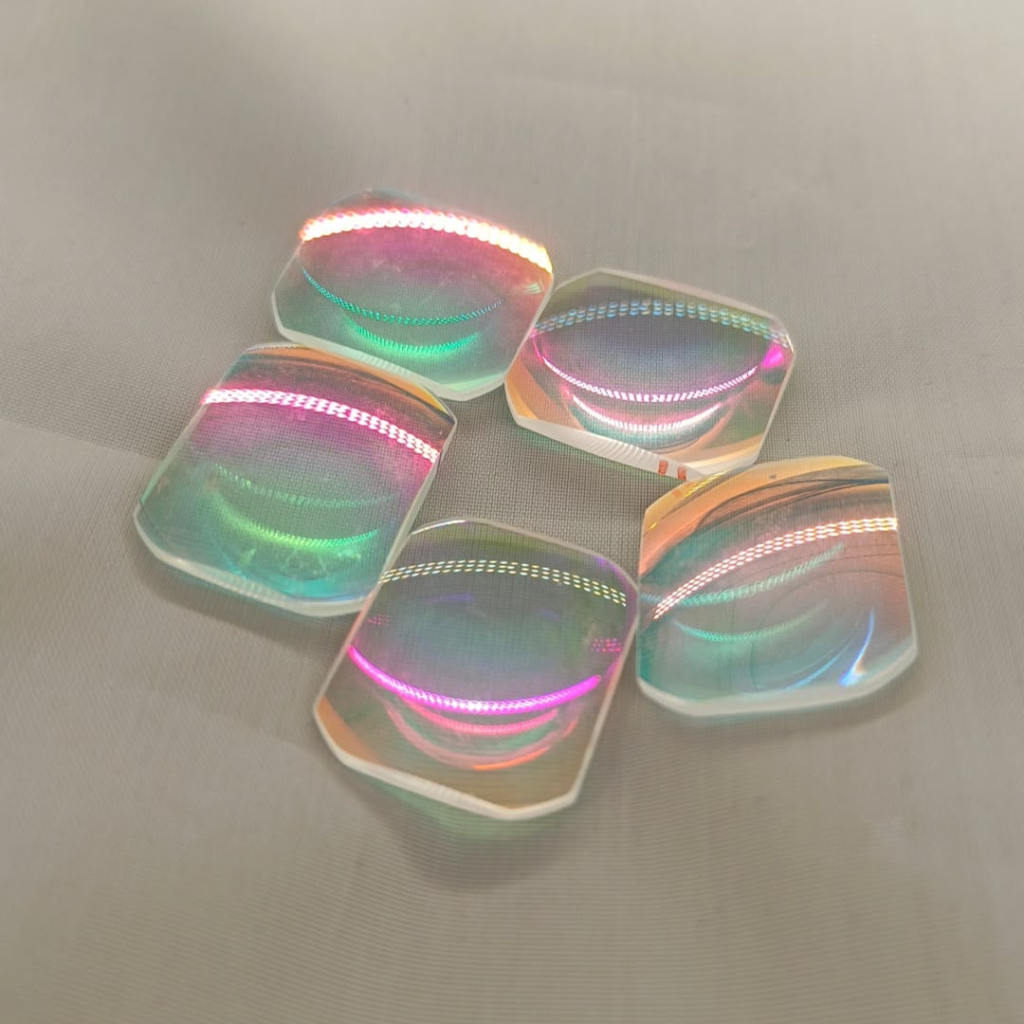
Surface engineering is especially important in optical applications.
An uncoated optical surface can reflect part of the incident light.
Thin-film structures can be designed to modify this behavior.
Depending on the coating design, manufacturers can control:
- Reflection
- Transmission
- Absorption
- Spectral response
This makes advanced surface engineering useful for optical windows, filters, sensor covers, and other precision components.
5. Improve Surface Adhesion
A coating only performs well when it remains attached to the substrate.
Surface preparation can improve the interface between sapphire and the deposited film.
Important factors include:
- Cleaning
- Surface activation
- Deposition conditions
- Film stress
- Interface structure
Good interface engineering is often just as important as selecting the coating material.
6. Control Surface Friction
Surface friction affects how components interact with other materials.
A coating can potentially modify friction characteristics and reduce unwanted surface interaction.
This can be useful in precision mechanical or optical assemblies.
7. Maintain Dimensional Accuracy
One advantage of thin-film surface engineering is that the functional layer can be relatively thin.
This allows manufacturers to modify surface properties without significantly changing the dimensions of the underlying component.
For precision sapphire parts, this can be an important consideration.
8. Add Specialized Functional Properties
Surface engineering isn’t limited to hardness.
Advanced coatings can be developed for specific functions such as:
- Hydrophobic behavior
- Oleophobic behavior
- Anti-reflective performance
- Optical filtering
- Electrical functionality
- Decorative appearance
The coating architecture can be tailored to the final application.
9. Extend Component Service Life
A well-designed surface can help maintain component performance over repeated use.
When the surface resists wear, chemical degradation, and environmental exposure, the useful service life of the component may be improved.
Long-term performance must, of course, be validated through appropriate testing.
Surface Engineering vs. Bulk Material Engineering
These two approaches solve different problems.
| Approach | Main Focus |
|---|---|
| Bulk material engineering | Changes properties throughout the material |
| Surface engineering | Modifies primarily the outer surface |
| Thin-film coating | Adds a controlled functional layer |
| Surface treatment | Changes surface chemistry or structure |
For sapphire, surface engineering is useful because the substrate already has excellent bulk properties.
Instead of replacing sapphire with another material, manufacturers can modify the surface to meet additional requirements.
Surface Engineering Technologies for Sapphire
Several technologies can be used for advanced sapphire surface treatment.
Physical Vapor Deposition
PVD deposits thin films under vacuum conditions.
Different PVD methods include:
- Sputtering
- Arc evaporation
- Electron-beam evaporation
- Thermal evaporation
The selected process depends on the coating material and application.
Magnetron Sputtering
Magnetron sputtering is widely used for thin-film deposition.
It can provide controlled deposition of metals, oxides, nitrides, and other materials.
For optical applications, sputtering can be used to create precise multilayer structures.
Ion-Assisted Deposition
Ion assistance can influence film density, adhesion, and microstructure.
This can be particularly useful when coating performance depends heavily on interface quality.
Multilayer Thin Films
Instead of using a single coating layer, manufacturers can combine multiple thin films.
Different layers can provide different functions.
For example:
Substrate → adhesion layer → hard layer → functional layer
The exact structure depends on the application.
Sapphire Super Hard Coating
One of the most direct applications of advanced surface engineering is the development of super-hard protective coatings for sapphire components.
The objective is to create a surface that combines the inherent strength of sapphire with additional engineered properties.
SRNC’s Sapphire Super Hard Coating is designed for applications requiring advanced surface protection and high-performance coating technology.
Depending on the application, coating development can consider factors such as:
- Surface hardness
- Wear resistance
- Adhesion
- Optical requirements
- Chemical stability
- Environmental durability
Surface Preparation: The Foundation of a Reliable Coating
Even the most advanced coating technology can perform poorly if the substrate isn’t properly prepared.
Before deposition, sapphire surfaces may undergo several preparation stages.
Cleaning
Removing organic contaminants, particles, and residues.
Activation
Improving surface conditions for coating adhesion.
Plasma Treatment
Depending on the process, plasma treatment may be used to further prepare the surface.
In-Situ Cleaning
Some vacuum processes can include cleaning steps immediately before deposition.
The purpose is simple: create a clean and stable interface.
How Surface Engineering Is Tested
Testing should be linked to the final application.
Common mechanical evaluations include:
| Test | Purpose |
|---|---|
| Scratch test | Evaluates resistance to surface damage |
| Hardness test | Measures surface hardness |
| Abrasion test | Evaluates wear |
| Adhesion test | Checks coating bonding |
| Friction test | Measures surface interaction |
For optical components, additional testing may include:
- Spectral transmission
- Reflectance
- Haze
- Optical uniformity
Environmental testing may evaluate:
- Temperature cycling
- Humidity
- Chemical exposure
- Long-term aging
Surface Engineering for Optical Windows
Sapphire optical windows can be used in demanding environments where both transparency and durability matter.
Potential applications include:
- Sensors
- Cameras
- Optical instruments
- Industrial equipment
- Laser systems
- Aerospace equipment
- Defense-related optical systems
Surface engineering allows manufacturers to modify the optical interface without changing the fundamental properties of the sapphire substrate.
For example, an anti-reflective multilayer coating can be designed to improve transmission within a selected wavelength range.
Surface Engineering for Consumer Electronics
Surface engineering also has a major role in consumer electronics.
Smartphones and wearable devices need exterior surfaces that are attractive and durable.
Coatings can be engineered for:
- Scratch resistance
- Fingerprint resistance
- Easy cleaning
- Texture
- Chemical resistance
- Optical performance
For smartphone exterior applications, SRNC’s Texture Coating for Cell Phone Back Panel provides another example of how surface engineering can combine aesthetics and functionality.
How to Choose a Surface Engineering Solution
There isn’t a universal coating solution.
The appropriate technology depends on several factors.
Substrate
Is the component sapphire, glass, ceramic, metal, or plastic?
Primary Function
Is the goal:
- Hardness?
- Wear resistance?
- Optical control?
- Chemical protection?
- Easy cleaning?
- Decorative appearance?
Operating Environment
Consider temperature, humidity, chemicals, abrasion, and mechanical contact.
Optical Requirements
For transparent components, wavelength range and transmission requirements are critical.
Production Volume
The process needs to be suitable for the expected manufacturing scale.
Quality Requirements
Define measurable specifications for coating thickness, adhesion, appearance, hardness, and optical performance.
Frequently Asked Questions
What is surface engineering?
Surface engineering is the design and modification of a material’s surface to improve specific mechanical, chemical, optical, or functional properties without necessarily changing the bulk material.
Why is surface engineering useful for sapphire?
Sapphire already has excellent bulk properties, but surface engineering can add specialized characteristics such as enhanced wear resistance, optical control, chemical protection, or other functional performance.
What technologies are used in surface engineering?
Common technologies include PVD, sputtering, ion-assisted deposition, thin-film coating, surface modification, and multilayer deposition.
Is PVD a surface engineering technology?
Yes. Physical vapor deposition is one of the important technologies used to engineer material surfaces through controlled thin-film deposition.
Can sapphire be coated with a hard coating?
Yes. Sapphire can receive specialized hard coatings when the coating material and deposition process are appropriately selected.
Does surface engineering change the bulk sapphire?
In many applications, surface engineering primarily modifies the surface or adds a thin functional layer while preserving the important bulk properties of the sapphire.
Can surface engineering improve optical performance?
Yes. Thin-film surface structures can be designed to control reflection, transmission, absorption, and spectral response.
How is a surface-engineered sapphire component tested?
Testing may include hardness, scratch resistance, abrasion, adhesion, chemical resistance, optical transmission, reflectance, environmental aging, and other application-specific evaluations.
Why is coating adhesion important?
Poor adhesion can cause cracking, delamination, or coating failure. Surface cleanliness, preparation, interface structure, and deposition parameters all affect adhesion.
Conclusion
Surface engineering provides manufacturers with a powerful way to get more performance from already advanced materials.
For sapphire, the goal isn’t simply to increase hardness. Instead, surface engineering allows manufacturers to tailor the outer surface for specific mechanical, optical, chemical, and functional requirements.
Technologies such as PVD, sputtering, ion-assisted deposition, and multilayer thin-film coating can create carefully controlled surface structures.
For applications requiring enhanced protection, SRNC’s Sapphire Super Hard Coating provides a dedicated solution for advanced sapphire surface applications.
For consumer electronics applications where surface appearance and functionality must work together, SRNC’s Texture Coating for Cell Phone Back Panel demonstrates another practical use of advanced coating technology.
Ultimately, effective surface engineering is about matching the right surface technology to the right material and application. When properly designed, it can turn a high-performance substrate into a more durable, functional, and application-specific component.