

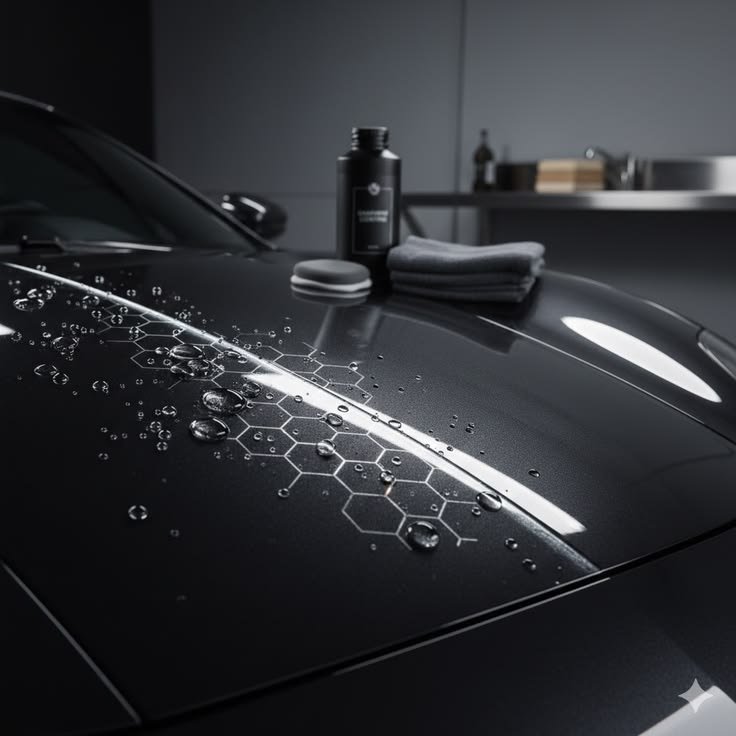
Hydrophobic Coating for Consumer Electronics: Water and Oil Repellent Surface Technology
Modern consumer electronics need to look good and stay functional through years of daily use. Smartphone back panels, wearable devices, tablets, and other portable products are constantly exposed to water droplets, fingerprints, skin oils, dust, and cleaning agents.
This makes surface engineering increasingly important.
Hydrophobic coating technology provides a way to modify the surface of a material so that water has less tendency to spread across it. Instead of forming a broad wet film, water tends to form droplets that can roll or be removed more easily.
For electronic products, however, hydrophobicity is only one part of the equation. A practical coating may also need to provide oil resistance, anti-smudge performance, easy cleaning, chemical durability, good adhesion, and long-term stability.
The coating therefore needs to be designed around the complete surface rather than one isolated property.
What Is Hydrophobic Coating?
A hydrophobic coating is a surface treatment designed to reduce the wettability of a material by water.
In simple terms, a hydrophobic surface makes water more likely to form droplets rather than spread across the surface.
This behavior is influenced by the surface’s chemical characteristics and microscopic structure.
A hydrophobic coating can be applied to different substrates, depending on the formulation and manufacturing process, including:
- Glass
- Plastic
- Metal
- Ceramic
- Composite materials
For consumer electronics, the coating can be used to improve the surface experience while helping reduce the visibility and retention of water-based contamination.
How Hydrophobic Surfaces Repel Water
The interaction between a liquid and a solid surface can be described using wettability.
One common way to evaluate this behavior is through the water contact angle.
A higher contact angle generally indicates that water spreads less readily across the surface.
A hydrophobic surface encourages water to remain in a more rounded droplet.
This can provide several practical advantages:
- Water is easier to wipe away
- Droplets are less likely to form a continuous wet film
- Water-based contamination can be easier to remove
- The surface can remain visually cleaner
However, contact angle alone doesn’t tell the whole story.
A useful coating also needs to maintain its performance after abrasion, cleaning, chemical exposure, and normal handling.
Hydrophobic Coating for Smartphone Back Panels
Smartphone back panels are frequently touched and exposed to the environment.
The surface can encounter:
- Water droplets
- Sweat
- Skin oils
- Fingerprints
- Cosmetics
- Dust
- Cleaning products
A hydrophobic surface can help reduce the tendency of water to spread across the panel.
When combined with suitable surface texture and other functional properties, the coating can contribute to a cleaner and more refined product surface.
For manufacturers developing textured smartphone back panels, SRNC’s Texture Coating for Cell Phone Back Panel provides a relevant surface-coating solution.
Water Repellency vs. Oil Repellency
It’s important to distinguish between water repellency and oil repellency.
Hydrophobicity primarily describes a surface’s interaction with water.
Oils behave differently because of their lower surface tension and different chemical properties.
A coating that strongly repels water isn’t automatically highly oleophobic.
For smartphone surfaces, this distinction matters because users leave both water-based contamination and oily fingerprints.
A multifunctional surface may therefore need to combine:
Hydrophobicity + oleophobicity + easy cleaning + durability
This combination can provide a better user experience than water repellency alone.
Hydrophobic Coating and Fingerprint Resistance
Fingerprints are one of the most visible forms of contamination on glossy electronic surfaces.
They contain oils, moisture, salts, and other substances that can remain on the surface after touch.
A hydrophobic coating may contribute to easier removal of water-containing residues, but fingerprint performance also depends on the coating’s interaction with oils.
For this reason, anti-fingerprint surfaces often require carefully engineered surface chemistry rather than simple hydrophobic treatment.
The goal is to make contamination:
- Less strongly attached
- Less visually obvious
- Easier to wipe away
Easy-Clean Surface Performance
One of the practical advantages of a low-wettability surface is easier cleaning.
When liquids and contaminants don’t spread readily, wiping can become more effective.
This can be useful for frequently handled products such as:
- Smartphones
- Tablets
- Smartwatches
- Earbuds
- Portable electronics
- Automotive interfaces
However, easy-clean performance must remain stable after repeated wiping.
A coating that initially performs well but quickly loses its surface properties may not be suitable for long-term consumer products.
Hydrophobic Coating and Surface Texture
Surface texture can influence wetting behavior.
Micro- and nano-scale surface structures can change how water interacts with the surface.
This is particularly relevant for textured smartphone back panels.
A textured surface can provide a distinct visual and tactile appearance, while a functional coating can modify its surface chemistry.
The challenge is maintaining a balance between:
- Texture appearance
- Tactile feel
- Water repellency
- Fingerprint resistance
- Abrasion resistance
- Cleanability
This is why texture and coating should be developed as a complete surface system.
Hydrophobic Coating on Different Substrates
The coating technology needs to match the substrate.
Glass
Glass provides a smooth and transparent surface and is widely used in electronics.
A hydrophobic coating can modify its surface energy and water interaction.
Plastic
Plastic housings are lightweight and can be manufactured in complex shapes.
Surface preparation can be particularly important because plastic chemistry and surface energy vary between materials.
Metal
Metal housings may require surface preparation to ensure sufficient coating adhesion.
The coating must also remain stable during thermal and mechanical stress.
Ceramic
Ceramic back panels can provide a premium appearance and distinctive tactile characteristics.
A functional coating can be used to add water-repellent, easy-clean, or other surface properties.
Coating Adhesion
A coating must remain attached to the substrate throughout the product’s service life.
Poor adhesion can lead to:
- Peeling
- Flaking
- Delamination
- Localized surface failure
Good adhesion begins with proper substrate preparation.
A typical preparation process can include cleaning, degreasing, surface activation, or other application-specific treatments.
The exact process depends on the substrate and coating technology.
Hydrophobic Coating Durability
Hydrophobic performance can change when the surface is exposed to repeated mechanical contact.
Smartphone back panels are particularly demanding because they may be:
- Held continuously
- Placed on tables
- Stored in pockets
- Wiped frequently
- Exposed to dust and particles
Therefore, a coating should not be judged only by its initial water contact angle.
Long-term evaluation should also consider:
- Abrasion
- Repeated wiping
- Chemical exposure
- Temperature changes
- Humidity
- Surface contamination
Durability testing provides a more realistic picture of actual product performance.
Chemical Resistance
Consumer electronic surfaces can encounter many chemicals.
Examples include:
- Hand sanitizer
- Alcohol
- Cosmetics
- Skin oils
- Cleaning solutions
- Household contaminants
A coating intended for consumer electronics should be evaluated against the chemicals expected during normal use.
Chemical resistance is particularly important when the product is frequently cleaned.
The objective is to maintain the coating’s surface characteristics without significant degradation.
Hydrophobic Coating and Scratch Resistance
Hydrophobicity and scratch resistance are different properties.
A surface may repel water very effectively but still be vulnerable to mechanical damage.
For smartphone applications, manufacturers often need both.
A well-designed surface system may therefore combine:
- Hydrophobic performance
- Scratch resistance
- Abrasion resistance
- Chemical resistance
- Anti-smudge behavior
The challenge is integrating these properties without negatively affecting the desired texture or appearance.
Manufacturing Process
The exact manufacturing method depends on the coating technology and substrate.
A general process may include:
1. Substrate Preparation
The surface is cleaned and inspected.
2. Surface Activation
Additional treatment may be used to improve coating adhesion.
3. Coating Application
The hydrophobic coating is deposited or applied under controlled conditions.
4. Curing or Stabilization
The coating receives the required post-treatment.
5. Surface Inspection
The finished surface is checked for defects, uniformity, and appearance.
6. Performance Testing
Water repellency, durability, adhesion, chemical resistance, and other properties are evaluated.
How Hydrophobic Performance Is Tested
Water contact angle is one of the most common measurements.
A droplet of water is placed on the surface and its contact angle is measured.
Other useful evaluations include:
| Test | Purpose |
|---|---|
| Water contact angle | Measures surface wettability |
| Sliding angle | Evaluates droplet mobility |
| Abrasion test | Measures durability |
| Chemical resistance | Evaluates stability against chemicals |
| Adhesion test | Measures coating attachment |
| Repeated wiping | Simulates cleaning and daily use |
| Environmental aging | Evaluates long-term stability |
Testing should reflect the final product’s actual conditions.
Hydrophobic Coating for Premium Surface Finishes
Consumer electronics increasingly use surface finishes to create a premium appearance.
Texture, gloss, matte effects, metallic appearance, ceramic-like finishes, and soft-touch surfaces can all influence how users perceive a product.
A hydrophobic coating can be integrated into this surface-engineering approach.
Rather than treating water repellency as an isolated feature, manufacturers can design a multifunctional surface that combines appearance and performance.
This is especially useful for smartphone back panels, where visual design and tactile experience are both important.
How to Select a Hydrophobic Coating
The right coating depends on the application.
Substrate
Identify whether the surface is glass, plastic, metal, ceramic, or another material.
Required Water Repellency
Determine the desired contact-angle and droplet behavior.
Oil and Fingerprint Performance
If the surface will be frequently touched, consider oleophobic and anti-smudge requirements as well.
Durability
Define how much rubbing, handling, and cleaning the coating must withstand.
Chemical Exposure
Identify cleaning agents, cosmetics, oils, and other substances that may contact the surface.
Appearance
Make sure the coating doesn’t negatively affect color, gloss, texture, or tactile feel.
Production Requirements
The coating process needs to be compatible with the required component geometry and manufacturing volume.
Applications Beyond Smartphones
Hydrophobic coatings aren’t limited to phone housings.
They can also be considered for:
- Wearable devices
- Automotive components
- Consumer electronics
- Camera components
- Display surfaces
- Optical components
- Industrial equipment
- Household appliances
Each application requires a different balance of water repellency, durability, appearance, and chemical resistance.
Frequently Asked Questions
What is hydrophobic coating?
Hydrophobic coating is a surface treatment designed to reduce the tendency of water to spread across a surface, encouraging water to form droplets instead.
What does hydrophobic coating do on a phone?
On a phone surface, it can help repel water and make certain contaminants easier to remove. Additional oleophobic properties may be needed for effective fingerprint and oil resistance.
Is hydrophobic coating the same as waterproofing?
No. Hydrophobic coating changes the surface’s interaction with water, but it doesn’t make the entire electronic device waterproof.
How is hydrophobic performance measured?
Water contact angle is a common measurement. Sliding angle, repeated wiping, abrasion, and environmental testing can provide additional information.
Does hydrophobic coating prevent fingerprints?
Not necessarily. Hydrophobicity primarily relates to water. Strong fingerprint resistance generally requires additional oleophobic and anti-smudge surface properties.
Can hydrophobic coating be applied to textured surfaces?
Yes. The coating can be engineered for textured surfaces, but the texture geometry, coating thickness, adhesion, and desired wetting behavior need to be considered together.
Does hydrophobic coating resist scratches?
Hydrophobicity and scratch resistance are separate properties. A multifunctional coating may be designed to provide both, but each property needs to be independently tested.
Can hydrophobic coating be applied to plastic or metal?
Yes, depending on the coating technology and surface preparation. Different substrates require different adhesion and processing strategies.
How long does hydrophobic coating last?
Service life depends on the coating chemistry, substrate, abrasion, cleaning frequency, chemical exposure, and application environment. Accelerated durability testing is normally needed to estimate performance.
Conclusion
A modern electronic product surface needs to do more than simply look attractive.
It may need to resist water, fingerprints, oils, cleaning agents, repeated handling, and everyday wear while maintaining its intended appearance and tactile characteristics.
Hydrophobic coating technology provides one important tool for achieving this balance. By controlling surface wettability, it can help water form droplets instead of spreading across the surface, while a broader multifunctional coating system can also address oil resistance, easy cleaning, chemical durability, and abrasion.
For smartphone back panels, the coating should be developed together with the substrate and surface texture. SRNC’s Texture Coating for Cell Phone Back Panel is relevant to manufacturers looking for engineered surface finishes for cell phone back-panel applications.
The strongest solution isn’t simply the coating with the highest initial water contact angle. It is the surface system that maintains the right combination of water repellency, cleanability, adhesion, durability, appearance, and tactile performance throughout the product’s intended service life.