

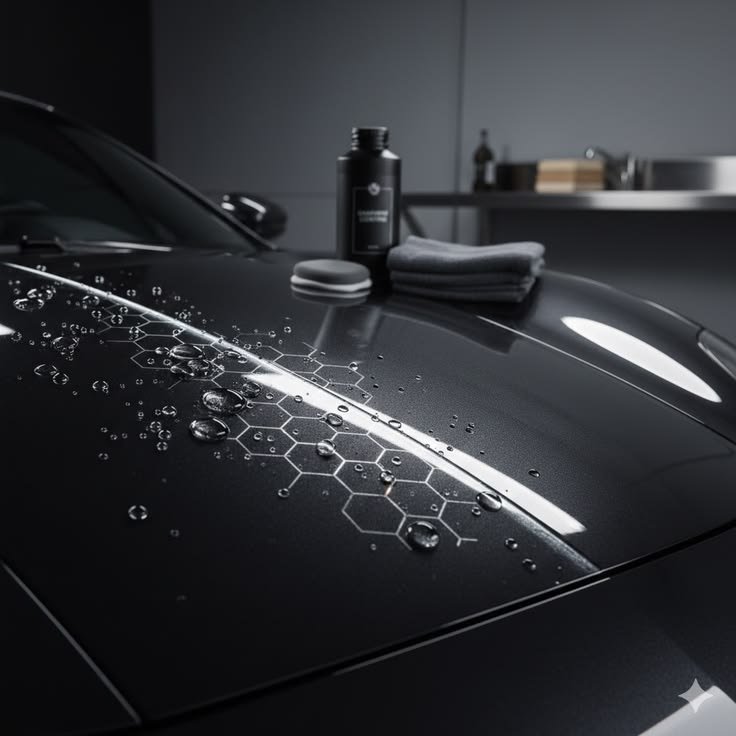
Ceramic Coating: 9 Powerful Benefits for Sapphire and Optical Surfaces
Sapphire is already known as one of the hardest transparent materials used in demanding optical and industrial applications. But even a highly durable substrate can benefit from carefully engineered surface technology.
This is where ceramic coating technology becomes interesting.
Ceramic-based coatings can provide an additional functional surface layer designed to improve properties such as hardness, wear resistance, chemical stability, and environmental durability. When applied to transparent or optical components, the coating must do more than simply protect the substrate. It also needs to preserve optical performance and surface quality.
That makes ceramic coating development very different from applying a conventional protective paint or decorative finish.
For sapphire windows, optical covers, camera components, and other precision substrates, coating thickness, adhesion, optical transmission, surface uniformity, and mechanical performance all need to be considered together.
The objective is not simply to create a harder surface.
It’s to create a thin, stable, high-performance interface between the optical component and its operating environment.
What Is Ceramic Coating?
Ceramic coating is a broad term for a coating system based on ceramic or ceramic-like inorganic materials.
Depending on the technology, ceramic coatings can be engineered to provide characteristics such as:
- High surface hardness
- Wear resistance
- Scratch resistance
- Chemical resistance
- Thermal stability
- Environmental durability
- Optical functionality
The exact composition and deposition method vary significantly between applications.
In optical applications, ceramic-based thin films may be deposited as very controlled layers rather than thick conventional coatings.
This distinction matters.
A coating for an automotive component, for example, can have very different requirements from a coating used on a transparent optical element.
For optical surfaces, the coating must be engineered around both mechanical performance and light transmission.
Why Ceramic Coating Is Relevant to Sapphire
Sapphire already offers excellent hardness and durability.
So why add another coating?
Because the surface of an optical component may need properties that aren’t provided by the substrate alone.
A functional coating can be designed to modify the surface for specific application requirements.
Depending on the coating system, this can include:
- Improved surface protection
- Controlled optical reflection
- Enhanced wear resistance
- Chemical stability
- Surface functionalization
- Additional environmental protection
The coating therefore doesn’t replace sapphire.
Instead, it complements the substrate.
The combination can create a surface system with properties tailored to the application’s specific operating conditions.
Ceramic Coating vs. Sapphire Substrate
It’s important to distinguish the coating from the substrate.
Sapphire is a crystalline material with high hardness, excellent transparency over relevant wavelength ranges, and strong chemical stability.
A ceramic coating is an additional engineered surface layer.
The two can work together, but they serve different roles.
| Feature | Sapphire Substrate | Ceramic-Based Coating |
|---|---|---|
| Main role | Structural and optical material | Functional surface layer |
| Hardness | Intrinsically high | Can further modify surface performance |
| Transparency | Depends on wavelength and material quality | Must be designed for optical application |
| Thickness | Relatively substantial | Usually much thinner |
| Function | Base optical/mechanical performance | Surface-specific functionality |
This layered approach provides greater flexibility for optical component design.
How Ceramic Coating Can Improve Surface Protection
Even when the underlying substrate is hard, the surface can still encounter repeated environmental and mechanical challenges.
Optical components may experience:
- Contact with other materials
- Repeated cleaning
- Dust particles
- Abrasion
- Chemical exposure
- Temperature changes
A suitable ceramic-based surface layer can provide an additional barrier between the substrate and these external stresses.
The coating can be engineered to maintain surface integrity under the relevant operating conditions.
However, performance should always be evaluated for the actual coating-substrate combination rather than assuming that all ceramic coatings behave the same way.
Sapphire Super Hard Coating
SRNC’s Sapphire Super Hard Coating is designed for applications where transparent substrates require advanced surface protection and high-performance coating technology.
The coating concept is particularly relevant to demanding optical and protective applications where surface hardness, durability, and optical quality need to work together.
Rather than treating the coating as a simple protective film, the surface can be engineered as part of the overall optical component.
This is important when the coated sapphire needs to maintain both its mechanical integrity and its optical function.
The Importance of Thin-Film Technology
Optical coatings are often extremely thin compared with the substrate they cover.
This allows manufacturers to modify surface behavior without substantially changing the dimensions or weight of the component.
Thin-film technology can be used to control:
- Optical reflection
- Transmission
- Surface protection
- Spectral response
- Environmental resistance
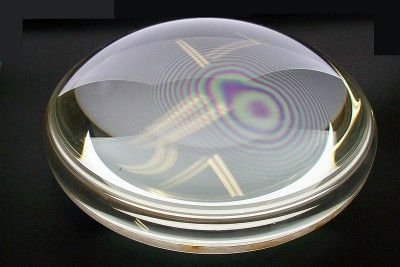
For transparent components, thickness control is particularly important.
A coating that is too thick, uneven, or poorly controlled may affect optical performance.
A precisely engineered thin film can provide functionality while maintaining the original form of the optical component.
Ceramic Coating and Optical Transparency
For transparent substrates, mechanical performance is only one part of the equation.
Light must still pass through the component efficiently.
This means a ceramic coating for an optical application needs to be evaluated for properties such as:
- Transmittance
- Reflectance
- Absorption
- Haze
- Surface uniformity
The coating composition and thickness influence how light interacts with the surface.
This is why ceramic coating technology for optics requires much tighter process control than many general-purpose protective coatings.
Ceramic Coating and Optical Reflection
When light reaches an interface between two materials, part of the light can be reflected.
In optical systems, unwanted reflection can reduce transmission and potentially introduce glare or other optical effects.
A coating can be engineered to influence this interaction.
This is one reason ceramic or inorganic thin-film materials are often incorporated into multilayer optical coating systems.
The coating isn’t simply “covering” the glass or sapphire.
It’s modifying the optical behavior of the interface.
Ceramic Coating in Multilayer Optical Systems
Advanced optical coatings may contain multiple thin-film layers.
Each layer can contribute to the final optical response.
A simplified multilayer structure could look like:
Air → Functional thin-film layers → Sapphire → Optical system
The layers may be designed to achieve specific combinations of:
- High transmission
- Low reflection
- Surface durability
- Environmental stability
The final performance depends on the materials, layer sequence, thickness, refractive indices, and manufacturing accuracy.
This makes ceramic-based thin-film technology especially interesting for precision optical applications.
Why Hardness Matters in Optical Surface Coatings
Optical surfaces can be expensive and difficult to replace.
A scratch may not only affect appearance.
It can also change the way light interacts with the surface.
For precision optical components, maintaining surface quality is therefore important.
A hard coating can help improve resistance to certain forms of mechanical damage.
Potential benefits include:
- Better resistance to surface scratching
- Improved wear performance
- Better resistance to repeated contact
- Longer surface service life
The actual improvement depends on the coating material, deposition process, substrate, and test method.
Ceramic Coating and Wear Resistance
Repeated contact can gradually modify an optical surface.
Cleaning is a common example.
An optical component may be wiped repeatedly to remove dust, fingerprints, or other contamination.
Over time, poorly selected surface treatments can lose their original characteristics.
A durable ceramic-based coating can be engineered to withstand repeated surface interaction while maintaining the desired optical and mechanical properties.
This makes wear resistance an important consideration for reusable optical components.
Chemical Stability of Ceramic Coatings
Optical components may encounter chemicals during cleaning, manufacturing, or normal operation.
Depending on the application, exposure could involve:
- Cleaning agents
- Solvents
- Oils
- Moisture
- Environmental contaminants
Inorganic ceramic materials can offer useful chemical stability in many demanding environments.
However, the complete coating system still needs to be evaluated.
Chemical resistance depends on the specific material, layer structure, substrate, and exposure conditions.
Thermal Stability
Some optical and industrial components operate across changing temperatures.
Temperature changes can affect coating and substrate materials differently.
If the coating and substrate have significantly different thermal expansion behavior, thermal cycling can create stress at the interface.
This makes thermal compatibility important.
A well-designed coating system should be evaluated for:
- Adhesion after thermal cycling
- Surface integrity
- Optical stability
- Appearance
- Layer stability
For demanding applications, thermal testing can provide valuable information about long-term reliability.
Ceramic Coating and Coating Adhesion
A high-performance coating is only useful if it stays attached to the substrate.
Adhesion is therefore a fundamental part of coating reliability.
Poor adhesion can lead to:
- Delamination
- Peeling
- Localized coating failure
- Optical defects
- Reduced protection
Sapphire presents a challenging surface for coating because its hardness and chemical stability can make surface preparation important.
The deposition process and interface engineering must therefore be carefully controlled.
Surface Preparation Before Ceramic Coating
Coating performance begins before deposition.
The substrate surface needs to be sufficiently clean and prepared for the selected coating technology.
Contamination, particles, or unsuitable surface conditions can affect:
- Adhesion
- Uniformity
- Optical quality
- Defect levels
For precision optical components, even small surface defects can matter.
This makes cleaning, handling, and process control important parts of the coating workflow.
Ceramic Coating for Optical Windows
Optical windows are used to separate sensitive components from the external environment while allowing light to pass through.
Examples can include:
- Camera windows
- Sensor windows
- Laser-system windows
- Imaging components
- Protective optical covers
These components often need to balance several properties at once.
A suitable coating may contribute to:
Transparency + Surface Protection + Durability + Environmental Stability
The exact priorities depend on the wavelength range and application.
Ceramic Coating for Camera and Imaging Components
Modern imaging systems require clean and durable optical surfaces.
A surface coating can influence both protection and optical behavior.
For example, a coating system may be designed to reduce unwanted reflection while also providing surface durability.
This can be particularly useful when the optical component is exposed to frequent handling or cleaning.
However, optical coating selection should always consider the camera’s wavelength range, optical design, coating stack, and required transmission characteristics.
Ceramic Coating and Surface Hardness
Hardness is often one of the main reasons manufacturers consider ceramic-based coatings.
A harder surface can provide improved resistance to certain forms of mechanical damage.
But hardness should not be evaluated alone.
A useful optical coating must also provide:
- Adequate adhesion
- Appropriate optical performance
- Sufficient environmental stability
- Controlled surface quality
- Compatibility with the substrate
The best coating is therefore not necessarily the hardest possible coating.
It’s the coating that provides the right balance of properties for the application.
Nine Benefits of Ceramic Coating
When properly engineered for an optical substrate, ceramic coating technology can provide:
- High surface hardness
- Improved wear resistance
- Better scratch resistance
- Chemical stability
- Environmental durability
- Controlled optical performance
- Protection of precision surfaces
- Compatibility with thin-film architectures
- Longer-lasting surface functionality
Actual performance depends on the specific ceramic material and coating process.
Ceramic Coating and Optical Surface Quality
Optical coating isn’t only about material selection.
Surface quality matters just as much.
A coating should ideally maintain:
- Low defect density
- Good uniformity
- Controlled thickness
- Appropriate surface roughness
- Stable optical properties
For precision optics, microscopic defects can influence performance.
This is why coating manufacturing requires careful process control and inspection.
How Ceramic Coating Is Tested
Different applications require different test programs.
Typical evaluation areas can include:
Hardness Testing
Determines resistance to indentation or mechanical deformation.
Abrasion Testing
Evaluates behavior under repeated rubbing.
Scratch Testing
Examines resistance to localized mechanical damage.
Adhesion Testing
Checks coating-substrate bonding.
Chemical Resistance Testing
Evaluates stability after exposure to specified chemicals.
Optical Testing
Measures transmission, reflection, haze, or other optical properties.
Environmental Testing
May include temperature, humidity, and thermal cycling.
A complete test program should reflect the actual operating environment.
Why Optical Coating Testing Requires Precision
A coating can pass a mechanical test while still failing an optical requirement.
For example, a very durable surface may not provide the desired transmission.
Similarly, excellent optical performance isn’t enough if the coating fails after repeated cleaning.
This is why optical coating development requires a multidimensional approach.
The coating needs to satisfy the mechanical and optical specifications simultaneously.
Ceramic Coating vs. Conventional Organic Coatings
Ceramic-based and organic coatings can serve very different purposes.
Organic coatings may be attractive when flexibility, appearance, or processing characteristics are the main priorities.
Ceramic or inorganic coatings can be advantageous when high hardness, thermal stability, and chemical resistance are important.
The correct choice depends on the application.
For demanding optical surfaces, inorganic thin-film technology can offer a useful combination of durability and optical functionality.
Choosing the Right Ceramic Coating
Manufacturers should consider several factors before selecting a coating system.
1. Optical Wavelength
Determine the relevant spectral range.
2. Required Transmission
Define how much light needs to pass through the component.
3. Surface Hardness
Identify the required mechanical performance.
4. Wear Conditions
Consider how frequently the surface will be touched or cleaned.
5. Environmental Exposure
Evaluate temperature, humidity, and chemical conditions.
6. Substrate Compatibility
Ensure the coating process is suitable for sapphire or the selected optical material.
7. Coating Thickness
Control the thickness according to both mechanical and optical requirements.
8. Production Requirements
Make sure the process can achieve the necessary uniformity and repeatability.
Why Ceramic Coating Is Important for Advanced Optical Components
As optical systems become smaller and more integrated, surface engineering becomes increasingly important.
A single optical component may need to provide several functions simultaneously.
It may need to:
- Transmit light
- Resist scratches
- Survive cleaning
- Maintain optical clarity
- Withstand environmental exposure
- Preserve dimensional stability
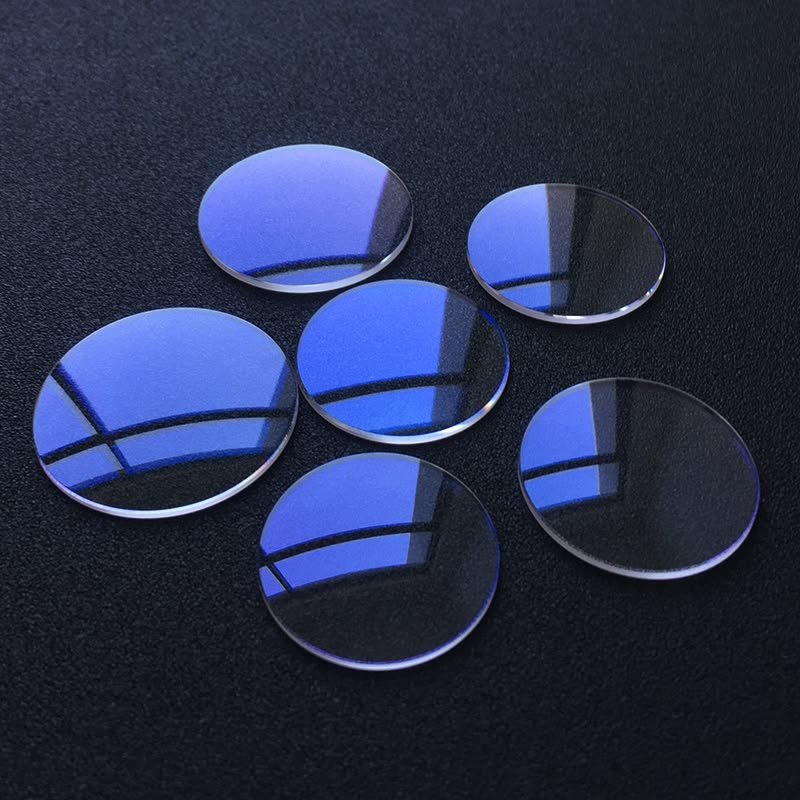
A carefully designed ceramic-based coating can become an important part of this system.
Rather than being an afterthought, the coating can be designed alongside the optical component itself.
Future Development of Ceramic Optical Coatings
The development of optical coatings is moving toward increasingly precise and multifunctional thin-film structures.
Future coating systems may combine:
- High hardness
- Low reflection
- High transmission
- Anti-glare properties
- Chemical resistance
- Wear resistance
- Environmental stability
The challenge is achieving these properties in very thin, uniform layers while maintaining production efficiency.
For sapphire and other demanding optical substrates, this type of surface engineering can open new possibilities for compact and durable optical systems.
Frequently Asked Questions
What is ceramic coating?
Ceramic coating is a broad category of surface treatment based on ceramic or ceramic-like inorganic materials. Depending on the formulation and deposition technology, it can provide hardness, wear resistance, chemical stability, thermal stability, or optical functionality.
Can ceramic coating be applied to sapphire?
Yes. Ceramic or inorganic thin-film coatings can be engineered for sapphire surfaces when the coating process and interface are properly matched to the substrate.
Is ceramic coating harder than sapphire?
Not necessarily. Sapphire itself has very high hardness. The purpose of a ceramic coating is not simply to be harder than the substrate, but to provide additional surface functionality and protection.
Can ceramic coating be transparent?
Yes. Certain ceramic or inorganic thin-film systems can be designed for transparent optical applications. Their optical performance depends on material composition, thickness, structure, and wavelength.
Can ceramic coating improve scratch resistance?
A suitable ceramic-based coating can improve resistance to certain types of surface scratching and mechanical damage. Actual performance should be verified using application-specific testing.
Is ceramic coating suitable for optical components?
Yes, provided the coating is specifically engineered for optical use. Transmission, reflection, haze, surface quality, adhesion, and mechanical durability all need to be considered.
Can ceramic coating be used as part of an AR coating system?
Yes. Ceramic or inorganic thin-film materials can be used in multilayer optical coating architectures designed to control reflection and transmission.
How durable is ceramic coating?
Durability depends on the material, deposition process, substrate, coating thickness, and environmental conditions. Testing should be performed against the actual mechanical, chemical, and environmental requirements.
Why is adhesion important for ceramic coating on sapphire?
Even a hard coating can fail if it does not adhere properly. Strong interface bonding helps prevent delamination and maintain long-term surface performance.
Conclusion
Ceramic coating technology offers more than simple surface protection.
For sapphire and other precision optical substrates, a properly engineered ceramic-based thin film can provide a carefully balanced combination of hardness, durability, optical performance, chemical stability, and environmental resistance.
The key is to treat the coating as part of the optical component rather than as an independent protective layer.
SRNC’s Sapphire Super Hard Coating is positioned for applications requiring advanced surface protection and high-performance coating technology on demanding optical substrates.
By combining a high-performance sapphire substrate with carefully controlled surface coating technology, manufacturers can develop optical components that are better equipped to maintain their surface quality and functional performance in demanding environments.