

Wavelength Modulation Film for Optical Thin Film Applications
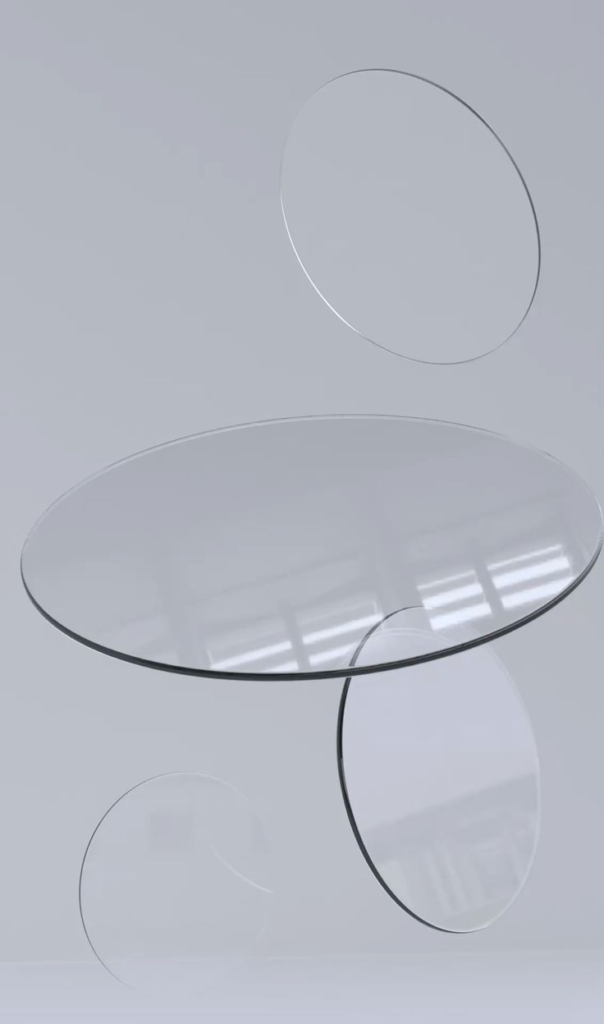
Optical components do not always need to transmit or reflect all wavelengths in the same way. In many applications, the optical response must be adjusted for a particular wavelength range. Wavelength Modulation Film provides a thin film approach for controlling this behavior at the surface of an optical component.
By combining carefully selected materials with controlled film thickness and multilayer structures, the coating can modify how light is transmitted, reflected, or selectively controlled. This makes it useful for optical filters, sensors, imaging equipment, laser components, and photonics systems.
What Is Wavelength Modulation Film?
Wavelength Modulation Film is a functional optical film designed to modify the optical response of a surface according to wavelength.
The coating can be engineered to:
- Control wavelength transmission
- Adjust surface reflection
- Select specific spectral ranges
- Reduce unwanted optical response
- Improve optical efficiency
Unlike a simple protective coating, a wavelength modulation film is designed around a specific optical requirement. The final result depends on the relationship between the coating material, film thickness, refractive index, and substrate.
How Does Wavelength Modulation Film Work?
The working principle is based on the optical interaction between the incident light and the thin film structure.
When light reaches a coating, part of it can be reflected at different material interfaces. In a multilayer structure, these reflected waves interact with one another. By controlling the optical thickness of each layer, the coating designer can create a desired transmission or reflection response at selected wavelengths.
This means that the performance of a Wavelength Modulation Film is closely related to its layer structure.
Small changes in film thickness can influence the spectral response, which is why accurate deposition and thickness monitoring are important during manufacturing.
Materials Used in Wavelength Modulation Film
Material selection depends on the required wavelength range and optical performance.
Silicon Dioxide (SiO₂)
Silicon dioxide is commonly used as a low refractive index material. It offers good transparency and chemical stability, making it suitable for multilayer optical coatings.
Titanium Dioxide (TiO₂)
Titanium dioxide has a relatively high refractive index and can be combined with low-index materials to create stronger interference effects.
Tantalum Pentoxide (Ta₂O₅)
Tantalum pentoxide can be used in precision optical coating structures where stable optical performance and controlled refractive index are required.
The material combination is normally selected according to the substrate, wavelength range, environmental conditions, and required optical response.
Wavelength Modulation Film Manufacturing Process
Producing a reliable wavelength modulation film requires controlled thin film deposition.
The process usually begins with substrate preparation. Optical surfaces need to be cleaned carefully because dust, oil, and other contaminants can affect coating adhesion and uniformity.
The selected coating materials are then deposited onto the substrate. Depending on the application, manufacturers may use:
- Physical Vapor Deposition (PVD)
- Magnetron sputtering
- Electron beam evaporation
- Vacuum deposition
For multilayer structures, each layer needs to reach the designed thickness before the next material is deposited. Process control is therefore important for maintaining consistent optical performance across the coated surface.
Applications of Wavelength Modulation Film
Optical Filters
Optical filters often need to transmit one wavelength range while reducing another. A wavelength modulation film can be designed to create the required spectral response.
Optical Sensors
Sensors may operate within a specific spectral range. A suitable coating can help control unwanted wavelengths before light reaches the sensing element.
Imaging Systems
Cameras and machine vision systems can benefit from controlled wavelength response when particular portions of the spectrum are more useful for an imaging application.
Laser Components
Laser systems typically operate around defined wavelengths. Optical coatings can therefore be designed around the transmission and reflection requirements of the laser source.
Photonics Components
Photonics devices require precise control of light at interfaces and optical surfaces. Multilayer films can provide tailored wavelength response for different component designs.
Wavelength Modulation Film and Vacuum Coating
Vacuum coating technology is well suited to applications requiring accurate and uniform thin film structures. A controlled deposition environment helps manufacturers maintain consistent layer thickness and coating quality.
SRNC provides vacuum coating technology for optical components and advanced thin film applications.
SRNC Vacuum Coating Technology
For optical coating applications and related thin film solutions:
SRNC Optical Coating Solutions
Factors Affecting Wavelength Modulation Film Performance
Several factors influence the final optical response:
- Film thickness accuracy
- Refractive index
- Material selection
- Number of coating layers
- Substrate quality
- Surface preparation
- Deposition conditions
The coating design also needs to consider the actual operating environment. Temperature, humidity, surface contamination, and mechanical requirements can affect long-term coating performance.
Conclusion
Wavelength Modulation Film provides a flexible way to control the optical behavior of precision components. Through appropriate material selection and carefully controlled multilayer structures, manufacturers can achieve specific transmission, reflection, and wavelength responses.