


Anti Smudge Coating: Advanced Surface Finishing for Smartphone Back Panels
A smartphone back panel is one of the most frequently handled surfaces on a mobile device. Every time a user picks up a phone, adjusts their grip, or places it on a table, the surface can collect oils, moisture, dust, and other small contaminants.
Over time, these residues can change the appearance of the surface.
Glossy areas may show obvious marks. Dark surfaces can reveal oily patches. Fine textures can become visually inconsistent when residue builds up in certain areas. Even an attractive decorative finish can lose some of its original character after repeated handling.
This is why anti smudge coating has become an increasingly useful surface technology for smartphone manufacturers.
An anti-smudge finish is designed not only to reduce visible marks but also to influence how contaminants interact with the surface and how easily they can be removed. When combined with carefully engineered texture, gloss, and surface chemistry, it can help a smartphone back panel remain cleaner and more consistent during everyday use.
The result is a surface that better balances appearance, touch, grip, durability, and maintenance.
What Causes Smudges on a Smartphone Surface?
A smudge is more than a simple fingerprint.
When skin touches a smartphone surface, it can transfer a combination of substances, including:
- Natural skin oils
- Moisture
- Sweat
- Cosmetic residues
- Dust
- Other environmental contaminants
The amount and composition can vary from person to person.
Once these substances reach the surface, they can change how light reflects from the material.
On a highly polished surface, even a thin layer of oil may create a visible difference in gloss. On a matte or textured surface, residue can collect differently and create localized dark or shiny areas.
The visible result depends on the interaction between the contaminant and the surface structure.
This makes smudge resistance a surface-engineering problem rather than simply a cleaning issue.
What Is Anti Smudge Coating?
Anti smudge coating is a functional surface treatment developed to reduce the visible and practical effects of everyday surface contamination.
For smartphone back panels, the coating can be engineered to influence how oils, moisture, and other residues spread across or adhere to the surface.
A suitable coating may help:
- Reduce visible smudge formation
- Limit oil spreading
- Improve cleanability
- Maintain surface appearance
- Preserve tactile characteristics
- Support long-term surface performance
The actual performance depends on the coating formulation, substrate, texture, gloss, and manufacturing process.
Therefore, anti-smudge performance should be considered as part of a complete surface system.
Anti Smudge Coating vs. Anti Fingerprint Coating
These two terms are often used interchangeably, but they can emphasize different aspects of surface performance.
Anti fingerprint coating generally focuses on reducing the visibility or adhesion of fingerprint marks.
Anti smudge coating can be considered more broadly, addressing visible marks and residue caused by repeated handling and contamination.
A fingerprint is one type of smudge, but not every smudge is necessarily a clear fingerprint pattern.
For example, a user may wipe a phone with their palm. The resulting oil film may appear as a broad cloudy or glossy area rather than a recognizable fingerprint.
This broader perspective is useful when designing smartphone back-panel surfaces.
Why Gloss Level Has a Major Effect on Smudge Visibility
Two surfaces can receive the same amount of oil but show very different levels of visible contamination.
Gloss is one reason.
Highly glossy surfaces reflect light in a more directional way. When an oily residue changes the surface’s optical properties, the difference can be easy to notice.
Matte surfaces scatter light more diffusely, which can reduce the visual contrast of certain marks.
This doesn’t mean matte surfaces are automatically smudge-proof.
Instead, it shows why coating, surface texture, and optical appearance need to be designed together.
For smartphone manufacturers, the goal is often to achieve a premium visual effect without creating a surface that constantly highlights handling marks.
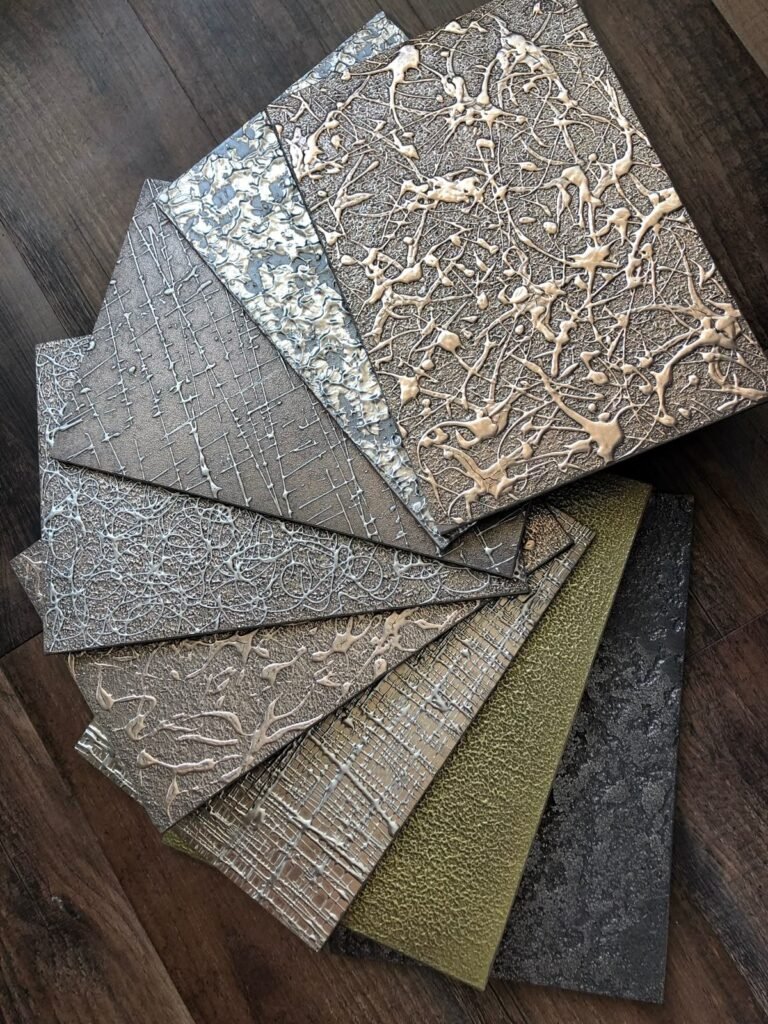
How Surface Texture Influences Smudge Behavior
Texture is particularly relevant to the back-panel application.
A smooth surface provides a continuous contact area. A textured surface changes the actual contact pattern between skin and the coating.
Fine or micro-scale texture can influence:
- Contact area
- Oil spreading
- Light reflection
- Tactile friction
- Visual uniformity
A carefully controlled texture may help make small amounts of residue less visually obvious.
However, texture must be engineered carefully.
If the surface is too rough, contaminants can become trapped in surface features and make cleaning more difficult.
If the texture is too shallow, it may have little effect on the desired tactile or visual characteristics.
This is why texture geometry and coating formulation should be developed together.
Anti Smudge Coating and Surface Energy
Surface energy can influence how liquids and oily substances interact with a material.
When a coating is engineered to reduce the affinity between the surface and certain contaminants, residues may spread differently or become easier to remove.
This can influence the appearance of a back panel after repeated touching.
Surface characteristics can be tuned around factors such as:
- Oil repellency
- Water interaction
- Contact behavior
- Surface friction
- Cleanability
The exact balance depends on the product’s design requirements.
For a smartphone back panel, a surface that repels contaminants too aggressively but feels unpleasant to touch may not provide the desired user experience.
The coating must therefore balance functionality and tactile quality.
Why Cleanability Matters as Much as Smudge Resistance
Even the best surface will eventually collect some contamination.
The practical question is what happens afterward.
A good anti-smudge surface should ideally allow residues to be removed with minimal effort.
This creates an important distinction:
Smudge resistance reduces the problem. Cleanability reduces the effort required to solve it.
For smartphone manufacturers, both properties can contribute to the user’s perception of product quality.
A back panel that wipes clean easily can maintain its intended appearance even when it is handled frequently.
Texture Coating for Cell Phone Back Panel
SRNC’s Texture Coating for Cell Phone Back Panel focuses on creating controlled surface textures for mobile device back panels.
The coating solution can support design requirements involving:
- Fine surface textures
- Customized texture patterns
- Uniform finishing
- Premium appearance
- Improved grip
- Wear resistance
This provides a useful foundation for developing back panels where anti-smudge performance is combined with a distinctive surface design.
Instead of treating appearance and functionality as separate processes, manufacturers can consider the surface as a complete engineered system.
Creating a Premium Surface Without Excessive Fingerprints
Modern smartphones come in a wide range of surface styles.
Manufacturers may want:
- High-end matte finishes
- Fine sand textures
- Soft-touch surfaces
- Subtle microtextures
- Decorative patterns
- Controlled gloss effects
Each style creates different interactions with skin and environmental contamination.
A successful anti-smudge solution should preserve the intended design.
For example, a coating shouldn’t make a fine texture look cloudy or uneven. It also shouldn’t dramatically change the intended hand feel.
This is why coating compatibility with the decorative and texturing process matters.
The Role of Wear Resistance
An anti-smudge coating is only useful if its functional properties remain stable during normal use.
Smartphones are repeatedly handled and may rub against clothing, bags, desks, cases, and other objects.
Repeated abrasion can gradually alter the surface.
Potential changes include:
- Increased gloss
- Reduced texture definition
- Different tactile friction
- Reduced contaminant resistance
- Uneven appearance
For this reason, wear resistance should be considered during coating development.
The goal isn’t simply to produce a surface that performs well on day one. It should maintain its intended characteristics throughout the expected service life of the product.
Anti Smudge Coating for Glass Back Panels
Glass is widely used for premium smartphone back panels because it supports a clean, refined appearance and a wide range of decorative effects.
However, smooth glass can also make smudges highly visible.
A functional coating can modify the surface characteristics without requiring a completely different substrate.
Depending on the design, a glass back panel may combine:
- Glass substrate
- Decorative layer
- Texture structure
- Functional coating
- Protective finishing
The exact structure can vary depending on the required visual effect and mechanical performance.
This provides manufacturers with flexibility when developing premium back-panel designs.
How Manufacturers Can Evaluate Anti-Smudge Performance
Anti-smudge performance should be tested under conditions that reflect actual product use.
Important evaluation areas include:
Smudge Visibility
How obvious is a mark after repeated handling?
Oil Resistance
How does the surface interact with skin oils?
Wipe Cleanability
Can common residues be removed easily?
Repeated Touching
Does performance remain stable after repeated contact?
Abrasion
Does rubbing change the coating’s surface characteristics?
Texture Retention
Does the original texture remain consistent after wear?
Appearance Stability
Does the surface maintain its intended gloss, color, and visual uniformity?
Testing conditions should be established according to the customer’s product specifications.
Anti Smudge Coating and Tactile Design
Touch is an important part of smartphone product design.
Users don’t just look at a phone—they hold it hundreds of times.
A good surface should therefore provide an intentional tactile response.
Depending on the design, manufacturers may want a surface that feels:
- Smooth
- Soft
- Dry
- Slightly textured
- Secure
- Refined
Anti-smudge chemistry can influence friction and surface feel.
This means the coating formulation needs to be considered together with the desired tactile experience.
A surface that looks excellent but feels sticky or excessively slippery may not meet the expectations of a premium smartphone.
Eight Key Factors in Anti-Smudge Surface Design
A strong anti-smudge solution typically depends on several elements working together.
1. Coating Chemistry
Determines the surface’s interaction with oils and moisture.
2. Surface Texture
Influences contact, visual appearance, and tactile response.
3. Gloss Level
Changes how strongly residues are visually highlighted.
4. Substrate
Affects coating adhesion and overall surface behavior.
5. Coating Uniformity
Helps maintain consistent performance across the back panel.
6. Cleanability
Determines how easily contamination can be removed.
7. Abrasion Resistance
Helps preserve functionality during repeated handling.
8. Visual Design
Ensures functional performance doesn’t compromise the intended appearance.
Why Manufacturing Consistency Matters
Surface coatings can look simple, but producing them consistently at scale is challenging.
A smartphone back panel may have a large visible surface where small differences in coating or texture can become noticeable.
Manufacturing control should therefore address:
- Surface preparation
- Coating thickness
- Texture consistency
- Process parameters
- Curing or deposition conditions
- Inspection
Uniform production helps ensure that one device doesn’t feel noticeably different from another.
For smartphone manufacturers, this consistency is especially important for premium product lines.
Future Trends in Anti-Smudge Smartphone Coatings
Surface technology is moving toward multifunctional solutions.
Rather than developing separate treatments for appearance, grip, durability, and contamination resistance, manufacturers increasingly need coating systems that combine several functions.
Future development is likely to focus on:
- Improved oil resistance
- Easier cleaning
- More durable functional surfaces
- Fine and customized textures
- Better soft-touch characteristics
- Greater scratch and wear resistance
- More stable performance after repeated handling
This trend will make surface engineering increasingly important in smartphone product development.
Frequently Asked Questions
What is anti smudge coating?
Anti smudge coating is a functional surface treatment designed to reduce the visibility, adhesion, or persistence of marks and residues caused by handling.
Is anti smudge coating the same as anti fingerprint coating?
They are closely related, but anti-smudge coating can address a broader range of visible residues and handling marks rather than only recognizable fingerprints.
Can anti smudge coating be applied to smartphone back panels?
Yes. It can be developed for glass and other back-panel substrates depending on the required surface characteristics.
Does anti smudge coating prevent fingerprints completely?
No. Normal contact can still leave oils and moisture on a surface. The coating is designed to reduce their visual impact, adhesion, or cleaning difficulty.
Can texture improve anti-smudge performance?
A carefully designed texture can influence how oils spread and how marks appear visually. However, texture should be optimized together with the coating rather than used as a standalone solution.
Does anti smudge coating change the feel of a smartphone?
It can. Surface chemistry affects friction and tactile response, so coating formulation should be selected according to the desired hand feel.
How is anti-smudge performance tested?
Testing can include repeated-touch tests, oil contamination, wipe-clean tests, abrasion tests, and visual evaluation. Specific methods should be selected according to the product requirements.
Can anti smudge coating be combined with decorative textures?
Yes. Functional anti-smudge characteristics can be integrated with fine, matte, sand, microtexture, and other decorative surface designs.
Conclusion
A smartphone back panel is both a visual surface and a frequently handled interface. Oils, moisture, dust, and repeated contact can quickly change its appearance, particularly when the surface is smooth or highly reflective.
Anti smudge coating provides a way to manage these everyday challenges by influencing how contaminants interact with the surface, how visible marks become, and how easily residues can be removed.
For premium smartphone products, however, anti-smudge performance shouldn’t be developed in isolation. Texture, gloss, grip, tactile feel, abrasion resistance, and decorative appearance all contribute to the final surface experience.
SRNC’s Texture Coating for Cell Phone Back Panel provides a coating solution focused on controlled surface texture, premium finishing, customized designs, grip, and wear resistance.
By combining surface texture engineering with functional coating technology, manufacturers can create smartphone back panels that are not only visually distinctive but also better suited to the realities of everyday handling.