

Spectral Filtering Layer for Precision Optical Coatings
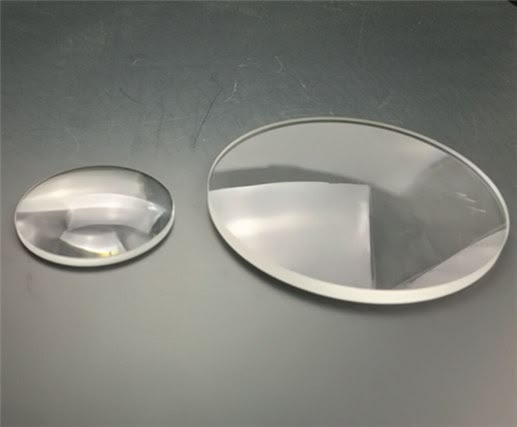
Optical systems often need to control specific wavelengths rather than simply transmit or reflect all incoming light. A Spectral Filtering Layer provides a precise way to manage this optical response through a carefully designed thin film structure.
By combining different optical materials and controlling the thickness of each layer, manufacturers can create coatings that transmit selected wavelengths while reducing unwanted portions of the spectrum. This technology is used in optical filters, sensors, imaging systems, laser components, and photonics equipment.
What Is a Spectral Filtering Layer?
A spectral filtering layer is a thin optical coating designed to selectively control the transmission and reflection of light across a particular wavelength range.
Unlike a simple protective coating, its main purpose is to provide a specific optical response. Depending on the design, the layer can be used to transmit, reflect, or suppress selected wavelengths.
Typical functions include:
- Wavelength selection
- Spectral filtering
- Transmission control
- Reflection control
- Optical response adjustment
The final performance depends on the coating material, film thickness, refractive index, and overall layer structure.
How Does a Spectral Filtering Layer Work?
The filtering effect is primarily created through the interaction of light with thin film layers.
When materials with different refractive indexes are deposited together, light reflected from different interfaces can interact with each other. By controlling the thickness and optical properties of each layer, the coating can be designed to produce the required transmission or reflection characteristics.
For multilayer coatings, thickness accuracy is particularly important. Small changes in individual layers can affect the position and shape of the intended spectral response.
This makes coating design and deposition control equally important in precision optical applications.
Materials Used in Spectral Filtering Layers
Material selection depends on the required wavelength range and optical performance.
Silicon dioxide (SiO₂) is commonly used as a low refractive index material. It offers good transparency and chemical stability and can be combined with higher-index materials in multilayer structures.
Titanium dioxide (TiO₂) provides a higher refractive index and is often used to create stronger optical interference effects within multilayer coatings.
Other dielectric materials, such as tantalum pentoxide, can also be selected when specific optical properties and environmental stability are required.
The material combination should be matched to the substrate, target wavelength, and intended application.
Spectral Filtering Layer Deposition Process
Producing a consistent spectral filtering layer requires accurate thin film deposition technology.
The process generally begins with careful substrate cleaning. Contamination or surface defects can affect adhesion, uniformity, and final optical performance.
During deposition, optical materials are applied under controlled conditions. Common technologies include:
- Physical Vapor Deposition (PVD)
- Magnetron sputtering
- Electron beam evaporation
- Vacuum deposition
For multilayer coatings, film thickness must be carefully controlled from one layer to the next. Deposition conditions such as pressure, rate, and substrate temperature can also influence the final coating structure.
Applications of Spectral Filtering Layer
Optical Filters
Spectral filtering layers are widely used in optical filters where only a specific wavelength range needs to pass through the component.
Depending on the design, the coating can be used for bandpass, longpass, shortpass, or wavelength rejection applications.
Optical Sensors
Optical sensors often need to isolate a particular portion of the spectrum. A filtering layer can reduce unwanted wavelengths before light reaches the sensing element.
This can be useful in measurement, detection, and imaging systems.
Imaging Systems
Cameras and machine vision equipment may require controlled spectral response for specific imaging conditions. Spectral filtering layers can help manage unwanted light and improve wavelength selectivity.
Laser Components
Laser systems operate within defined wavelength ranges, making precise optical filtering important for certain mirrors, windows, filters, and beam-control components.
Spectral Filtering Layer and Vacuum Coating
Vacuum coating technology provides a controlled environment for producing accurate and uniform optical thin films. It is particularly useful when applications require precise multilayer structures and consistent coating thickness.
SRNC Vacuum Coating Technology
For optical coating applications, SRNC also provides related thin film coating solutions for optical components and precision applications.
SRNC Optical Coating Solutions
Factors Affecting Spectral Filtering Performance
Several factors can influence the final performance of a spectral filtering layer:
- Film thickness accuracy
- Refractive index
- Material selection
- Layer structure
- Substrate quality
- Surface preparation
- Deposition conditions
For demanding applications, the coating design needs to match both the optical requirements and the characteristics of the substrate.
Conclusion
A Spectral Filtering Layer provides a practical method for controlling specific wavelengths through precision thin film technology. By combining suitable dielectric materials with accurately controlled layer structures, manufacturers can develop coatings for transmission, reflection, and spectral selection.
As optical sensors, imaging equipment, laser systems, and photonics technologies continue to advance, precise spectral control will remain an important part of modern optical coating technology.