

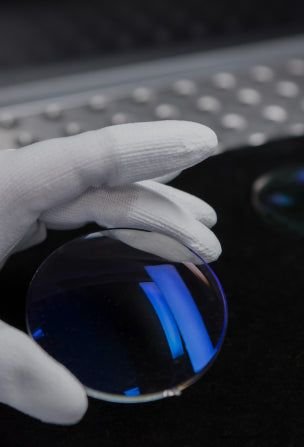
Lens Coating: Advanced Optical Performance for Smartphone Camera Systems
A smartphone camera may look compact from the outside, but its optical system is highly sophisticated. Multiple lens elements, cover glass, filters, and sensors work together to capture light and convert it into a digital image.
Every optical surface in this system can affect the final result.
Reflection, light loss, surface contamination, and mechanical wear can reduce the efficiency of an optical component. As smartphone cameras become more advanced, manufacturers need surface technologies that can control light while protecting the components exposed to everyday conditions.
Lens coating provides an important solution. Through carefully engineered thin-film layers, a lens surface can be optimized for light transmission, reflection control, durability, and other functional requirements.
For smartphone camera applications, the right coating isn’t simply an additional protective layer. It becomes part of the optical design itself.
Why Smartphone Camera Lenses Need Specialized Coatings
A camera lens needs to transmit as much useful light as possible to the image sensor. At the same time, it must control unwanted reflections that can interfere with image formation.
An untreated optical surface can reflect a portion of incoming light. When a camera contains several optical interfaces, these reflections may accumulate and contribute to unwanted optical effects.
Typical challenges include:
- Surface reflection
- Light transmission loss
- Flare
- Ghost images
- Reduced contrast
- Surface scratches
- Environmental contamination
These challenges become more important as smartphone cameras move toward larger sensors, wider apertures, higher-resolution imaging, and more complex optical architectures.
A properly designed lens coating helps address these challenges at the surface level.
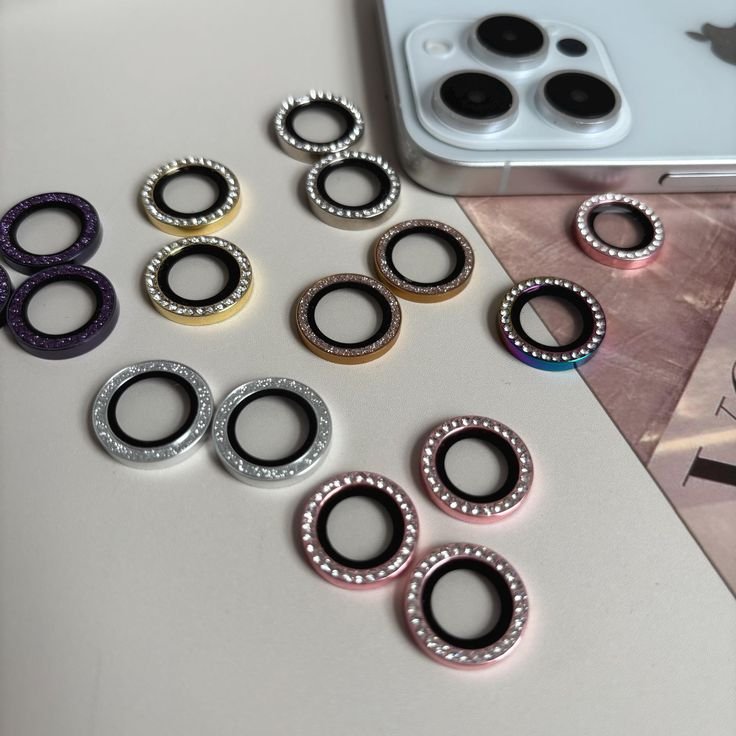
What Is Lens Coating?
Lens coating is a thin-film surface treatment applied to an optical lens to modify its interaction with light and improve its functional performance.
Depending on the application, a coating can be designed to:
- Reduce surface reflection
- Increase light transmission
- Control specific wavelengths
- Improve optical consistency
- Increase scratch resistance
- Improve surface durability
The coating structure may consist of one or multiple microscopic layers. Each layer can be selected and controlled according to the desired optical response.
This makes lens coating fundamentally different from ordinary decorative or protective coatings.
The objective is not merely to cover the lens. It is to engineer the surface so that it performs better as part of an optical system.
How Lens Coating Influences Camera Image Quality
Light entering a smartphone camera passes through several interfaces before reaching the sensor.
At each interface, some light may be reflected. Unwanted reflections can travel through the optical system and create secondary light paths.
This can contribute to effects such as flare and ghosting, particularly when strong light sources are present in the scene.
An optimized coating can reduce unwanted reflection over the required wavelength range.
This can help the optical system achieve:
More transmitted light → less unwanted reflection → better optical efficiency
The exact improvement depends on the lens design, coating structure, wavelength range, angle of incidence, and other camera parameters.
Therefore, coating design needs to be matched to the specific optical application rather than treated as a one-size-fits-all solution.
Anti-Reflective Performance Is Only One Part of Lens Coating
It’s easy to associate lens coating exclusively with anti-reflection. In practice, modern optical coatings can perform several functions.
Reflection Control
The coating can be engineered to reduce unwanted surface reflections.
High Transmission
Reducing reflection can help more useful light pass through the optical component.
Spectral Control
Specialized multilayer structures can control how different wavelengths interact with the surface.
Surface Protection
Protective coating structures can improve resistance against scratches and everyday wear.
Environmental Stability
Depending on the coating system, the surface can be engineered for greater resistance to humidity, temperature changes, and other environmental stresses.
For smartphone cameras, combining optical and protective functions in a compact coating system can be especially valuable.
Lens Coating for Smartphone Camera Components
The term “lens” can cover several different components within a modern mobile imaging system.
Camera Lens Elements
Individual lens elements can use optical coatings to control reflection and improve light transmission.
Camera Cover Glass
The external cover glass sits directly in front of the camera and is exposed to the surrounding environment. Its optical performance and surface durability are therefore both important.
Optical Filters
Filters can use thin-film coating structures to selectively control specific wavelength ranges.
Compact Camera Modules
The complete module may contain multiple optical surfaces, making consistent coating performance across components an important manufacturing consideration.
The Importance of Multilayer Thin-Film Design
Modern lens coating often relies on multilayer thin-film structures rather than a single coating layer.
Different materials can be deposited in carefully controlled thicknesses to create a desired optical response.
The final coating design depends on factors such as:
| Design Factor | Why It Matters |
|---|---|
| Wavelength Range | Determines the target optical response |
| Layer Thickness | Influences interference behavior |
| Material Refractive Index | Affects reflection and transmission |
| Angle of Incidence | Changes optical performance |
| Substrate | Influences adhesion and optical behavior |
| Environmental Conditions | Determines durability requirements |
This is why optical coating development requires both materials expertise and an understanding of the complete camera system.
Vacuum Deposition for Precision Lens Coating
A high-performance lens coating requires accurate and repeatable deposition.
Advanced vacuum coating processes provide a controlled environment for depositing extremely thin layers onto optical components.
Depending on the coating design, technologies may include:
- Magnetron sputtering
- Electron beam evaporation
- Ion-assisted deposition
These processes can provide precise control over coating thickness, film structure, adhesion, and uniformity.
For smartphone camera manufacturing, consistency is particularly important because even small variations can affect optical performance.
Why Coating Uniformity Matters in Mass Production
A coating may perform well on a laboratory sample but still face challenges during high-volume production.
Smartphone manufacturing requires thousands or millions of components to maintain consistent quality.
Variations in coating thickness can potentially affect:
- Reflection
- Transmission
- Color response
- Surface appearance
- Optical consistency
A reliable coating process therefore needs appropriate production controls and inspection procedures.
SRNC’s coating capabilities are designed around precision vacuum deposition and quality control for optical and electronic components.
Functional Coating for Cell Phone Camera
SRNC’s Functional Coating for Cell Phone Camera is developed for the demanding requirements of mobile camera components.
The solution can support functional requirements associated with:
- Optical transmission
- Reflection reduction
- Optical clarity
- Surface protection
- Customized coating performance
Rather than applying the same coating specification to every component, an application-focused approach allows the coating structure to be matched to the requirements of the camera system.
This is particularly important for high-end smartphones where optical performance, appearance, and durability all need to work together.
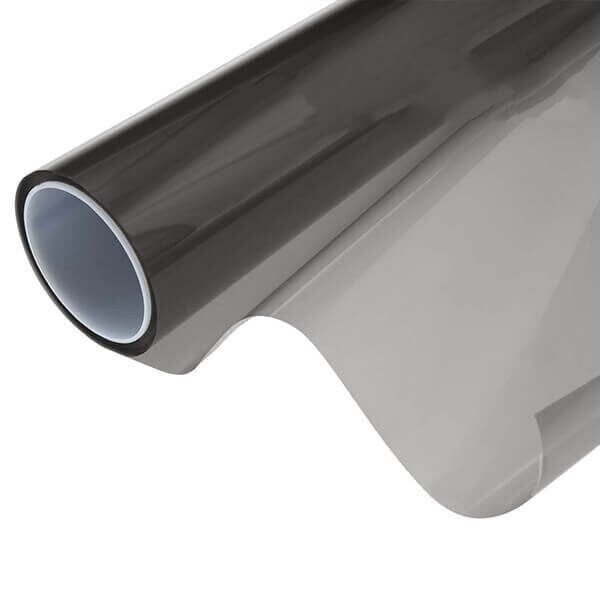
How to Select the Right Lens Coating
There is no universal lens coating that fits every optical application.
Before selecting a coating, manufacturers should consider several factors.
1. Define the Optical Target
Determine whether the priority is high transmission, low reflection, spectral filtering, or a combination of functions.
2. Identify the Wavelength Range
Visible-light smartphone cameras have different requirements from infrared or specialized optical systems.
3. Consider the Substrate
Different glass and optical materials may require different coating structures and adhesion strategies.
4. Evaluate Environmental Conditions
The coating may need to withstand humidity, temperature cycling, abrasion, cleaning, and other real-world conditions.
5. Match the Coating to Production Requirements
A coating solution needs to remain stable and repeatable at the intended manufacturing volume.
Lens Coating vs. Ordinary Protective Coating
These two technologies shouldn’t be treated as identical.
An ordinary protective coating may primarily focus on mechanical protection.
A lens coating, on the other hand, must consider the optical behavior of the surface.
| Requirement | Protective Coating | Optical Lens Coating |
| Scratch Protection | Often important | Can be important |
| Reflection Control | Usually secondary | Core requirement |
| Light Transmission | Usually not the focus | Critical |
| Spectral Performance | Limited | Can be engineered |
| Optical Design | Limited | Essential |
For camera applications, optical performance needs to remain at the center of the coating design.
Future Development of Lens Coating Technology
Smartphone cameras continue to become more capable while the physical space available inside the device remains limited.
This creates demand for thinner, more multifunctional, and more precisely engineered coatings.
Future developments are likely to focus on:
- Higher optical transmission
- Wider-band reflection control
- More durable thin-film structures
- Multifunctional optical coatings
- Improved environmental stability
- Greater production consistency
- More sophisticated multilayer designs
The goal is clear: achieve more optical functionality from an increasingly small surface area.
Frequently Asked Questions
What is lens coating?
Lens coating is a thin-film surface treatment applied to an optical lens to control reflection, improve transmission, enhance durability, or provide other optical functions.
Why is lens coating important for smartphone cameras?
It helps control unwanted reflection and light loss while potentially improving surface durability and overall optical performance.
Is lens coating the same as anti-reflective coating?
Not necessarily. Anti-reflective coating is one common type of lens coating. Other lens coatings can provide spectral filtering, protection, or multiple functions simultaneously.
Can lens coating improve light transmission?
Yes. Properly designed optical thin films can reduce surface reflection and increase the amount of useful light transmitted through the optical component.
Can lens coating protect against scratches?
Some coating structures are designed to provide both optical functionality and improved surface hardness or wear resistance.
What technologies are used to manufacture lens coatings?
Depending on the required coating structure, processes such as magnetron sputtering, electron beam evaporation, and ion-assisted deposition can be used.
Can lens coatings be customized?
Yes. Coating designs can be customized according to wavelength range, optical targets, substrate material, environmental requirements, and production conditions.
Conclusion
As smartphone camera systems become increasingly sophisticated, surface engineering has become an important part of optical design. Lens coating provides manufacturers with a way to control reflection, improve light transmission, protect optical surfaces, and support the overall performance of compact camera modules.
The most effective solution depends on more than the coating material itself. Thin-film structure, deposition technology, substrate compatibility, optical requirements, environmental durability, and production consistency all influence the final result.
SRNC’s Functional Coating for Cell Phone Camera provides an application-focused solution for manufacturers seeking advanced optical and functional coatings for mobile camera components.
With precision vacuum coating technology and customized thin-film development, SRNC supports the growing requirements of smartphone camera manufacturers seeking higher optical performance and reliable surface protection.